3 Spellcasters and a Dwarf
  • Home
  • Special Effect
    • Special Effect
    • The Final Return of The Indiana Jones Charity Globe Trot
    • The Warlock of Firetop Mountain Challenge
    • Return of The Indiana Jones Charity Globe Trot
    • Bard's Tale Challenge
    • Fighting Fantasy Challenge
    • The Indiana Jones Charity Globe Trot
    • Mirkwood Charity Walk
    • Middle-earth Charity Walk
    • Dungeon Daze
  • RPGs
    • D&D BECMI
    • The One Ring
    • The Evils of Illmire
    • Beach Patrol
    • The Surrendered Lands
  • Game Blogs
    • RPG Blog
    • Gaming Blog
  • Painting Blog
  • Contact

Gaming Blog

Love Letter - 21

13/9/2021

0 Comments

 
12th September 2021

Gaming Sunday has come to a conclusion and we're logged into Board Game Arena for the final game of the night; Love Letter.
Read my blog about it here.
0 Comments

King of Tokyo

12/9/2021

0 Comments

 
12th September 2021


Up from the depths.
Thirty stories high.
Breathing fire!
HIS HEAD IN THE SKY!
GODZILLA!
GODZILLA!
GODZILLA!
….and Godzoo- OK, that's going too far.

Take on the role of a kaiju as they rampage against each other for the right to flatten  Tokyo!

What's in a game?
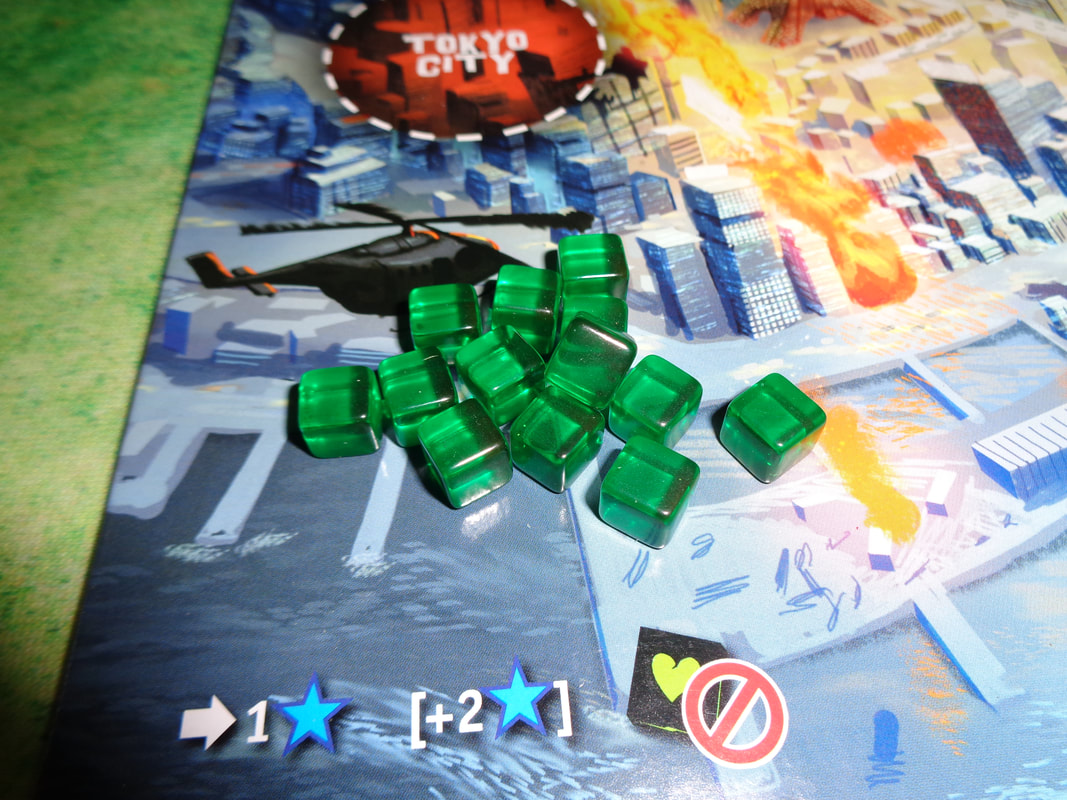
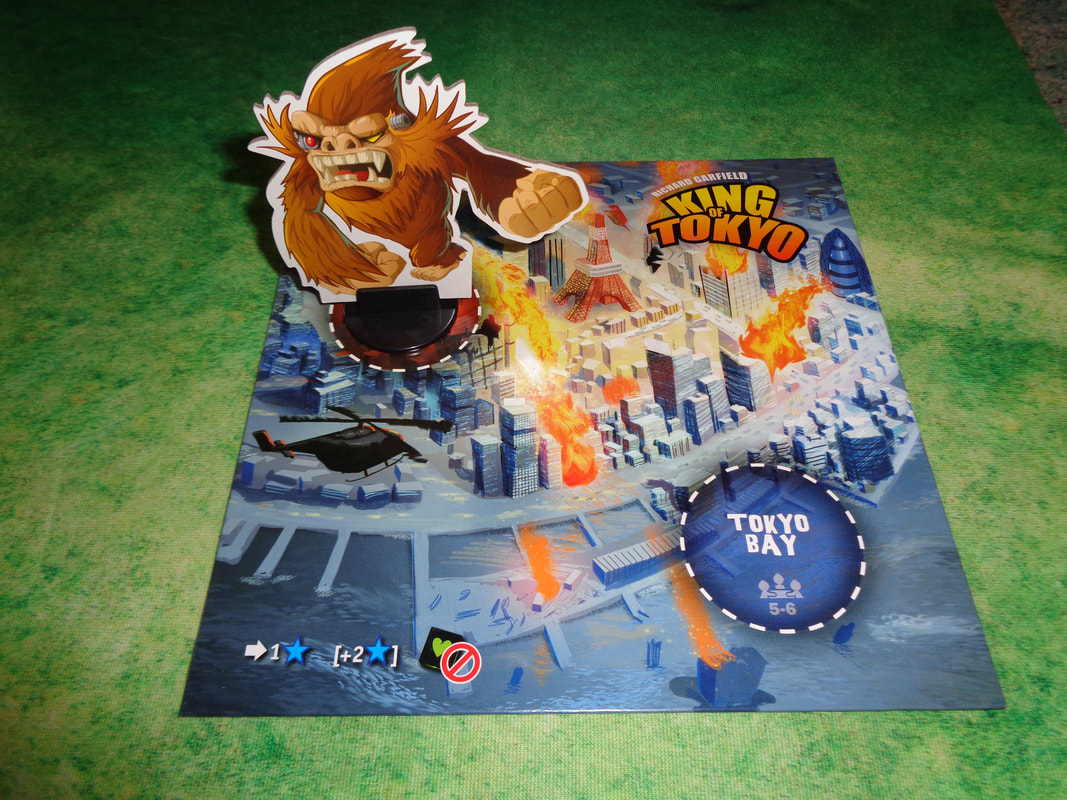
  • Board: This small square board, depicts poor, unfortunate Tokyo on fire! There's a central space called Tokyo City, which will be occupied by one of the monsters.
    Another space display Tokyo Bay and serves the same function but in 5+ player games.
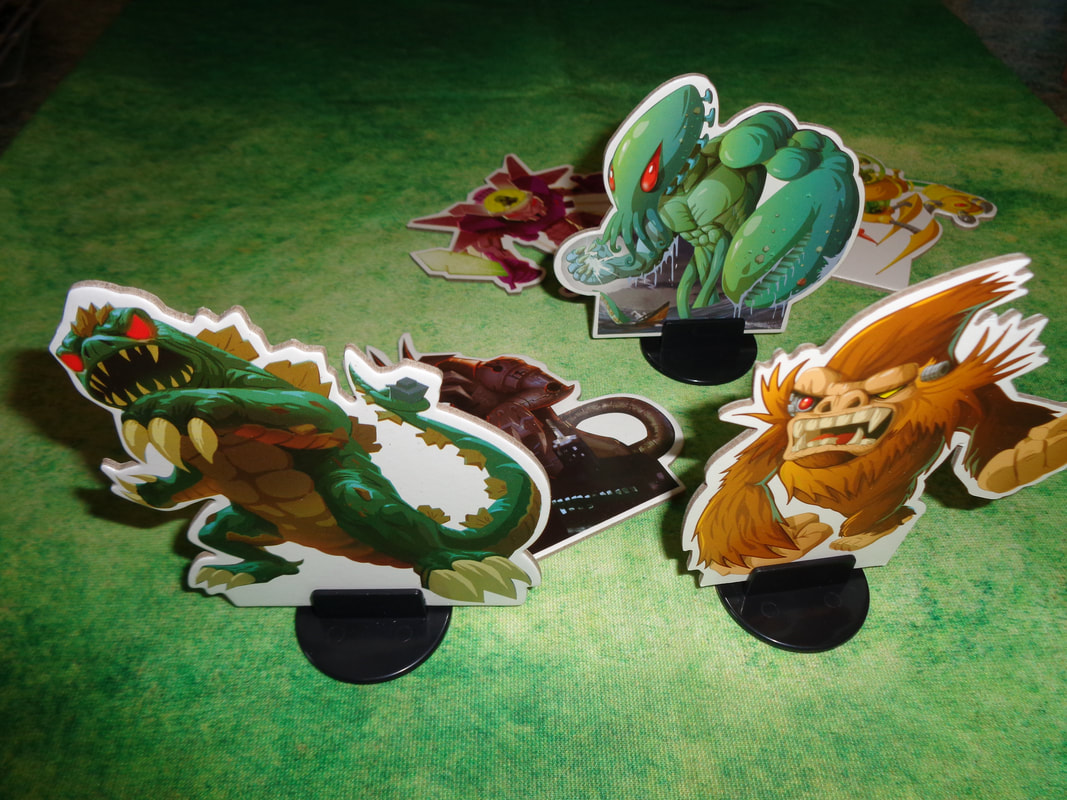
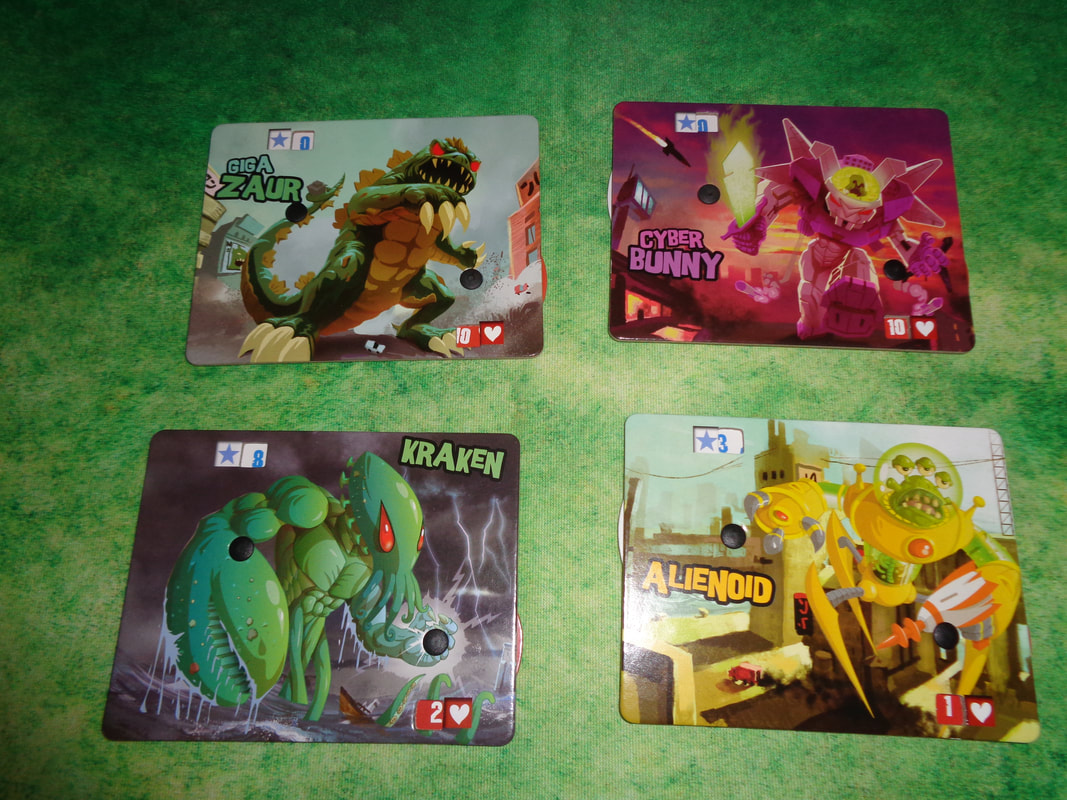
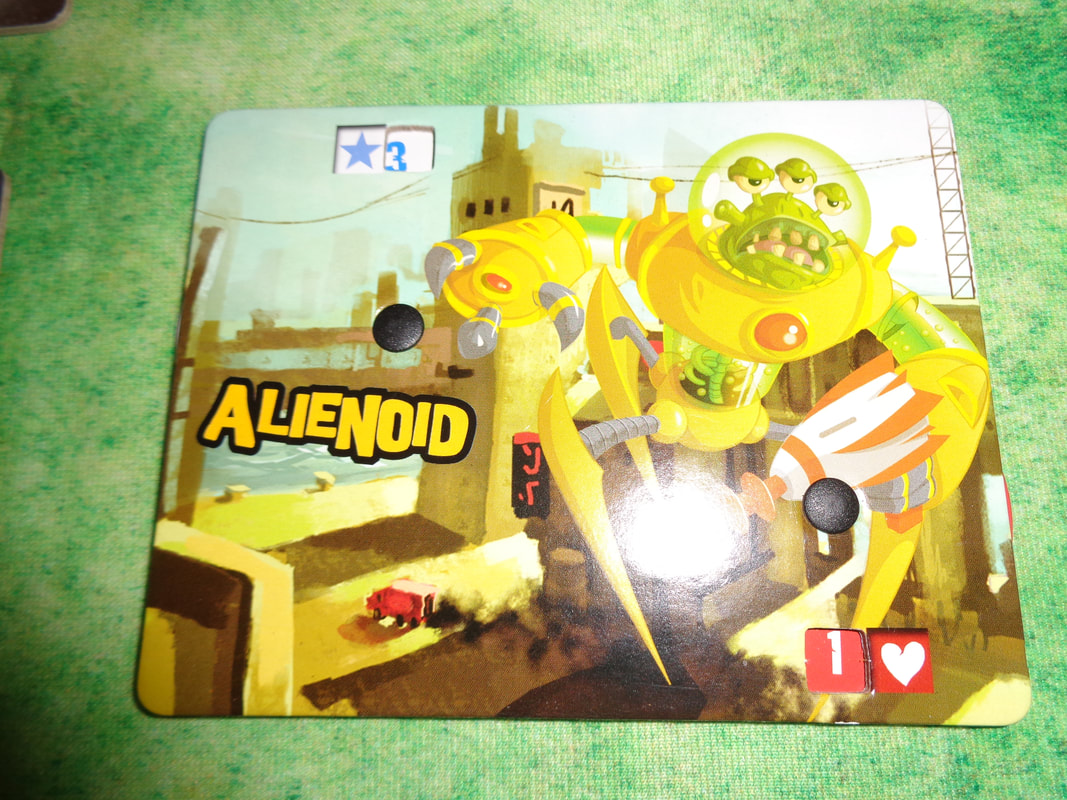
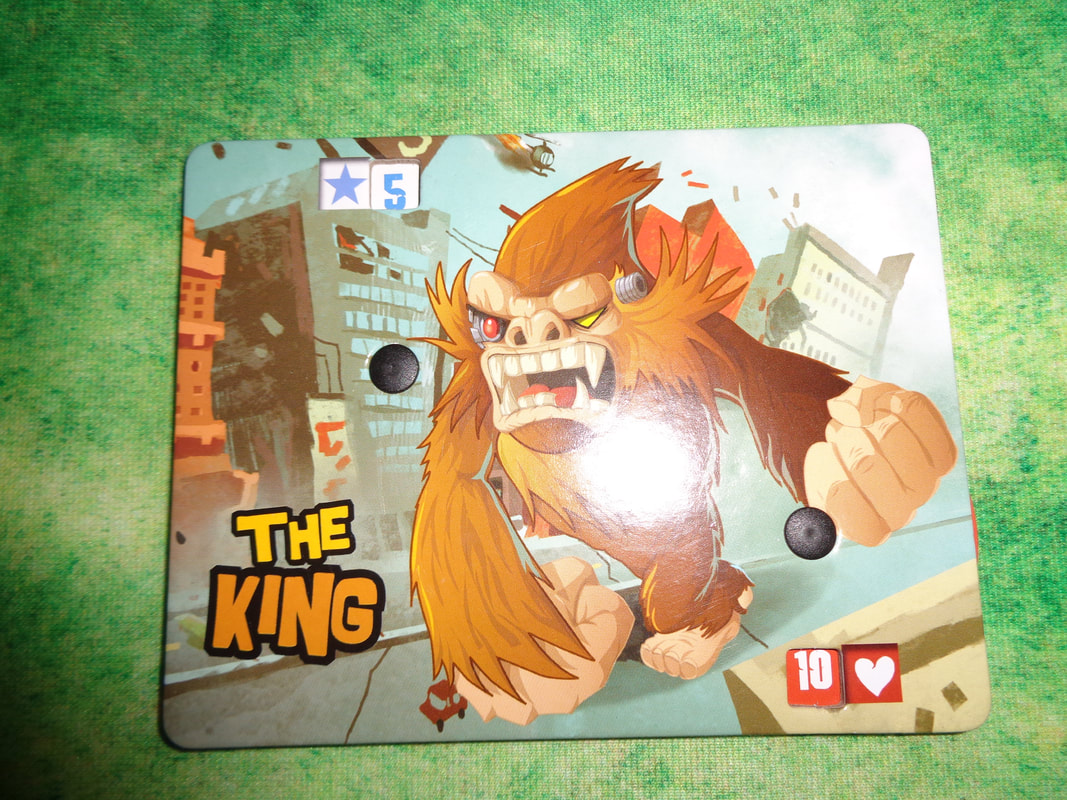
  • Monster board: Each of these 6 boards depicts a different monster, each board also has 2 dials to track health and victory points.
  • Monster Standee: Each monster has a corresponding standee.


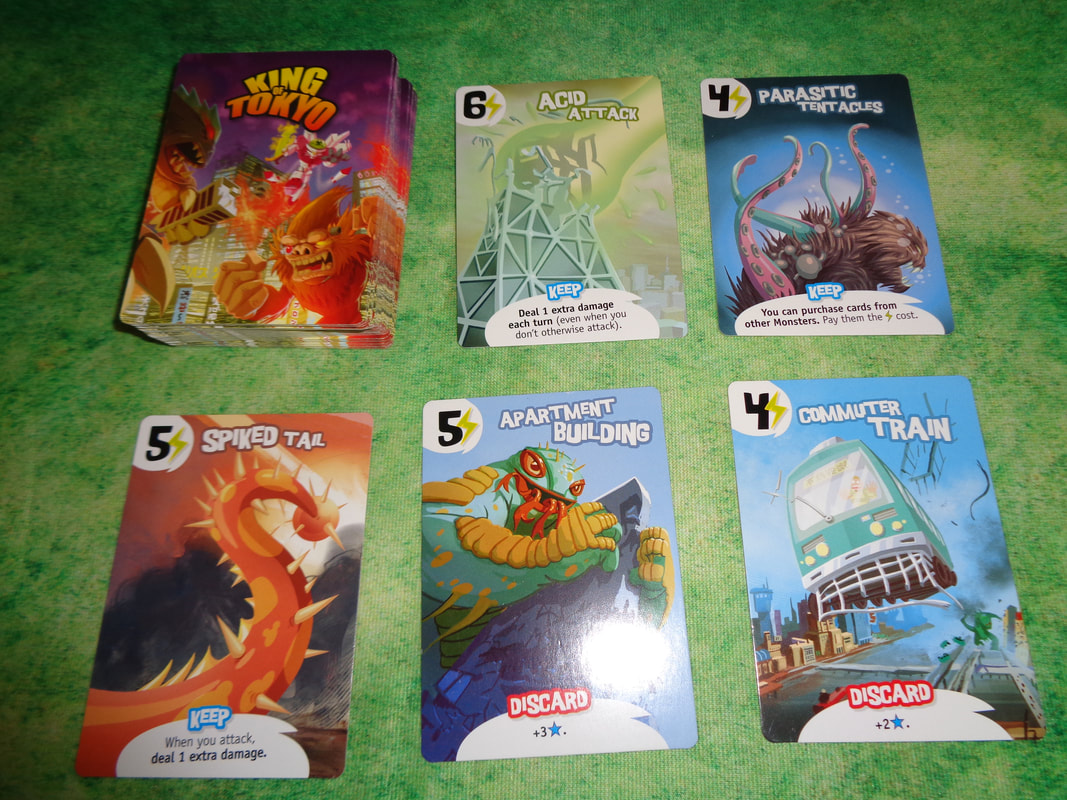
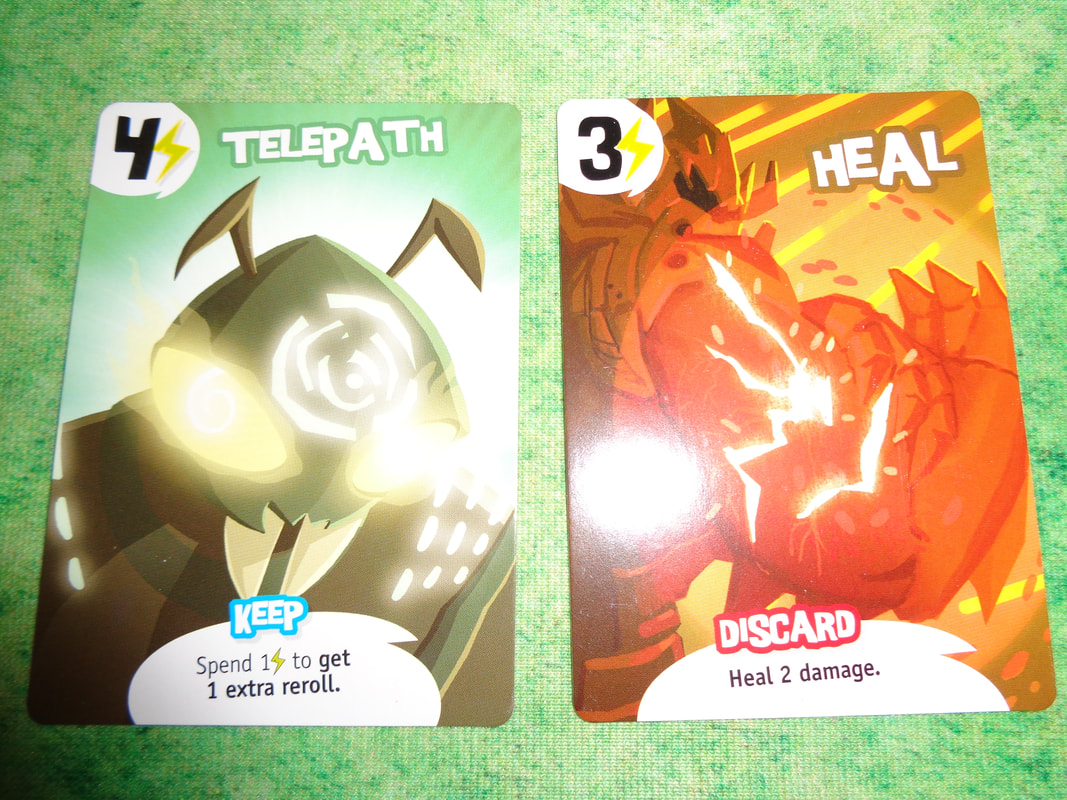
  • Power cards: These cards grant monsters powers. Some powers are once-only and discarded when used, some are always active and others can be triggered by certain criteria. Additionally, some power cards will target other players' monsters, normally to detrimental effect.
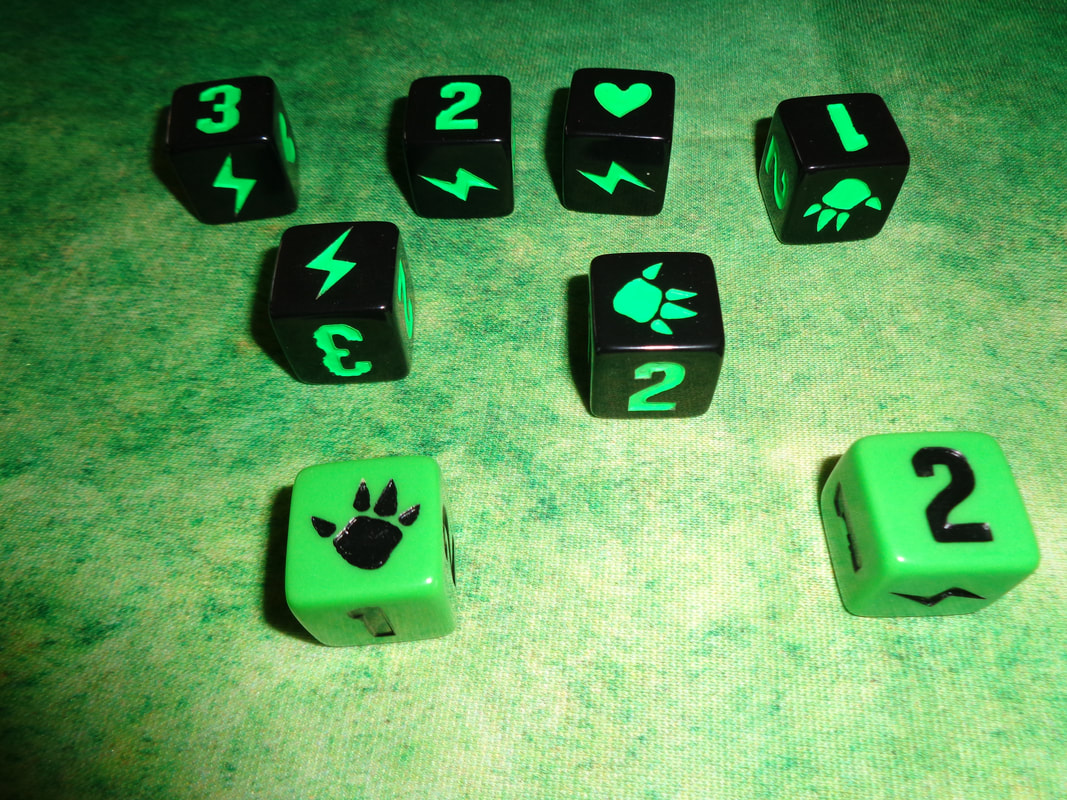
  • Dice: These are not the usual six-siders, the numbers 4, 5 & 6 are replaced with a monster footprint, lighting and heart symbols.
    There are 6 black dice and 2 green ones. Mostly, players will use the black dice, some power cards allow them to use the extra 2 green dice though.
  • Energy cubes: Translucent, green acrylic cubes.
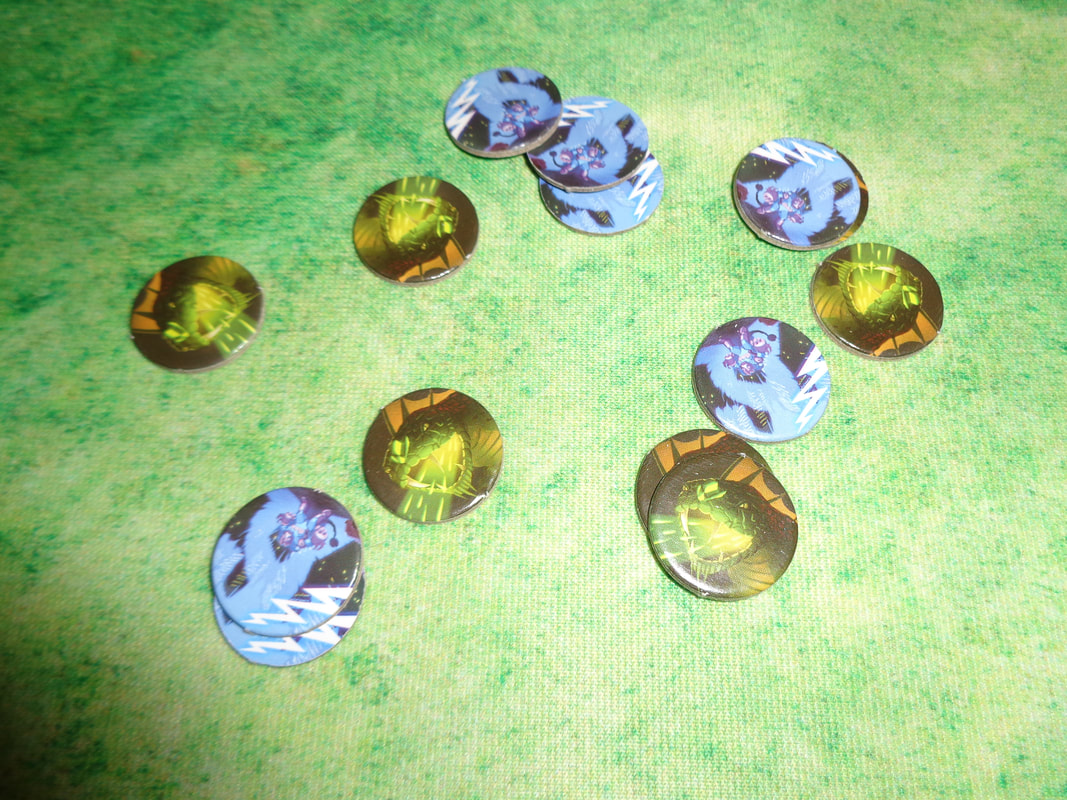
  • Tokens: Standard cardboard disc shaped tokens, used to track some of the power cards' abilities.
That's it for components, they're all solidly made; the monster standees and boards are thick and sturdy, it doesn't feel like the dials will fall off any time soon. The tokens, cards and acrylic are exactly what you'd expect them to be.
​The dice are very well constructed and feel satisfying weighty to heft, which is good because they be getting a of of use.
The boards, cards and standees are lavished with brash, colourful and cartoonish art, it's comical style perfectly fits both the game's style and over the top theme.
The game has little iconography which is easy to understand.


How's it play?
Setup
  • ​Give each player a standee and matching monster board, each player should set the health to 10 and victory points to 0.
  • Set out the main board, dice, cubes and tokens.
  • Shuffle the power cards into a face-down deck and deal 3 face-up.
  • Determine a starting player.

On to play
​In King of Tokyo, players take turns rolling and re-rolling dice, then using those results to try and gain some benefit to work towards their objectives. During play there will always be a monster inside Tokyo, while the others are outside, in a 5+ player game, there can be 2 monsters inside Tokyo.
A turn goes like this.
  • Dice: The active player rolls the 6 black dice.
    Rerolls: After the 1st roll, the active player may choose to set aside any number of dice and reroll the remaining. They may choose to set aside 0 dice or all of them (Although this would end their rolling.).
    They may then reroll those remaining dice that were not put aside; after this roll, they may put aside any number of those dice, they may even add back in dice they put aside in the previous roll.
    Finally, the active player may have a final 2nd reroll (3rd roll in total.) of the dice not set aside. Now the results on all the dice must be resolved.
  • Results:
    3-of-a-kind: If the active player got 3-of-a-kind for the numerical results, then they score victory points for that base number. If they rolled 1, 1 & 1, then they score 1 point, if they roll 3, 3 & 3, they would score 3 points.
    Getting more matching numbers, increase the score per matching die. Thus getting a result of 2, 2, 2, 2, & 2 would earn the active player 4 victory points.
    Footprint: The footprint stomps enemies! Each footprint does a point of damage.
    If the active player is outside Tokyo, the damage dealt to the monster inside Tokyo, if the active player is inside Tokyo, the damage is dealt to every monster outside Tokyo!
    If a monster has it's health reduced to 0, it is eliminated from the game.
    Heart: For every heart result the active player has rolled, they are healed 1 damage, however, monsters inside Tokyo cannot heal.
    Energy: Each energy result gains the active player 1 energy cube.
  • Buy power card: Once the dice have been resolved, the active player can spend their energy cubes to buy 1 or more power cards.
    Alternatively, the active player may spend 2 energy to clear away the 3 available power cards and replace them with 3 new ones.
  • Next player: Play proceeds with the player to the left.
Rules for Tokyo
  • If a Tokyo space is empty, the active player's monster must enter it.
  • A player earns a victory point for entering Tokyo.
  • A player beginning their turn in Tokyo earns 2 victory points.
  • A player's monster cannot leave Tokyo, they can only yield it to a player who has just damaged them.

Endgame
Play continues until one of two conditions are met.
A player has reached 20 victory points - in which they immediately win or all monster bar one have had their health reduced to 0, in which case the last monster standing wins.


Overall
King of Tokyo is a push-your-luck game with a difference, most other games of this type task players with essentially beating the odds and doing so more efficiently than other players, getting to whatever the victory criteria is first. But King of Tokyo has an extra wrinkle, in King of Tokyo, players can target and eliminate other players, I'm not a fan of player elimination but it gives the game an extra approach and dimension to gameplay. Not only that, players will look to prioritise different results at different times, if they're low on health; they'll want hearts. If there's a power card they like the look of; they'll want energy.

The rules for getting into Tokyo compliment this well.

Getting into Tokyo works for scoring points or attacking enemies.
There's an inherent risk to do so, because it makes that player the central target. Managing to stick it out in Tokyo however, earns the player 2 victory points per turn, which on the surface might not seem like much but is actually 10% of the required victory score. Additionally, being in Tokyo is the best way to dish out damage to all other players, hit them hard enough and they'll probably want to heal instead of attack, giving the player in Tokyo more time, because sometimes, attacking the player in Tokyo is a risk. A canny player might yield Tokyo to another player who is low on health because it then puts them on the spot!

Throw the usage of power cards into the mix and King of Tokyo becomes an enjoyable blend of strategy, risk and reward and push-your-luck mechanics. Furthermore, players will need to adapt to the unpredictability the game sends their way.

King of Tokyo is a easy to learn, light and fun game not to be taken too seriously, it's perhaps a little too long for a filler game but is definitely worth trying, especially if you're a fan of push-your-luck games.
0 Comments

Race for the Galaxy - 05

12/9/2021

0 Comments

 
12th September 2021

Sunday gaming on Board Game Arena continued with Race for the Galaxy.
Read my blog about it here.
0 Comments

Martian Dice - 02

12/9/2021

0 Comments

 
12th September 2021

I'm logged into Board Game Arena for some Sunday night gaming.
The next game of the night was Martian Dice, read my blog about it here.
0 Comments

Forbidden Island - 05

12/9/2021

0 Comments

 
12th September 2021

It's Sunday evening and I'm logged into Board Game Arena for the start of some gaming goodness.
The night kicked off with Forbidden Island, read my thoughts about it here.
0 Comments

Letter Jam

12/9/2021

0 Comments

 
11th September 2021 

Wogglecon was drawing to a close and the final game of the day was co-operative word-puzzler Letter Jam.

What's in a game?
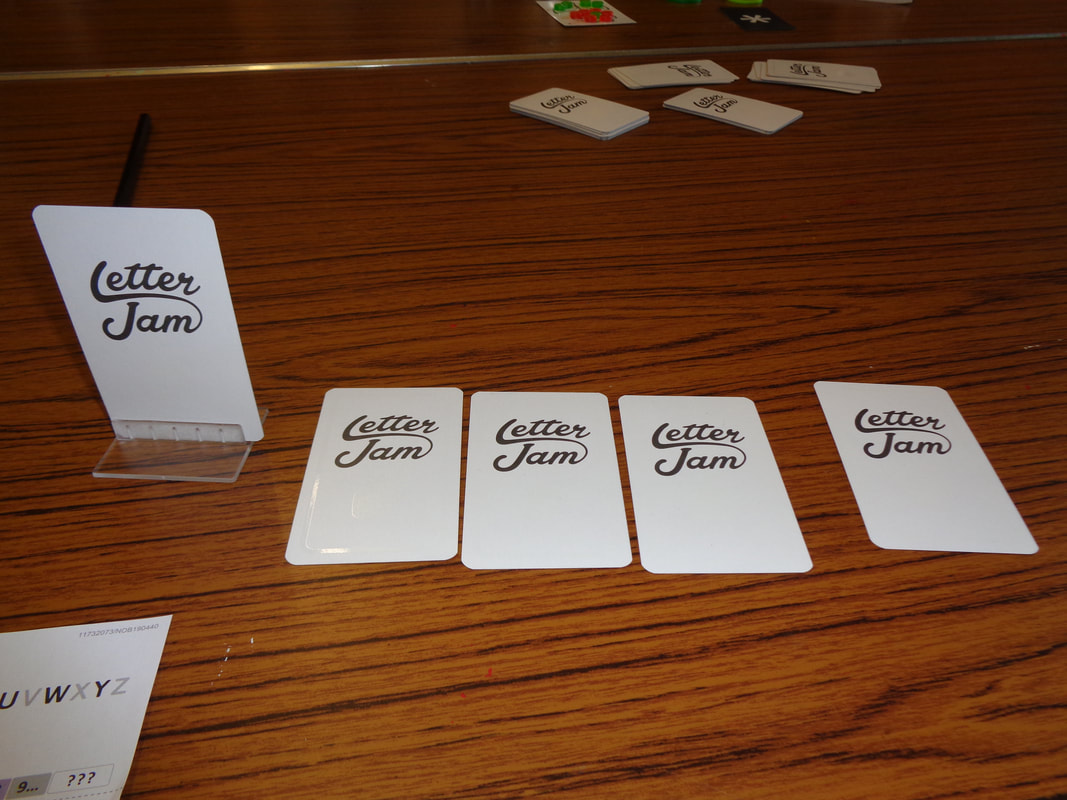
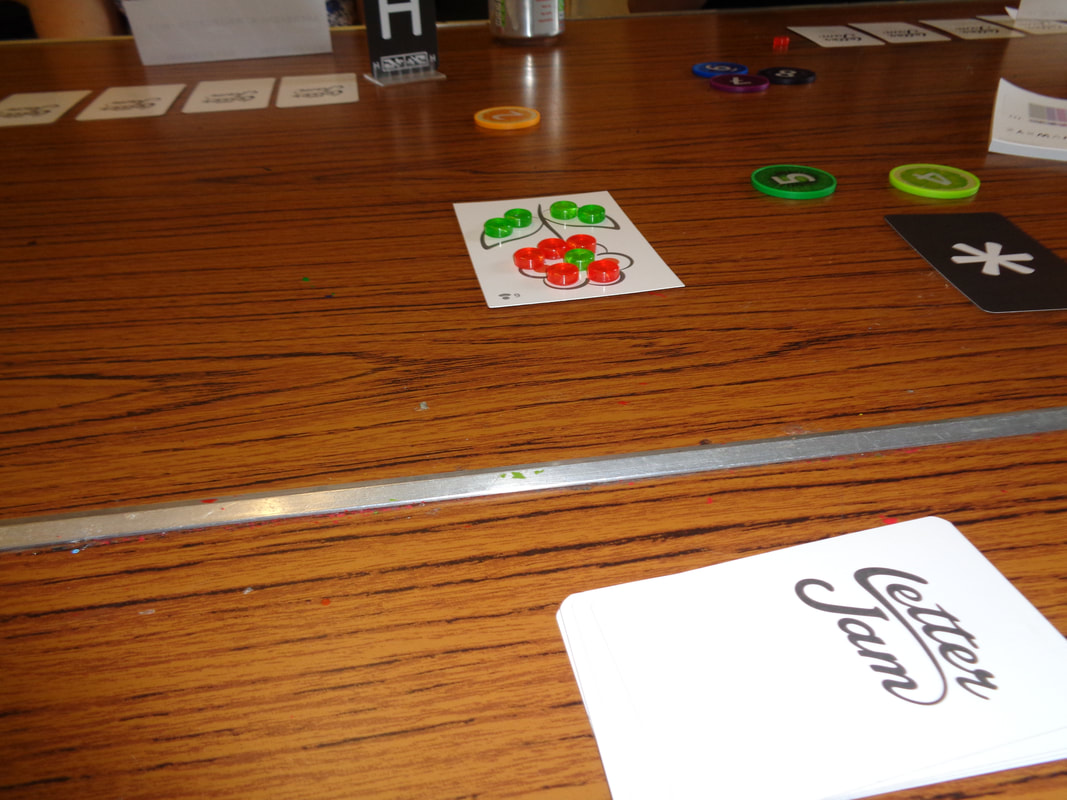
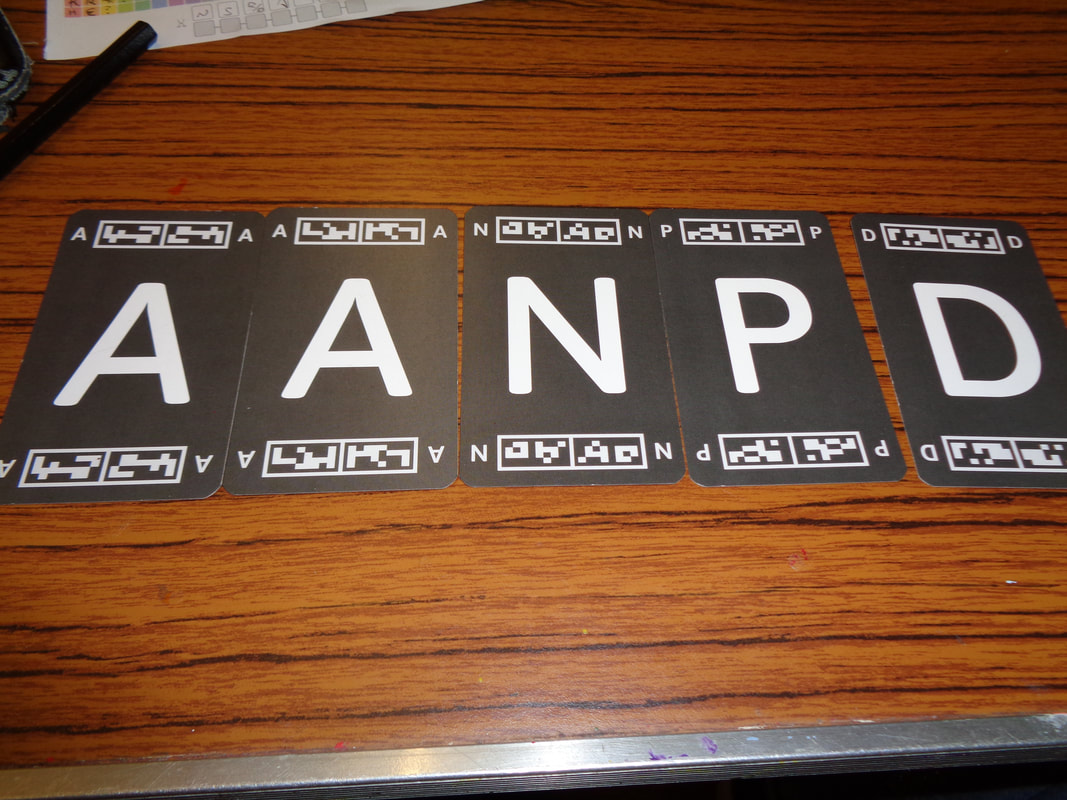
  • Letter cards: This deck of 65 cards displays 1 letter per card. Not ever letter from the alphabet is present, 'J', 'Q', 'V', 'X' & 'Z' are not used.
  • Wildcard... card: The wildcard card can be used as any letter.
  • Setup cards: These cards hold clue tokens and are stylised to look like flowers.
  • Clue tokens: These translucent little acrylic discs come in bright green and bright  red.
  • Numbered Tokens: Numbered from 1 to 8.
  • Standees: Used to hold a single letter card.
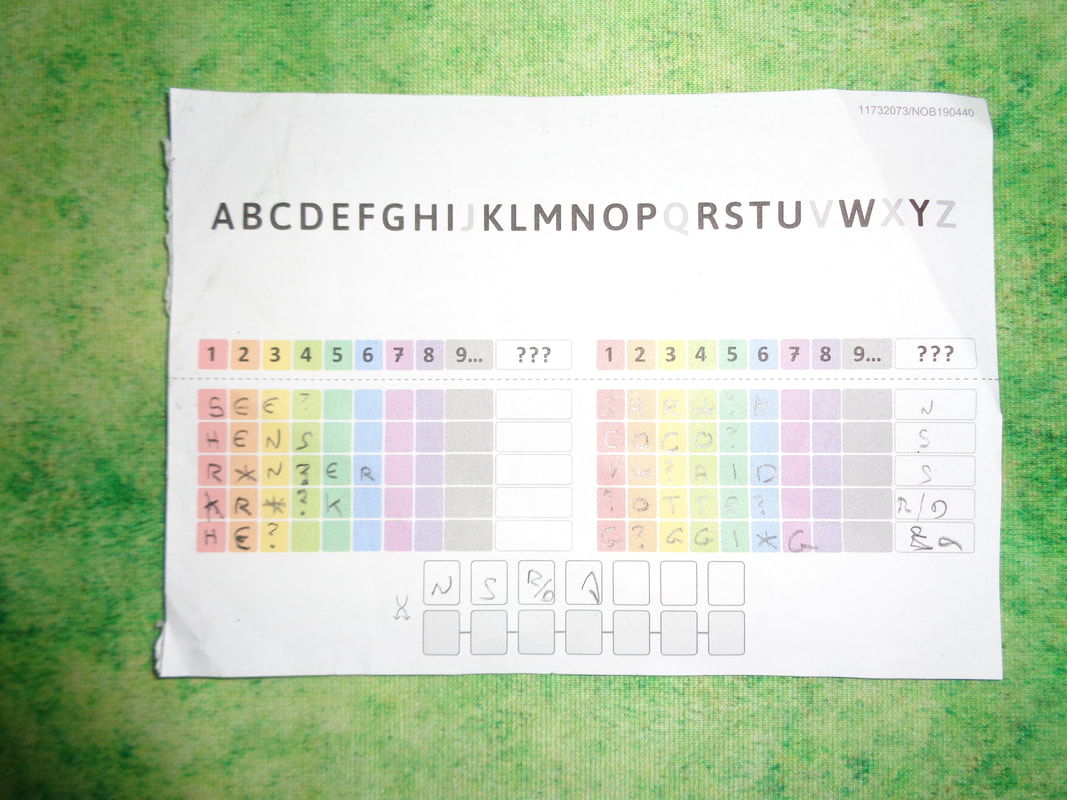
  • Guessing sheets: Players use these paper sheets to track info acquired through play.
The cards are the standard quality that you'd expect, as are the study acrylic tokens are study components. While the numbered tokens are basically poker chips with fruit themed art, they are excellent components.
The numbered token are bright and colourful art-wise and while simplistic, the setup cards are pleasant enough. Otherwise, there's pretty much no more art, but this is a word game, how much art is needed?
The game has practically no iconography that needs learning.


How's it play?
In Letter Jam each player is given a 5-letter word in the form of 5 face-down letter cards. Then the players have to collectively guess their individual words by looking at the clues given by other players and filling in the gaps.
Setup
  • Setup card: Take the setup card that matches the number of players and put it into the central playing area. Put the green and red clue tokens on to their allotted spaces.
  • Wildcard: Put the wildcard into the central playing area.
  • Letter cards: Deal out all the letter cards to the players as evenly as possible.
    Then, using these cards, each player creates a 5-letter word, then shuffles these cards and passes them face-down to the player to their right. The remaining cards are discarded into a deck in the central playing area.
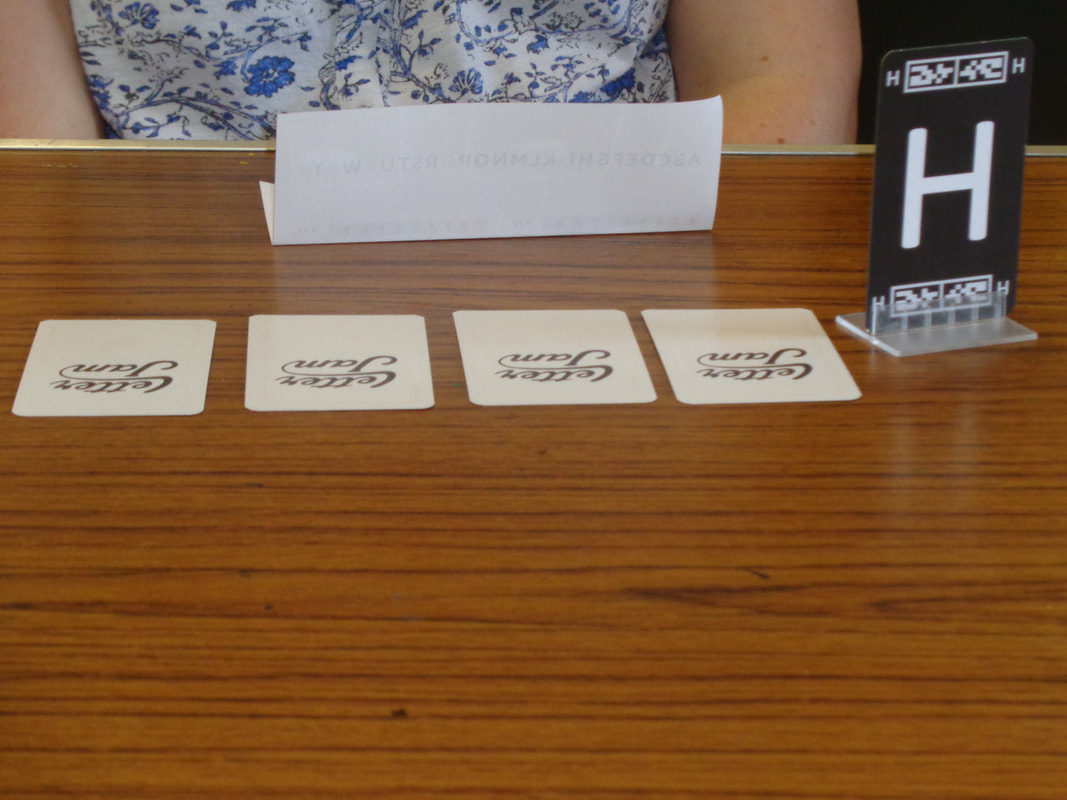
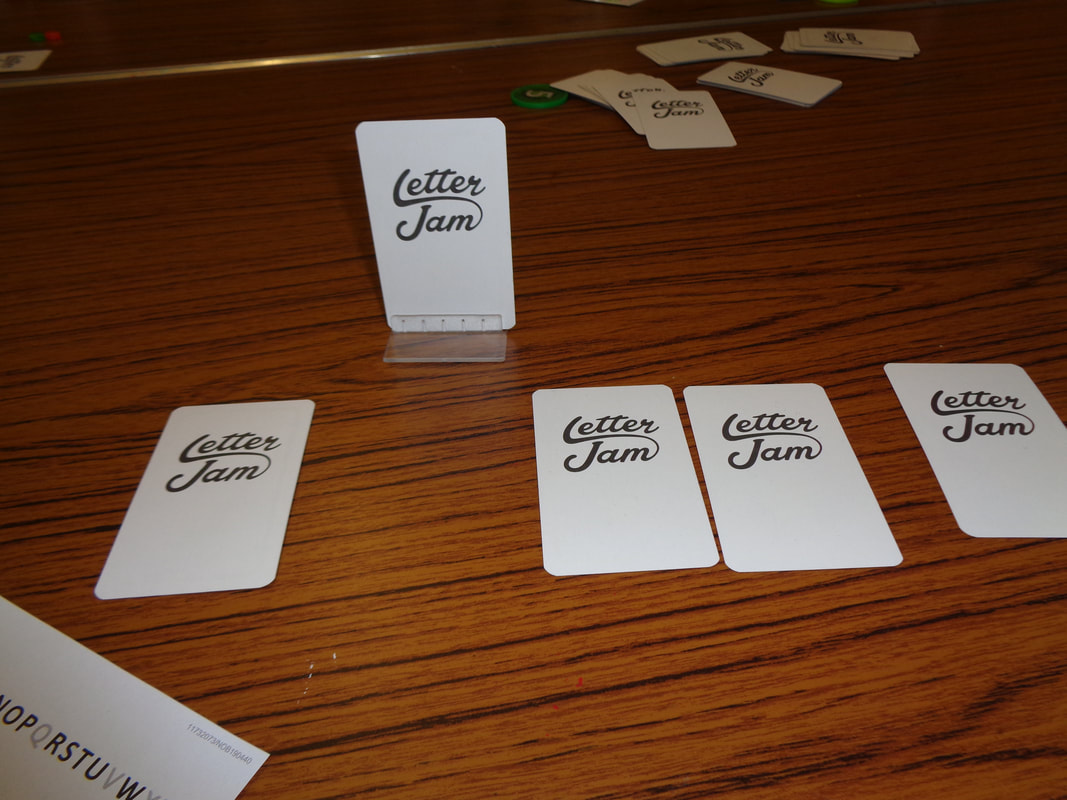
    Each player now takes the 5 cards given to them and without looking at them, places them into a face-down row in front of them.
  • Letters: Then each player takes the 1st of their letter cards and slots it into a standee, with the card facing away, so only the other players can see it. Conversely, players can see the letters of all other players,.
Letter Jam is always played with 6 players; if playing with less than 6 people, nonplayer stands are added to the game to make up the numbers. Nonplayer stands have their own rules which aren't really important for the purposes of this blog.

On to play
  • Discuss: After looking at the other players' letters, everyone should think of a clue (A word.) that they could give. Players then discuss who should be the cluegiver, they can talk about how many people they can help and so on. Player should be careful not to reveal too much.
  • Cluegiver: Once the cluegiver has been chosen, they must take a clue token, the first clue token they take must be red, if they take further clue tokens, they must always take a green clue token, they can never take another red. This means that all player must participate in cluegiving at least a little bit.
    The cluegiver then takes numbered tokens and uses them to spell out the word they thought of.
    For example; the cluegiver sees the letters S, E, U, M & O. They put the 1 next to the M, 2 next to the O, 3 the U, 4 the S and 4 the E, this would be M, O, U, S, E or mouse. The cluegiver could also spell Moose, by putting numbers 2 & 3 both next to the O.
    The cluegiver can put tokens next to the wildcard, although they cannot say which letter they are using it for.
  • Guessing: Using the guessing sheets, players write down what they can see. Thus the player who has the U in front of them would write down MO?SE, since that player cannot see the U, they put a '?' in it's place. Now players try and guess what their letter could be. In this instance, the missing letter could be a U (For MOUSE.) or a O (Spelling MOOSE.), this is noted on the guessing sheet.  Once everybody is happy with their guess, play progresses to the next round.
  • Next round: Players now decide whether to stick with the same letter (If they're not sure what it is.) or move on to the next letter (If they feel confident enough.), in which case the current letter is removed from the standee and placed face-down, the new one is then slotted in its place on the standee. Once a player moves on, they can't go back to a previous letter.
    Then the discussion and cluegiving occur again.
The objective here is for each player to try and deduce what 5 letters they have.

Endgame
Discussion and cluegiving continue until one of the following 2 conditions are met.
There are no more clue tokens or players are happy with their deductions and want to guess their words.
Now all players take their 5 cards and keeping them face-down, rearrange them to spell the word they were originally given.
Once this is done all players simultaneously reveal their words.
If everyone has spelt a word, then everyone wins! Interestingly, it does not have to be the word that was given, so long as it's a real word, it counts!
If one or more players hasn't spelt a word... well... there's always next time.


Overall
Letter Jam is a pretty clever little game that will tax players' grammatical and spelling abilities.
​Players will want to try and spell out distinct or unusual words so that there's less ambiguity for other players who will then have a better opportunity to guess their own letters. Ultimately though, players will probably end up having to employ deductive reasoning and make educated guesses and hope for the best. If you're an analytical player who sees all the possible variations in a situation, you'll probably end up overthinking Letter Jam.
There's not much more that can be said about Letter Jam, the game's depth doesn't arise from mechanics, it comes from players' abilities to spell words.

Letter Jam is a light game to play, has a lot of replay value and plays up to 6. If I have any criticism of Letter Jam, it might that the game feels a bit too overlong for what it is and rules are slightly fiddly. Otherwise it's mostly straight forward to learn and the game will have crossover appeal to non-gamers and is a reasonably fun cooperative game to play.
0 Comments

Betrayal at the House on the Hill

12/9/2021

0 Comments

 
11th September 2021

All day Saturday continues, the next game I played at Wogglecon was Betrayal at the House on the Hill.

​What's more fun than exploring the local haunted house with your disparate band of friends. I mean, what's the worst that could happen? It's not like one of them is going to betray you, right? It's not like it's in the game's title!

What's in a game?
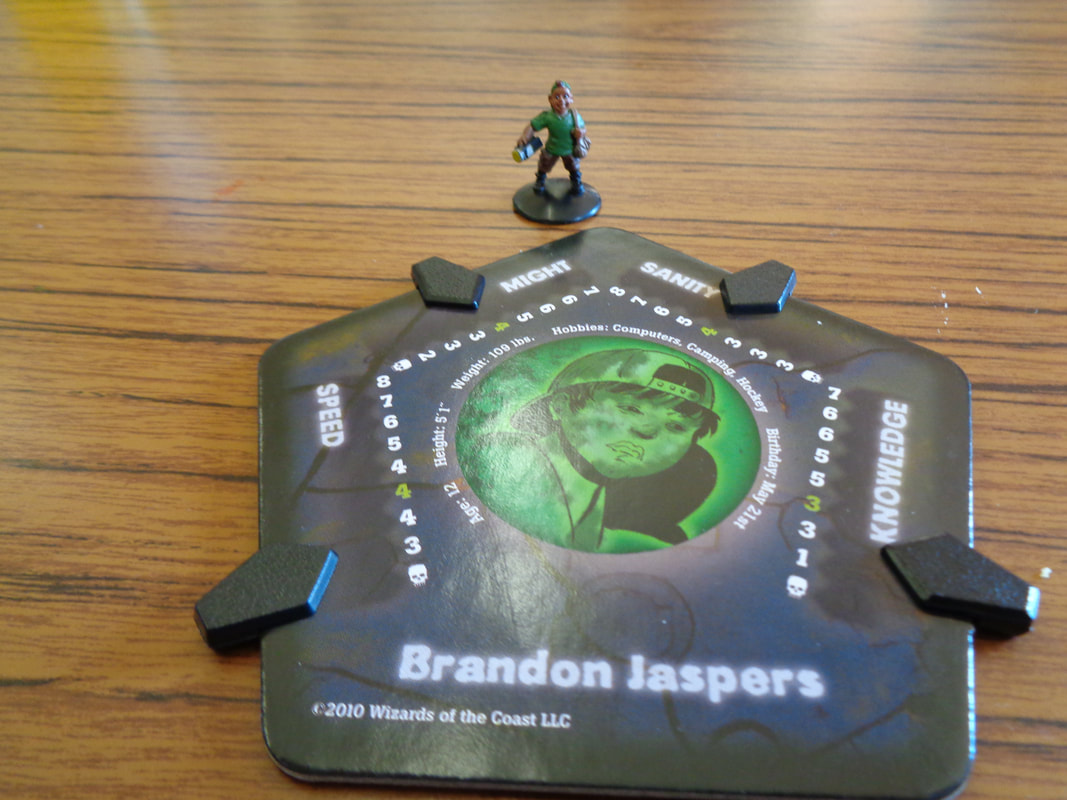
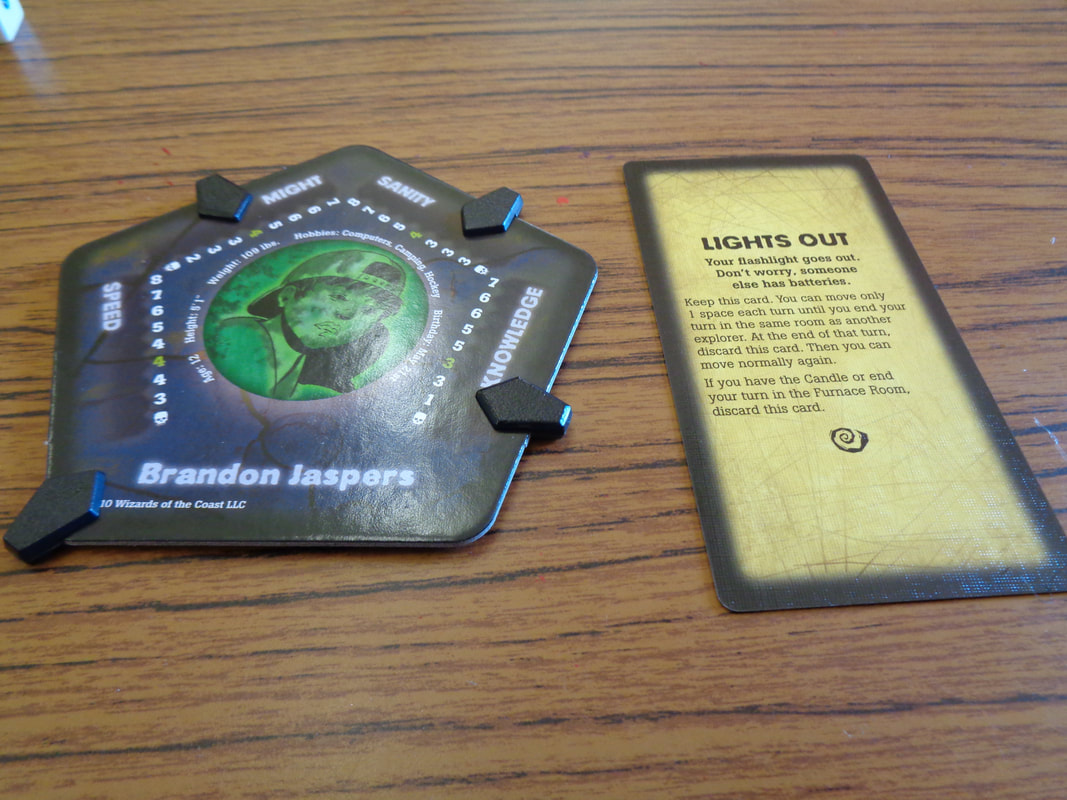
  • Character tiles: These double-sided tiles have a distinct pentagonal shape, each side depicts a different character and each one of these characters has 4 stats, Might, Sanity, Speed and Knowledge. 2 are physical and 2 are mental, each stat has a differing sliding scale of values, the green number is the starting number. stats are used for certain rolls and may go up or down. When a character takes damage it will reduce stats.
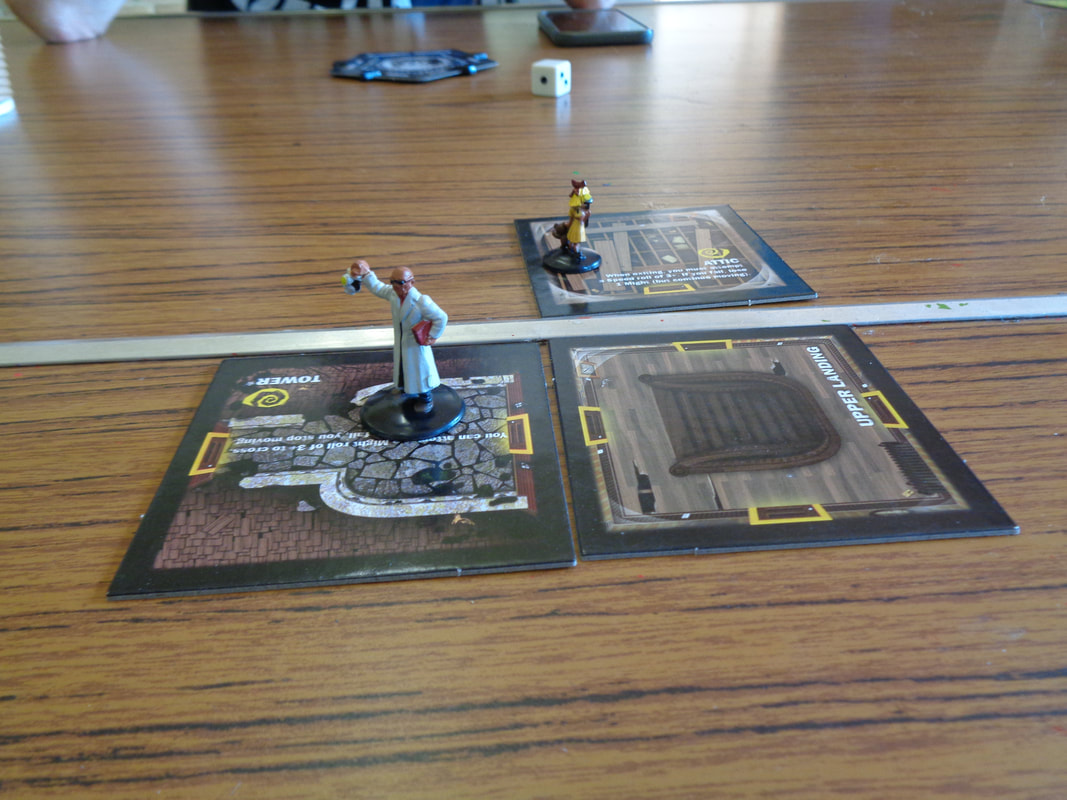
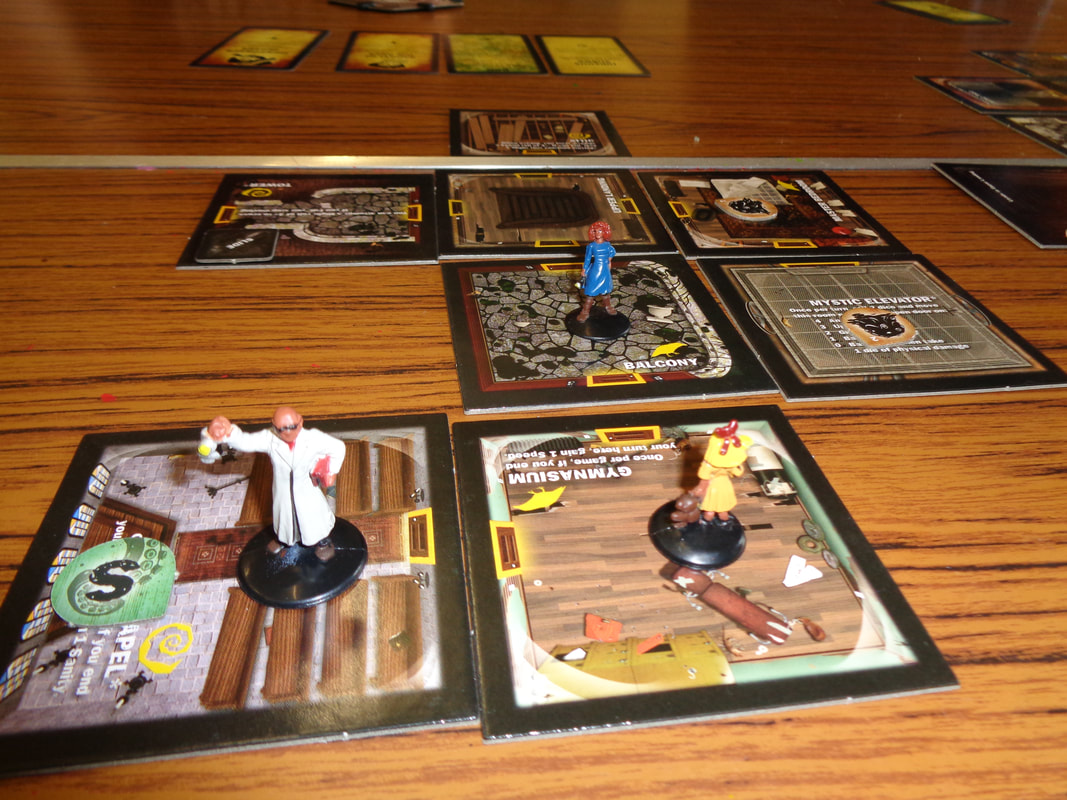
    ​Character models: Each character has their own pre-painted plastic 3d model.


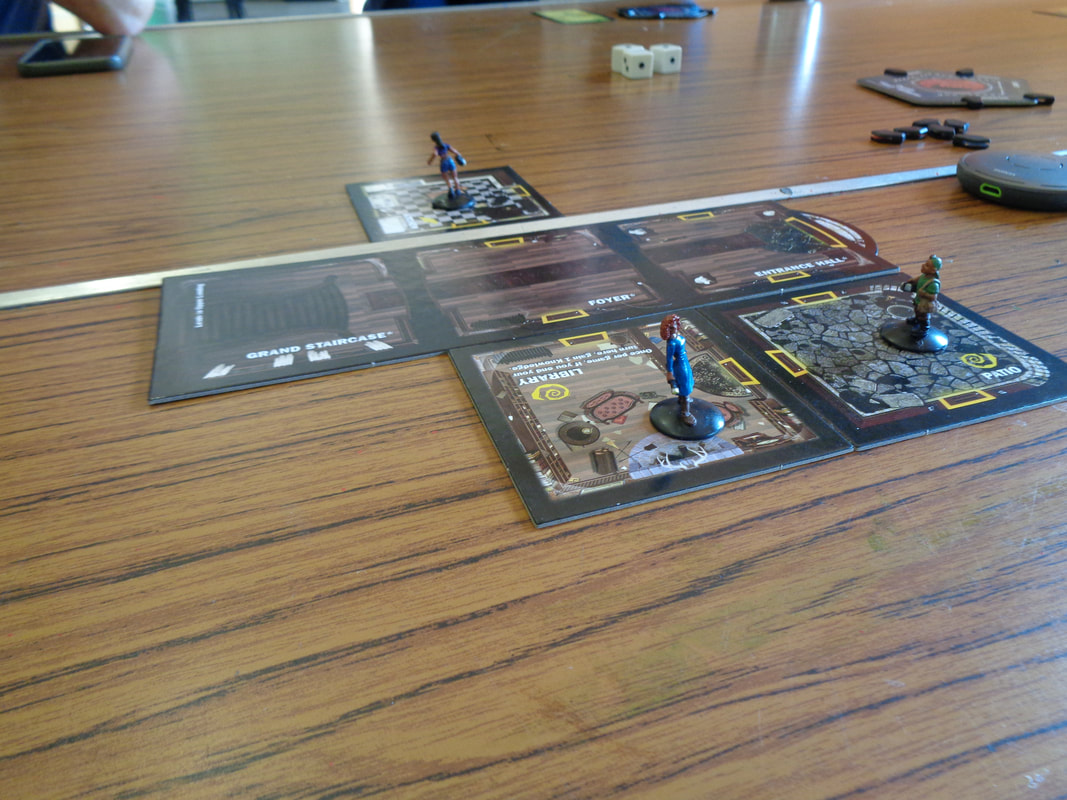
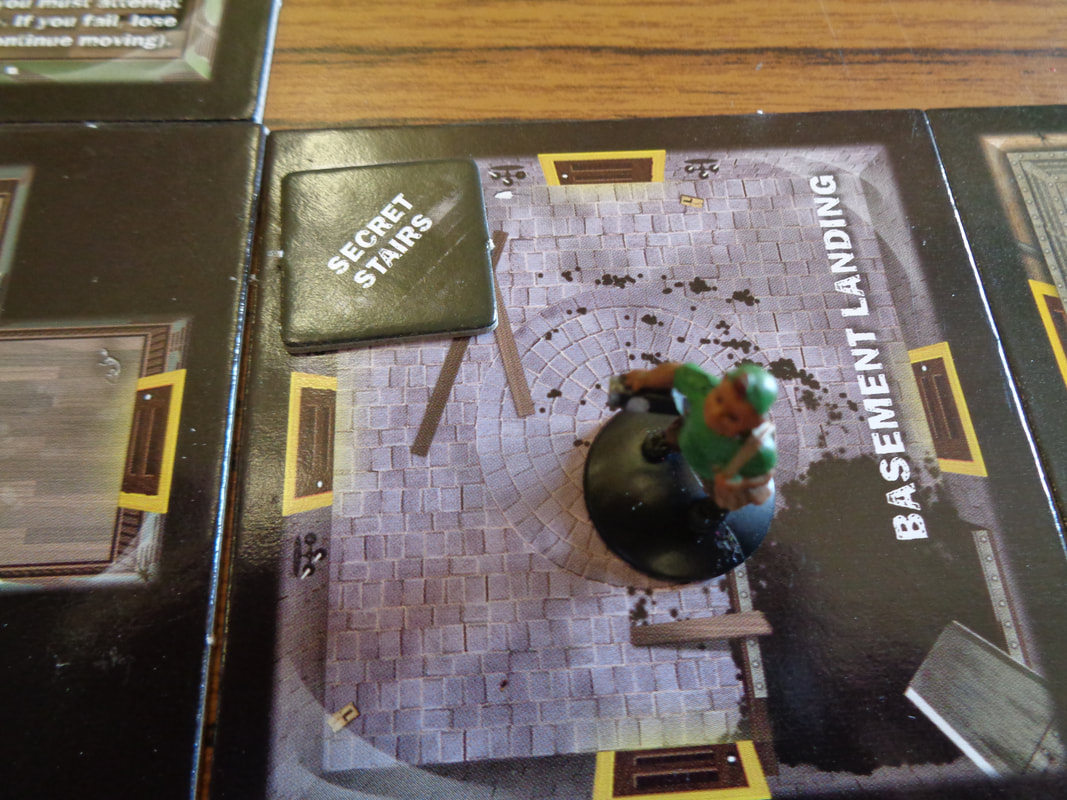
  • Room tiles: There is a starting tile along with another 44 other room tiles. Each tile depicts a room in the titular house, the back shows which of the house's 3 floors it belongs to.
  • Dice: Each one of these six-siders is numbered 0-2 twice.
  • Event cards: These are the encounters the characters will experience.
  • Item cards: Equipment and gear that characters will acquire during the game.
  • Omen cards: These don't sound like good news.
  • Tokens: The game has a lot of tokens, hundreds in fact and mostly for monsters!
  • Traitor's tome: This book is used during the 'haunt' stage.
  • Secrets of survival: Also used during the 'haunt' stage.
All of the game's tiles and tokens are constructed of thick and study card, the dice are also good quality. The cards are the expected standard quality.
The character tiles are decorated in monochrome illustrations with one colour - the player's colour. Artwork used on the room tiles is a little plain but unobtrusive. The paintjobs on the models is nice addition. Thematically, it all fits though.
The game's iconography was straight forward.


How's it play?
Setup
  • Each player should take a character tile, choose a side and set up their starting stats.
  • Shuffle the event, item and omen cards face-down into their respective decks
  • Put out the starting room tile - the entrance hall, then shuffle the remaining room tiles into a face-down stack.
  • Determine the starting player.
On to play
The objective in Betrayal at House on the Hill is to explore the house until the 'haunt' is discovered and then maybe defeat it!
Broadly speaking, the game is divided into 2 stages, the second stage begins once the 'haunt' has manifested.
On their turn, the active player can do the following:
  • Move: The active player may move through a number of room tiles equal to their speed stat.
  • Explore: When the active player would 'move off' the edge of the playing area, they draw a room tile, place it and move on to it. Their movement immediately ends, regardless of how far they've moved, then they must deal with the room's encounter.
    This involves drawing a card from either the event, item or omen decks.
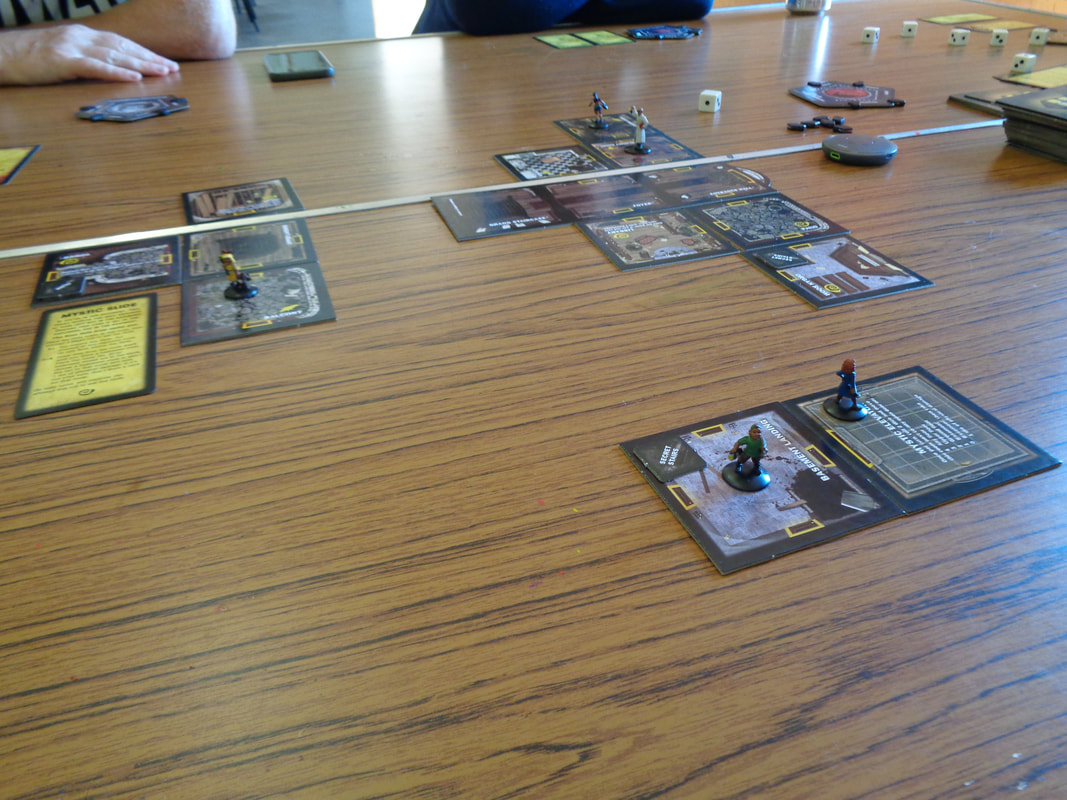
    The 'house' in the game actually has 3 different floors which will lead to the creation of 3 different tile-maps.
    Event cards: Event cards may be beneficial or detrimental, at times this will involve making a roll using one of the character's 4 stats which may also result in beneficial or negative outcomes.
    Once an event has been encountered, the event card is discarded.
    Item card: This will a item the character may use and typically confers some sort of benefit on the character.
    Items are kept by the character and their benefit can be used once per the player's turn.
    Item cards are kept by the player.
    Omen cards: These are a bit like event and items cards. An omen card might require a player to make a roll or perform an action, but they are also kept by the player and can be used once per turn.
    Anytime an omen card is drawn, the active player must roll 6 dice, if the result is lower than the total number of omen cards that have been drawn, then the 'haunt' is triggered. More on this below.
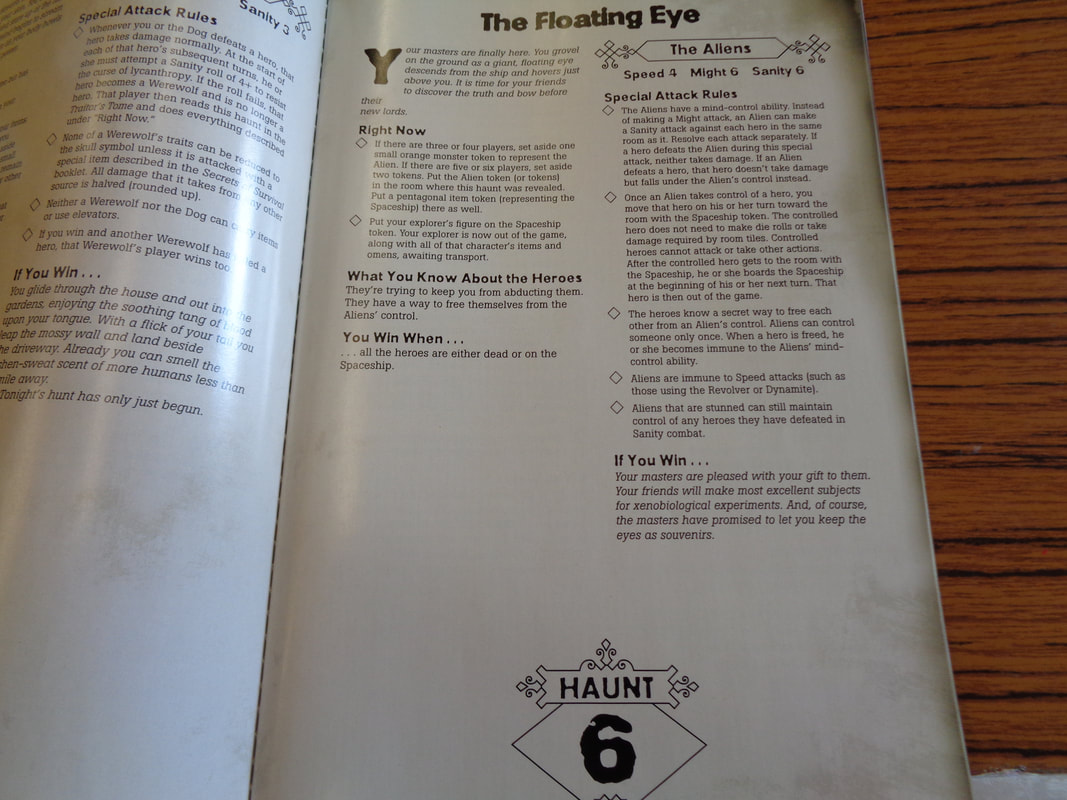
  • The haunt: After the haunt is triggered, it can fundamentally alter the game. The active player looks at a chart in one of the books, it will determine who is revealed as the traitor and which of the game's 50 haunt scenarios will be played out.
    Traitor: The traitor player takes the Traitor's Tome and must move away from the other players, then they read the haunt scenario that was activated. It will tell the traitor what their objective is and why powers they may have acquired and what monsters they may control.
    Heroes: The remaining explorers now become the heroes, with the traitor out of earshot, they can read about the haunt in Secrets of Survival, learn their objectives and discuss their strategy.
    Turn order: Once all players have finished reading their pertinent information, a new turn order is established. Basically the traitor player goes last in the new order, any monsters the traitor controls go after them.
    Play pretty much continues pretty much as it did previously, heroes and the traitor can still move around, explore and draw cards. Crucially, though, heroes' stats may now be reduced to 0, resulting in their untimely demise.

Endgame
The heroes and the traitor continue taking their turns until one or the other complete their objective, in which case they win. 


Overall
Mechanically speaking, Betrayal at the House on the Hill is straightforward, especially in the first stage of the game. Players add tiles to the map and deal with whatever randomly comes with it, it's fun, but players are just reacting to encounters, all a bit unchallenging mentally.
When the traitor is revealed, this all changes though.

The heroes will find themselves having to complete their objectives while invariably having to keep out of the clutches of the traitor and their monstrous allies. They'll probably have to collaborate to have a chance of success.
Meanwhile, the traitor will have their own objectives, this may or may not involve capturing or defeating the heroes. The traitor can be sure that the heroes' objective will be bad news for them and will want to thwart them.
Betrayal at the House on the Hill has now become a very tense game of cat-and-mouse.

However, there are number of things about the game that irk me.
I'm not fond of traitor mechanics, nor am I fond of one-vs-many mechanics and Betrayal at the House on the Hill uses both! It's a bit of a put-off for me, obviously, YMMV.

Additionally, when the haunt is revealed, all the players must split up to secretly read their objective and in the case of the heroes; discuss their actions while the traitor sits around waiting. This creates a strange, pace-breaking awkward pause to the game.

Finally, having the playing area actually split into 3 playing areas, one for each of the house's floors feels somewhat clumsy to me, it's not a dealbreaker, but it does take up table-space.

There's nothing wrong with the game, it's just not really for me and isn't a game I'd pick to play.
If the haunted house theme appeals and you're happy to play with traitor mechanics, Betrayal at the house on the hill will probably be an enjoyable experience.
0 Comments

Just One - 05

12/9/2021

0 Comments

 
11th September 2021

Wogglecon continued with Just One.
Read my blog about it here.
0 Comments

Space Cadets

12/9/2021

0 Comments

 
11th September 2021

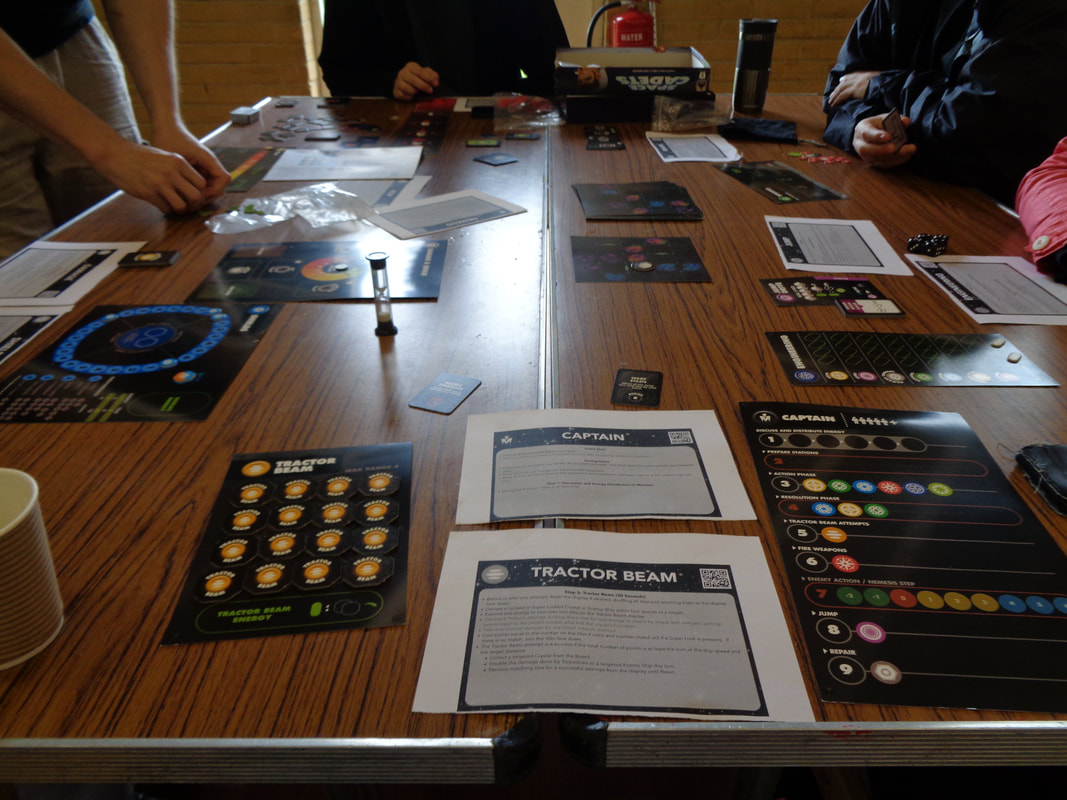
The first game of the first Wogglecon for me was Space Cadet.

I wish I hadn't made those Star Trek references in other games, because I could really do with one here!

Caveat: I'm not going to blog about Space Cadet in as much detail as other games, otherwise I'd be here all week!

Space Cadets is a 3-6 player co-operative game where players take on the roles of the bridge crew commanding a starship as they go on various missions.
There are 9 different stations on the bridge which must be manned, thus players will have 1-3 stations they will be responsible for, depending on the number of players.

What's in a game?
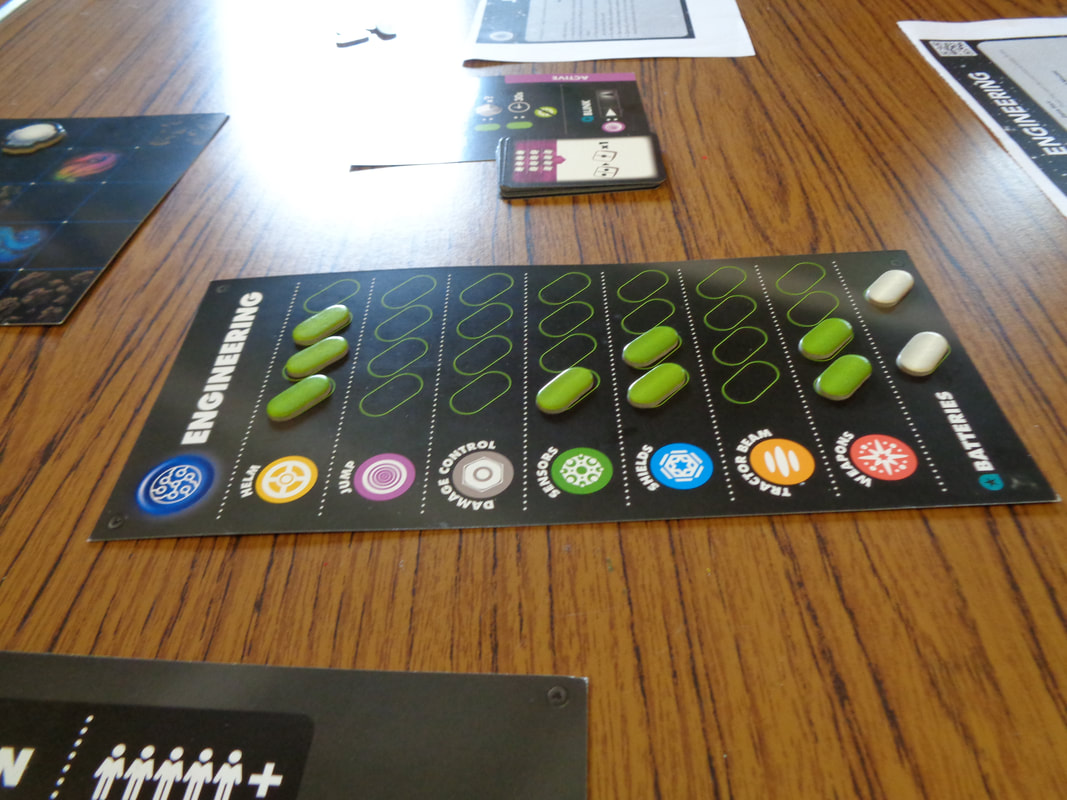
  • Stations: Each of the game's 9 stations is actually its own minigame and the player who is manning that station must play the relevant minigame in order to control the station. Each station has it's own board and tokens. The stations are:
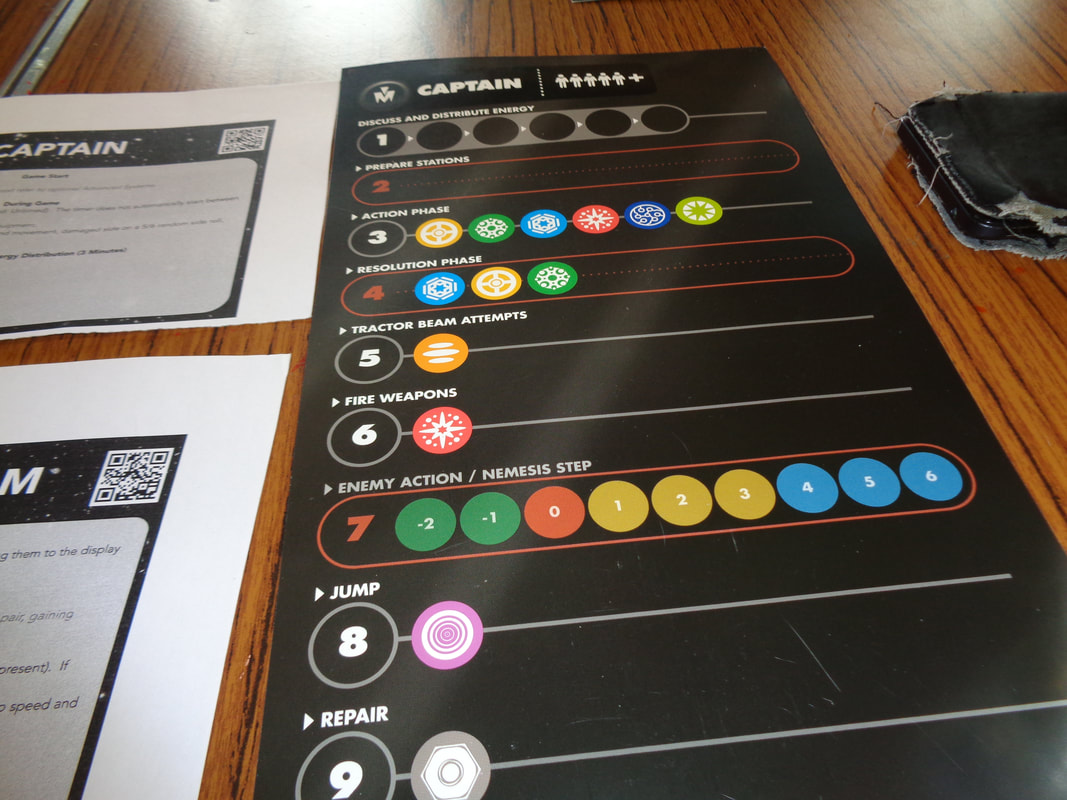
    Captain: The captain is in charge of the rounds general strategy and also timing.
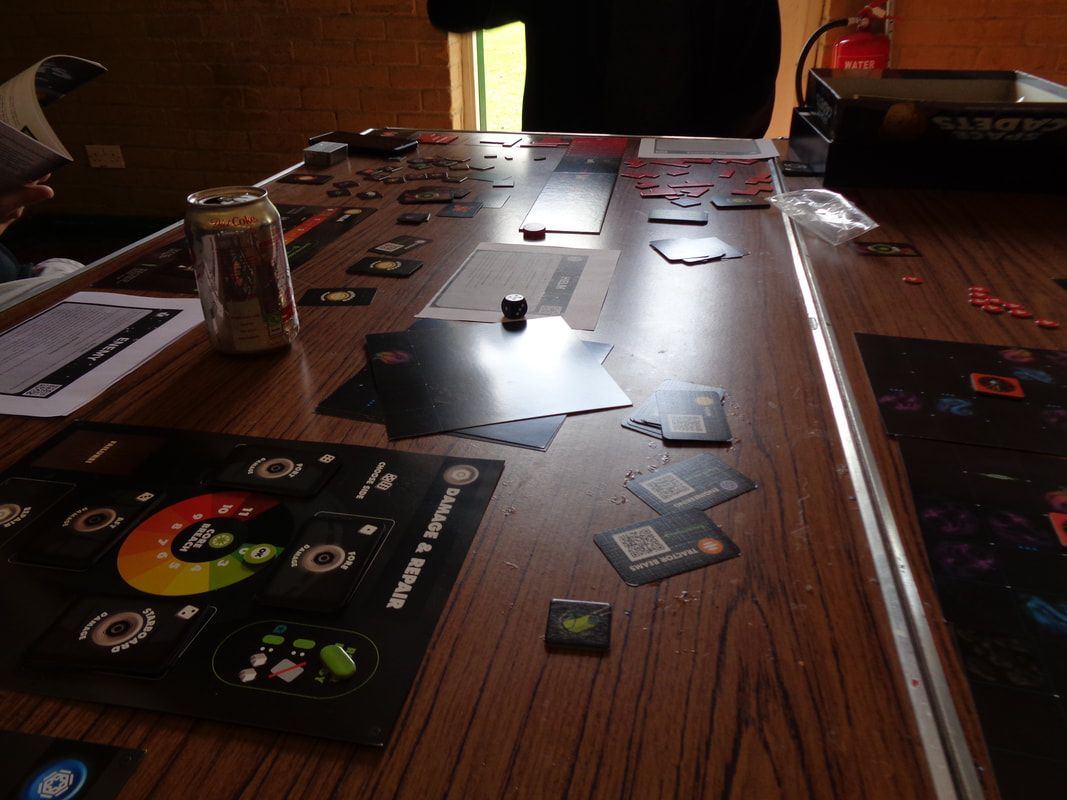
    Damage control: This station uses cards and dice to manage damage. When damage occurs, they draw cards and roll dice.
    If things get really bad, there's a risk of a core breach, then all players must play a sort of card matching minigame to prevent the starship exploding!
    Engineering: The engineer plays a symbol-matching, tile-laying minigame, each completed symbol generates energy for their relevant station.
    Helm: The helm minigame requires the playing of a programming movement game using a deck of cards. The more energy the helm gains, the more cards can be drawn.
    Jump drive: To use the jump drive, particularly at the end of them game, the player rolls dice and must get five-of-a-kind. The more energy they have, the more rerolls they get. During the game, they can roll dice to acquire cards to assist with the final roll.
    Sensors: To get sensor lock, the player draws cards from a deck. Each card contains the outline of a tetromino shape, the player then has to blindly draw the matching shape out of bag, although they are allowed to 'feel' for it. Successful results will result in sensor locks or even super locks!
    Shields: To power up shields, the player draws numbered and coloured tiles, then assigns them to one of the starship's 4 shields. The aim to power shields by getting poker hands - i.e. 2-of-a-kind, full house, straights etc. The more power assigned to this station, the more tiles the player draws. 
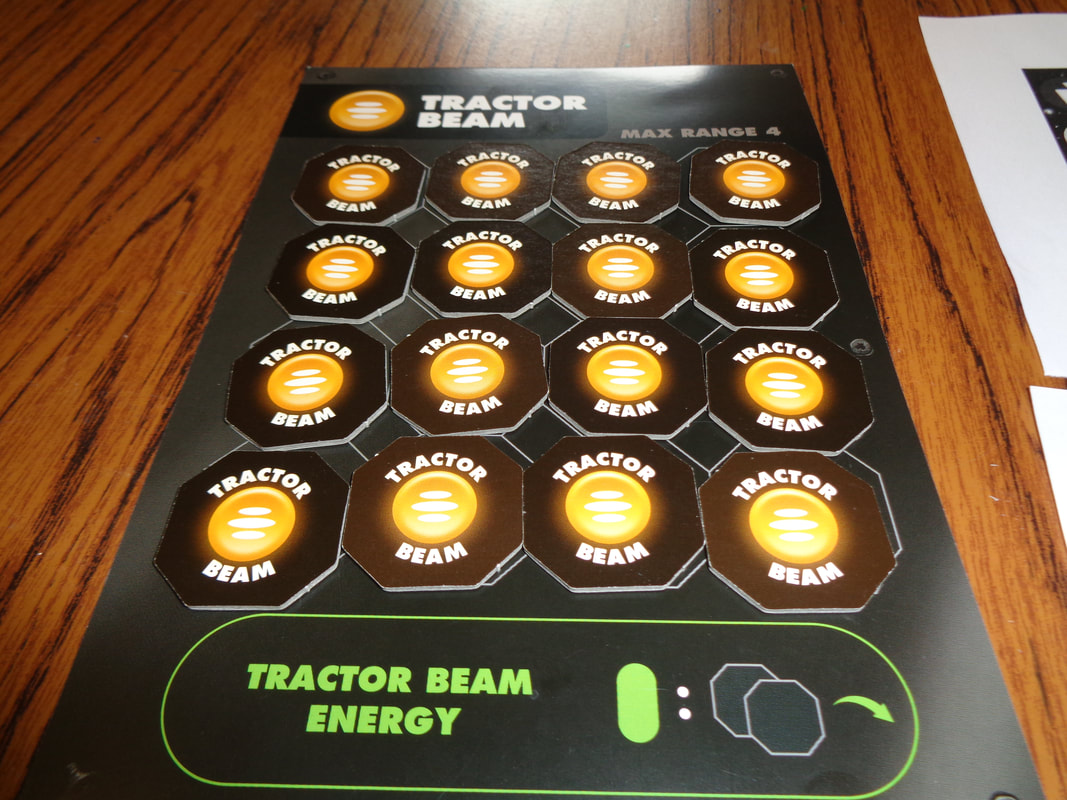
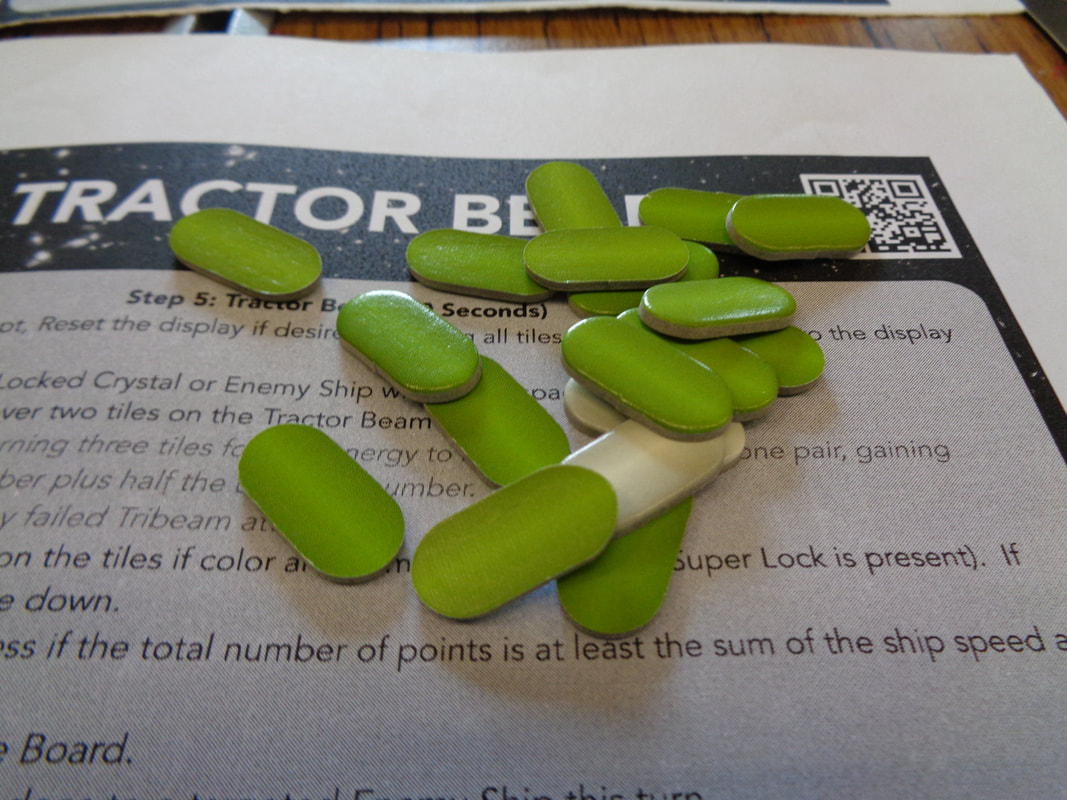
    Tractor beam: Using the tractor beam requires the player to play the classic game memory and turn over and match both shape and number, the higher the number, the further the range of the beam. More energy means turning over more tiles.
    Weapons: Whoever is in charge or weapons actually has two minigames to play, one to load torpedoes and one to fire.
    Loading: The player draws cards which have outlines on them, they try and fill the outline with tetrominos shapes.
    Fire: For each successfully loaded torpedo, the player then plays shove ha'penny, the further they get to the edge, the more damage the torpedo inflicts.
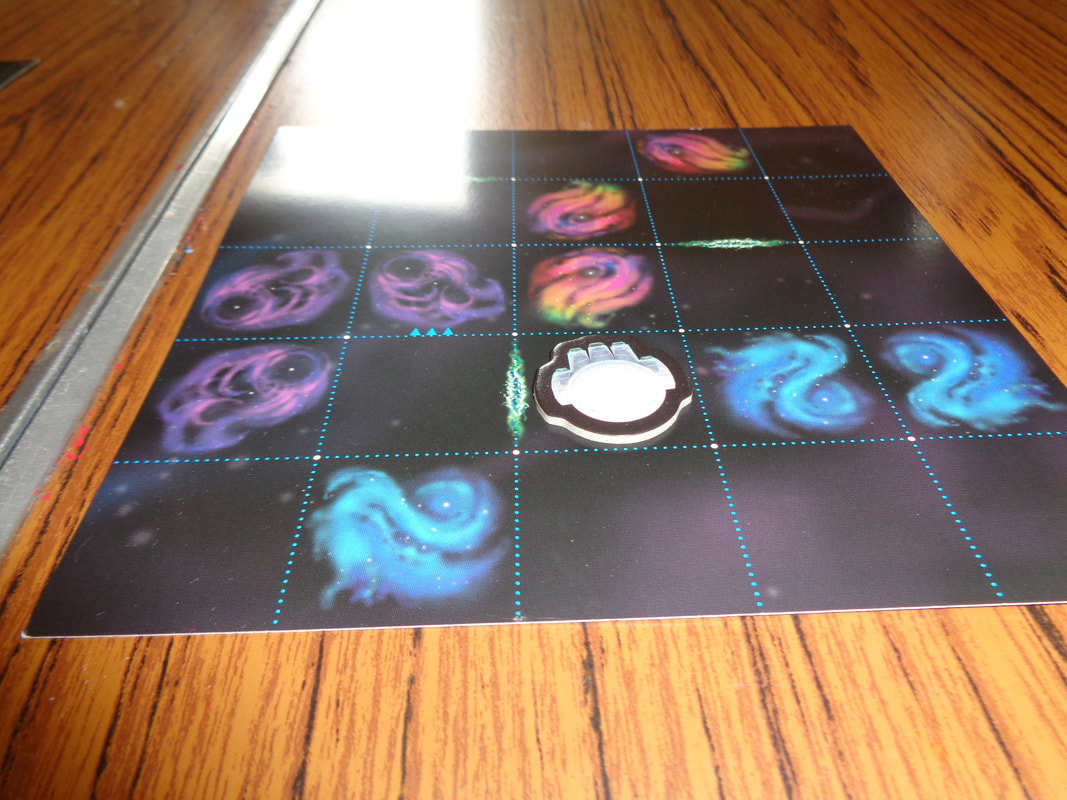
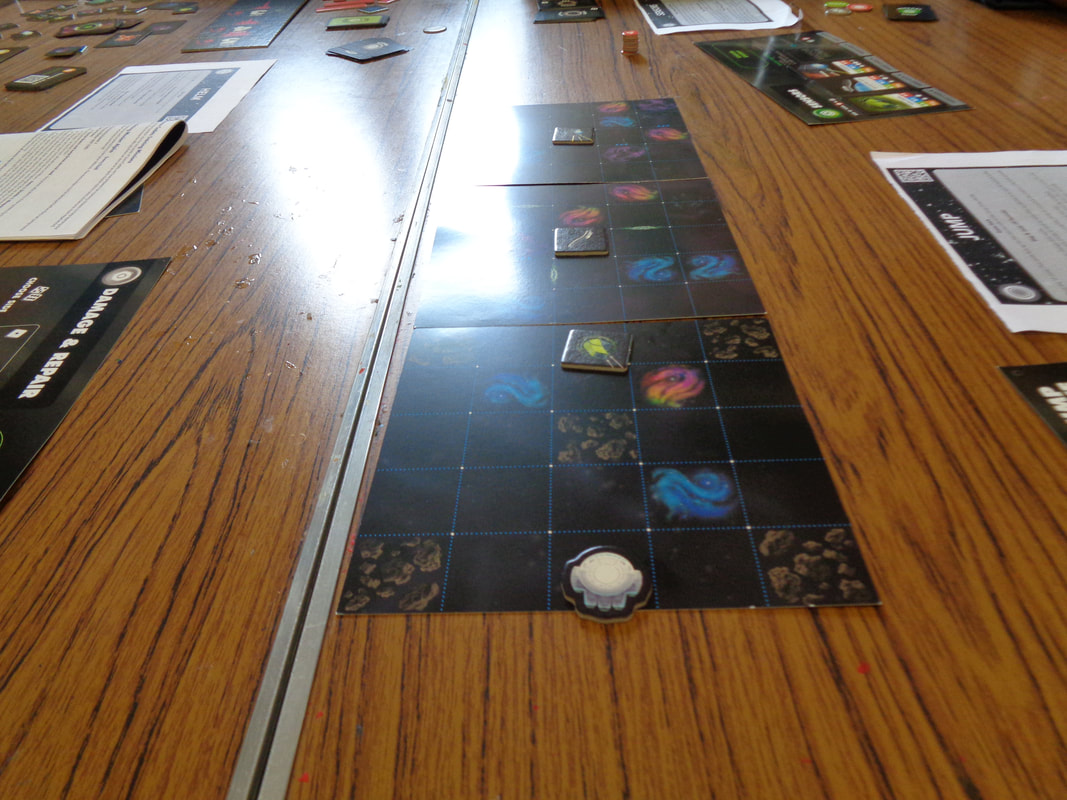
  • Map tiles: These 5x5 gridded tiles represent the quadrants of space the player's ship will have to navigate.
  • Tokens & cards: Space Cadets uses a variety of tokens and cards to represent enemy ships and their stats, damage, collectibles and so on.
Since Space Cadets employs 9 minigames just to manage what the players are doing, it uses a wide variety of components.
The smaller tiles and tokens are fairly sturdy, but the larger boards and tiles, particularly the map tiles feel quite thin and flimsy, and might prone to warping (Sic.), it's not a deal breaker though.
There's little art to speak off and it's mostly functional. The games iconography is clear and understandable.


How's it play?
At the start of the game, players will be given a mission with certain objectives to complete. They will spend rounds exploring quadrants of the galaxy by turning over map tiles, encountering obstacles that need navigating and enemies that need vanquishing in the pursuit of their mission.

Space Cadets is a real time game but that's not to say that all the players act at the same time. The game is broken down into 9 stages per round, although this has nothing to do with the number of stations in the game. The stages are as follows.
  • Discussion & energy distribution: The players discuss their strategy for this round, what their priorities are and so on, then the engineer gives out energy tokens to players of the stations as per the need. This stage lasts 3 minutes
  • Preparation: Players prepare their stations, often by assigning the energy tokens given to them, this may involve some setup.
  • Action: This stage lasts 30 seconds and the following stations become active.
    Engineering: The player generates energy to be used in the following round.
    Helm: This player programs movement for the round.
    Sensors: Scans for enemies and generates target locks.
    Shields: This player powers up the starship's shields.
    Weapons: This player loads torpedo's, they don't fire them yet though.
    Core breach: Not an action, but if the ship is at risk of core breach, this is when the players try to prevent it.
  • Resolution: Once the 30 seconds from the previous round are up, then all the players that acted can resolve the effects of their minigames.
  • Tractor beam: The player at this station has 30 seconds to use the tractor beam to pull in items as per mission requirements. Even if there's isn't something to tractor, the player can try to learn which tiles are which. 
  • Weapons fire: Now whoever's at the weapons station can play shove ha'penny for 30 seconds to unleash torpedoes. Sensor locks add bonuses to shooting.
  • Enemy action: Yep, now the enemies get to go. There is a deck of cards that determine enemy ship strength but basically; enemy ships attempt to get lock the player's ship, move closer and attempt to destroy the player's ship. This is done with dice
  • Jump drive: Whoever is in charge of the jump drive has 30 seconds to activate it. Doing so will jump the player's ship off the game map and end the mission for better or worse.
  • Repair: Whoever is in charge of damage control has 30 seconds to enact repairs from damage inflicted during the enemy action.
That's a very quick overview of how a turn works.
The game also includes a countdown mechanic in the form of a nemesis ship, which after a certain time will appear and hound the players. The nemesis ship cannot be destroyed. 

Endgame
Players continue on their mission until they collectively complete or fail their objectives, additionally, their starship may explode, which as you may imagine can be considered a loss.


Overall
Space Cadets is without a doubt a hugely ambitious co-operative game. It works hard to evoke the spirit of the TV shows it attempts to simulate.
During play, there were moments when the players were naturally talking about how they needed energy diverted to their station, or how they'd achieved lock on an enemy ship or torpedoes were loaded. It sounded like a sci-fi TV show. This was pretty awesome.

Players will collectively need to identify and prioritize dangers as well as balance managing these risks with working towards their goals. They'll need to decide which stations need energy the most, it's very hard to power up all systems at the same time and of course, they'll need to play their minigames and all of this needs to be done in real time!
It's also something of a peculiar experience, since most players will be concentrating on their own minigames, they won't spend much time paying attention to what other players are doing - even though a lot of the game's mechanics are interlinked. There's a lot of clever gameplay going here.

Having said that; I can't really recommend Space Cadets to casual players or the casual group. While the individual games are not complex, there are 9 of them! Taking 2 minutes to explain each game takes 18 minutes add a minute of of questions for each game and that's now 27 minutes, add in explaining how the enemy ships work and setting up and you're looking at close to 45 minutes of setup, maybe more!

However, if you've got a group of dedicated players who are all willing to commit to learning the game and playing it on regular basis, then Space Cadets will probably be a great experience.
0 Comments

Wogglecon

12/9/2021

0 Comments

 
11th September 2021

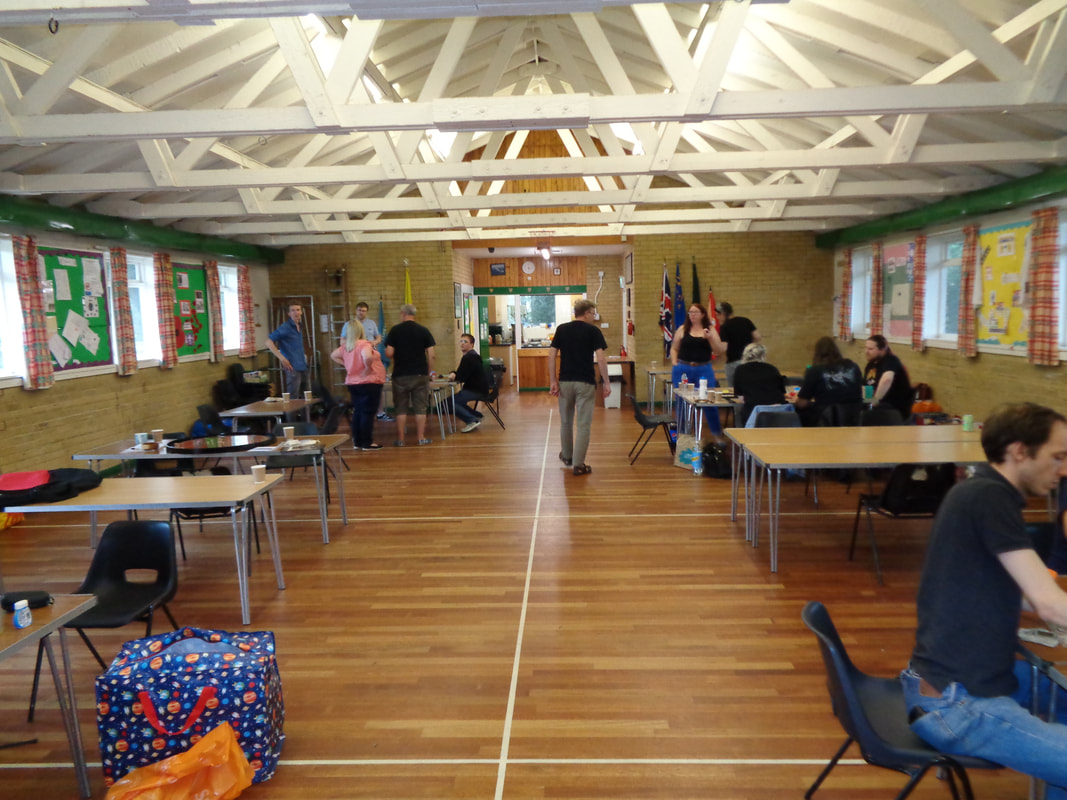
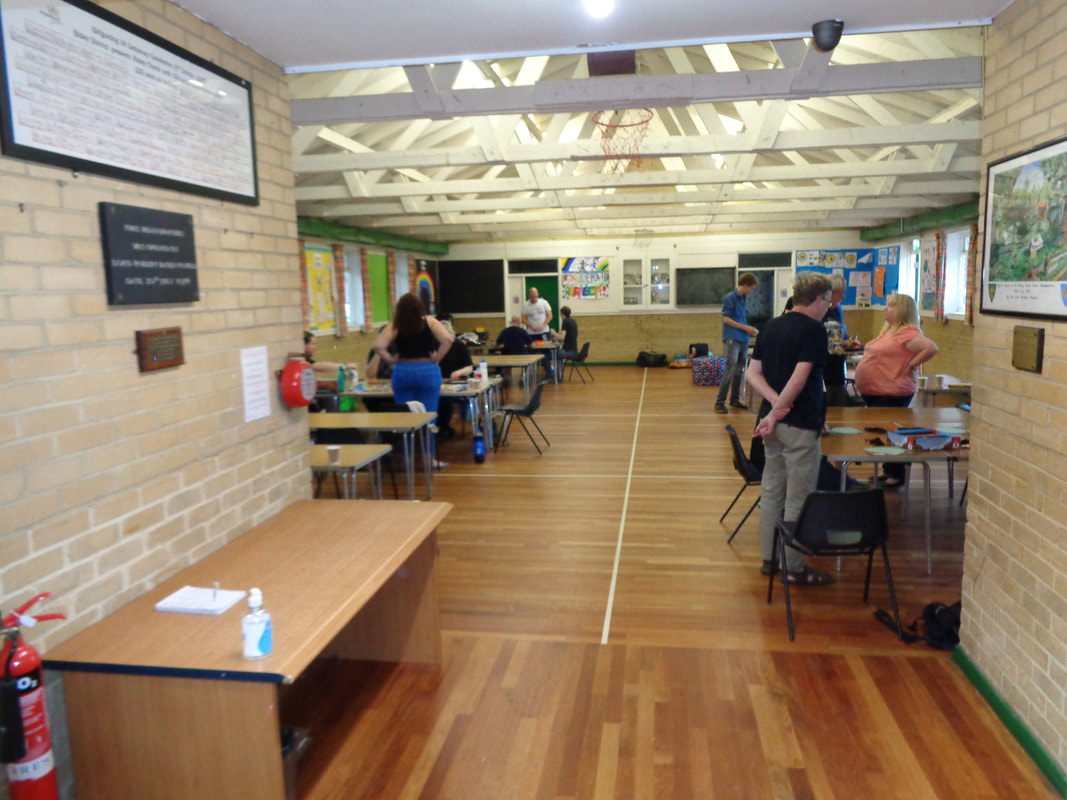
It's a Saturday morning and the inaugural day of Wogglecon. A small gaming con organised by David from Woking Gaming Club​.
Members gathered at the scout hall in Bisley for a day of gaming and socialising.


Games I played were:
Space Cadets
Just One

Betrayal at the House on the Hill
Letter Jam
​

If you're wondering what a woggle is, find out here!
0 Comments
<<Previous
Forward>>

    Author

    I play, I paint.
    ​This is where I talk about what I play.

    RSS Feed

    Categories

    All
    2 Player Only
    50 Fathoms
    Abstract
    Action/Role Selection
    Annual Quiz
    Area Control
    Asymmetrical Play
    Auctioning
    Bidding/gambling
    Black Hack
    Bluffing
    Board Game
    Campaign Play
    Card Game
    Clockwork & Chivalry
    Collect And Deliver
    Cooperative
    Cthulhu Hack
    Deck/Bag Builder
    Deduction
    Dice Game
    Drafting
    Engine Builder
    Hand Management
    Hidden Movement
    Hidden Role
    In Darkest Warrens
    Legacy
    Memory
    Merry Outlaws
    One Vs Many
    Oubliette
    Party Game
    Programming
    Push Your Luck
    Real Time
    Renaissance
    Resource Management
    Roll And Move
    Roll And Write
    Route Builder
    RPG
    Sand Box
    Savage Worlds
    Set Collecting
    Storytelling
    Tableau Builder
    Team Based
    The Month In Gaming
    The Year In Gaming
    Tile Placement
    Trading
    Traitor
    Trick Taking
    Voting
    Wargame
    Wasted Hack
    WFRP
    Wogglecon
    Word Game
    Worker Placement

    Archives

    February 2026
    March 2025
    March 2024
    September 2023
    August 2023
    July 2023
    June 2023
    May 2023
    April 2023
    March 2023
    February 2023
    January 2023
    December 2022
    November 2022
    October 2022
    September 2022
    August 2022
    July 2022
    June 2022
    May 2022
    April 2022
    March 2022
    February 2022
    January 2022
    December 2021
    November 2021
    October 2021
    September 2021
    August 2021
    July 2021
    June 2021
    May 2021
    April 2021
    March 2021
    February 2021
    January 2021
    December 2020
    November 2020
    October 2020
    September 2020
    August 2020
    July 2020
    June 2020
    May 2020
    April 2020
    March 2020
    February 2020
    January 2020
    December 2019
    November 2019
    October 2019
    September 2019
    August 2019
    July 2019
    June 2019
    May 2019
    April 2019
    March 2019
    February 2019
    January 2019

Powered by Create your own unique website with customizable templates.
  • Home
  • Special Effect
    • Special Effect
    • The Final Return of The Indiana Jones Charity Globe Trot
    • The Warlock of Firetop Mountain Challenge
    • Return of The Indiana Jones Charity Globe Trot
    • Bard's Tale Challenge
    • Fighting Fantasy Challenge
    • The Indiana Jones Charity Globe Trot
    • Mirkwood Charity Walk
    • Middle-earth Charity Walk
    • Dungeon Daze
  • RPGs
    • D&D BECMI
    • The One Ring
    • The Evils of Illmire
    • Beach Patrol
    • The Surrendered Lands
  • Game Blogs
    • RPG Blog
    • Gaming Blog
  • Painting Blog
  • Contact