3 Spellcasters and a Dwarf
  • Home
  • Special Effect
    • Special Effect
    • The Final Return of The Indiana Jones Charity Globe Trot
    • The Warlock of Firetop Mountain Challenge
    • Return of The Indiana Jones Charity Globe Trot
    • Bard's Tale Challenge
    • Fighting Fantasy Challenge
    • The Indiana Jones Charity Globe Trot
    • Mirkwood Charity Walk
    • Middle-earth Charity Walk
    • Dungeon Daze
  • RPGs
    • The One Ring
    • The Evils of Illmire
    • Beach Patrol
    • The Surrendered Lands
  • Game Blogs
    • RPG Blog
    • Gaming Blog
  • Painting Blog
  • Contact

Gaming Blog

Isle of Cats - First Play!

10/6/2022

0 Comments

 
9th June 2022

We're in Aldershot for an evening of board gaming fun.

So; in Isle of Cats, some evil bad guy is heading to the titular island (Which as the name might suggest, is filled with the felines.) to kill al the cats!!!
Players have a limited number of rounds to save as many as possible.

What's in a game?
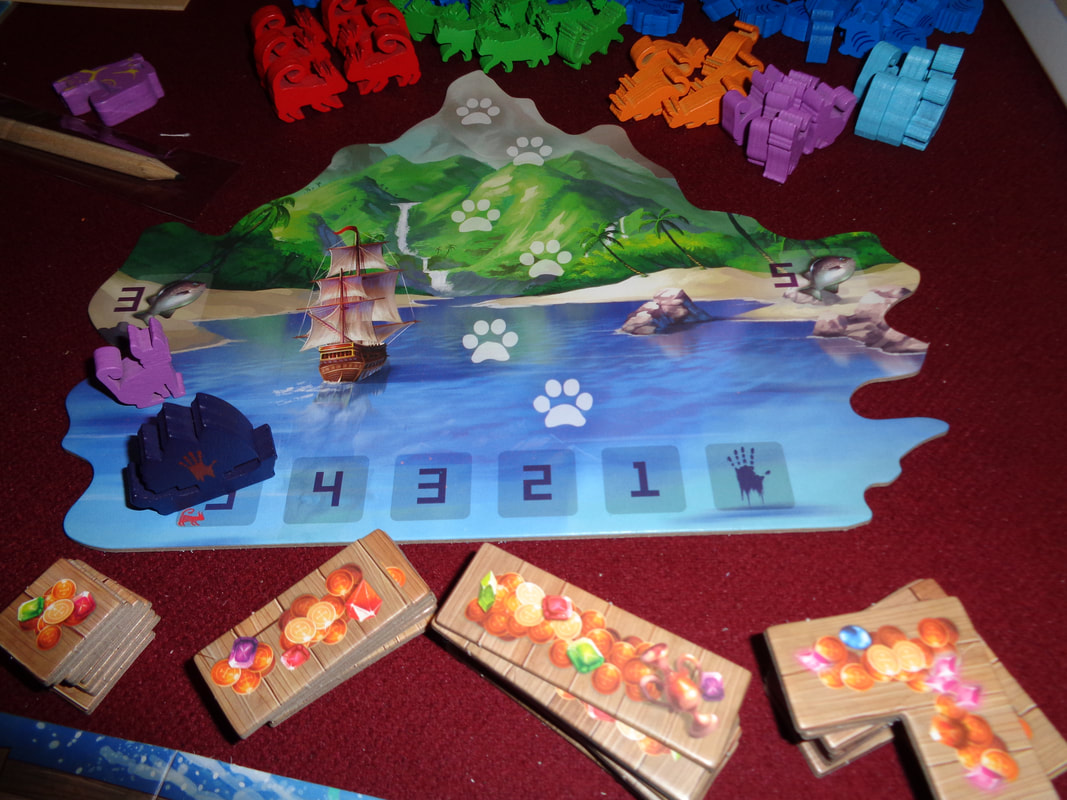
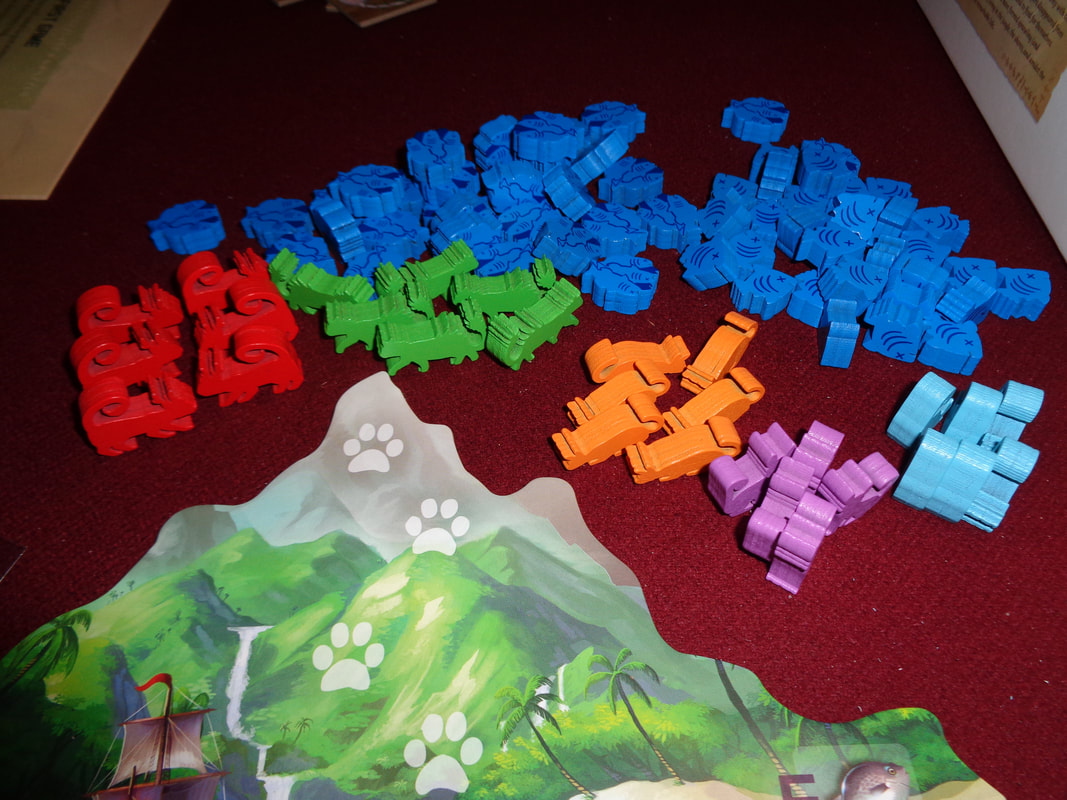
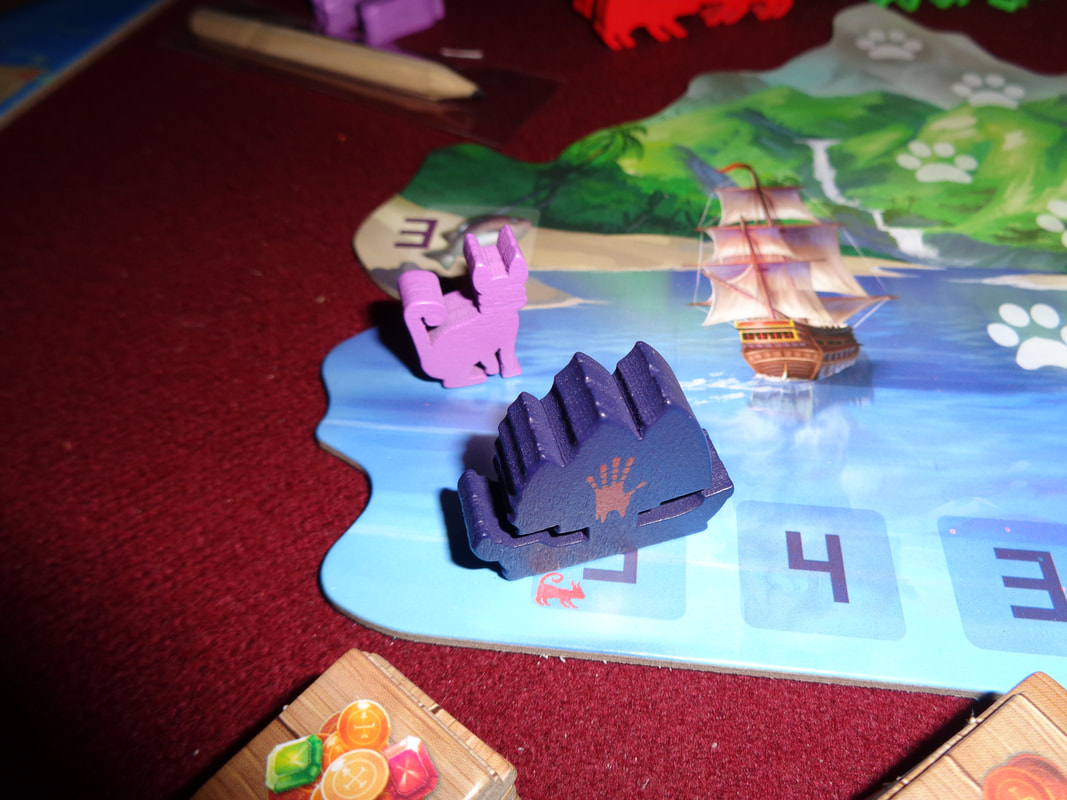
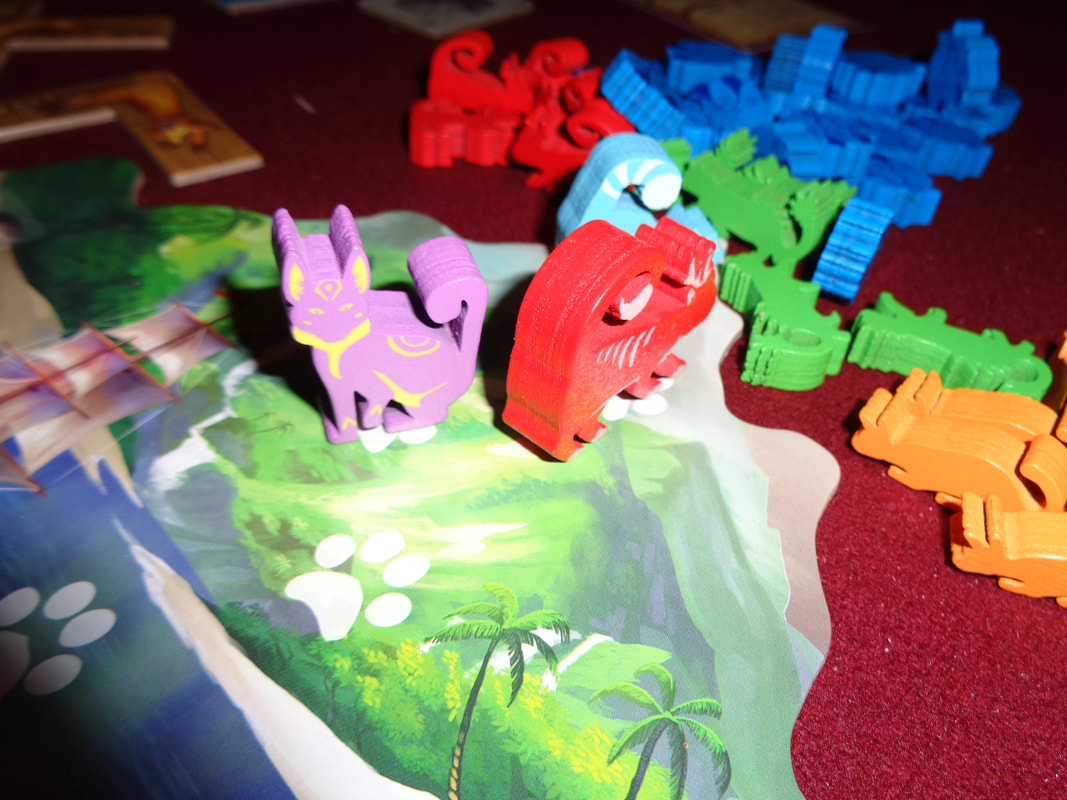
  • Island board: A idyllic beach scene leading a mountain is depicted on this board.
    There's a track for turn count and and a paw track (SIC) for player order.
    The island board has a '3' on the left side and a '5' on the right. These represent the game's left and right 'fields'. More on fields below.
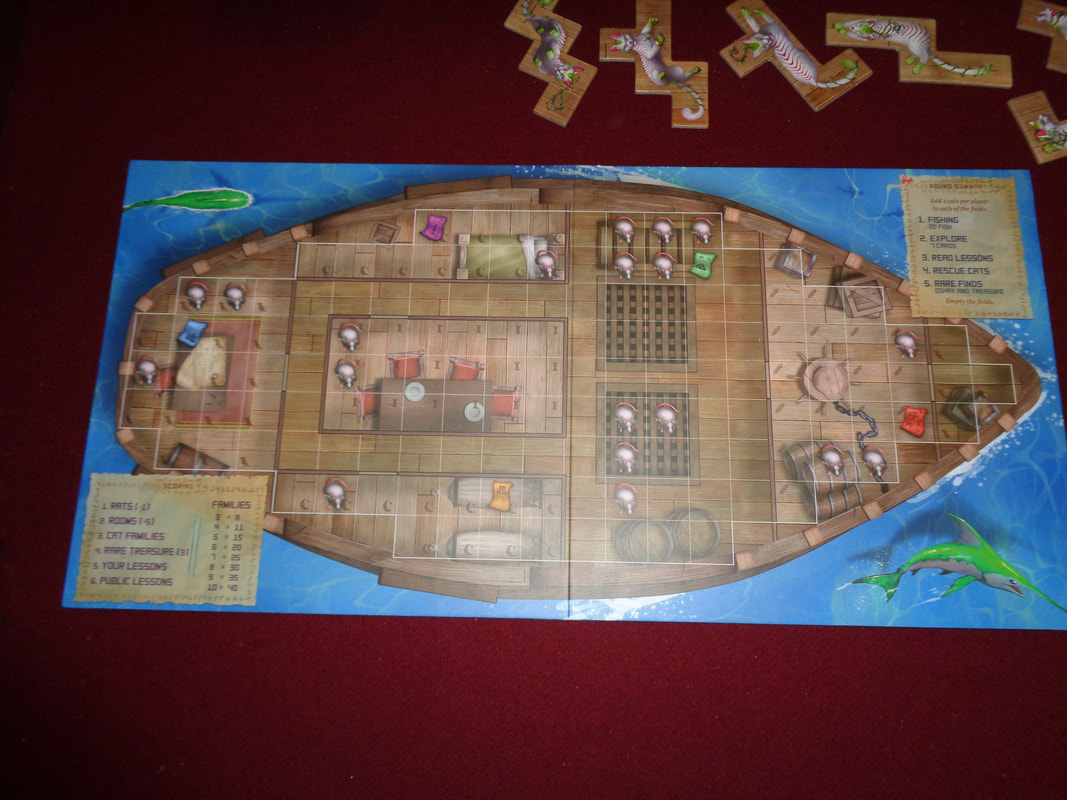
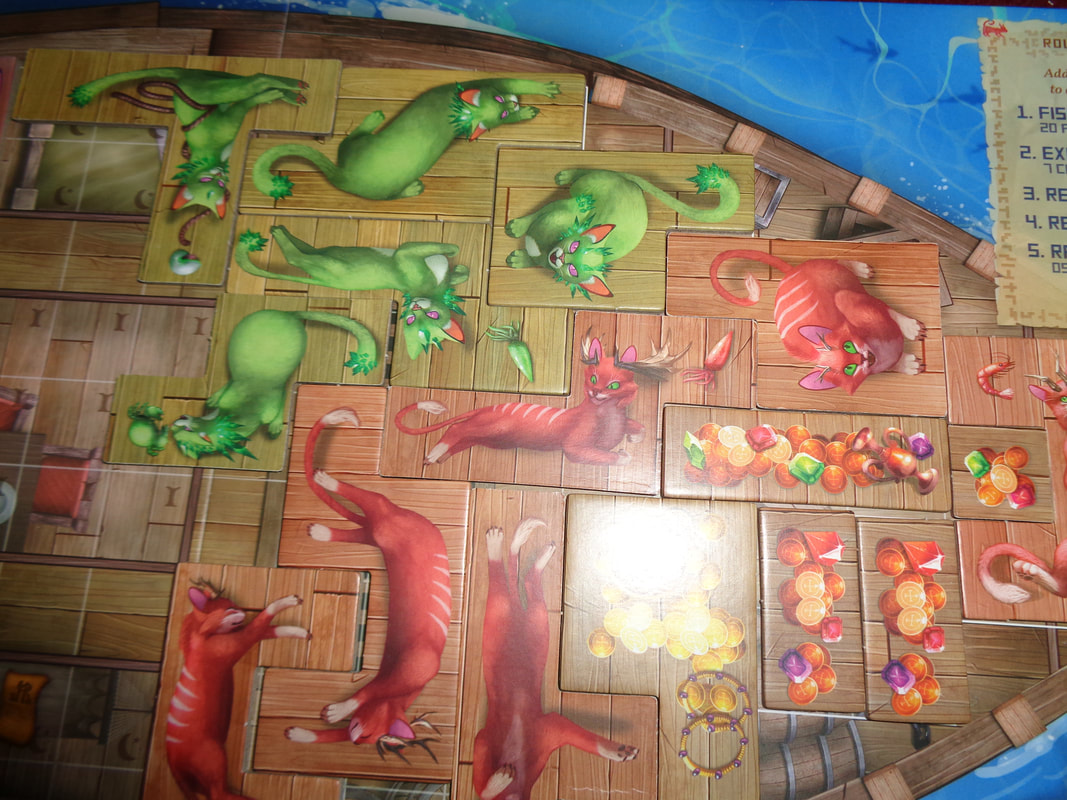
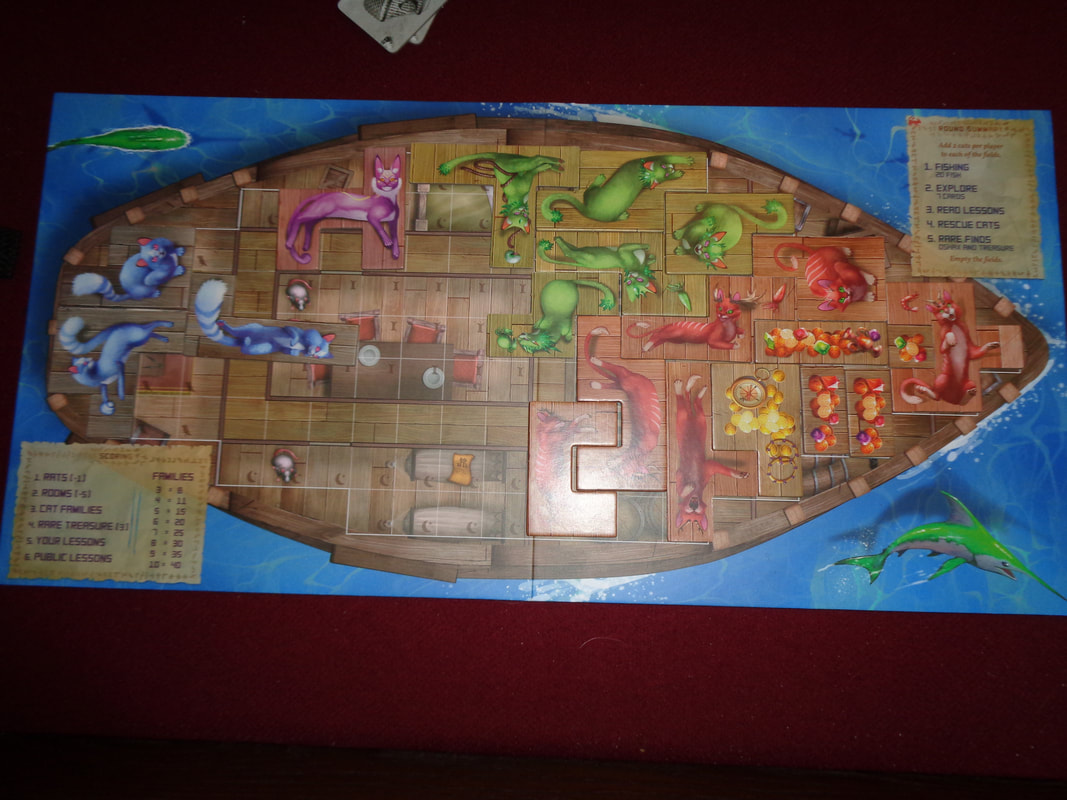
  • Player boards: Each player board is fashioned to look like a boat (The boat you'll be using to rescue cats.) which has several rooms, which are all marked out with a grid and some small icons, there are also icons for rats and treasure maps - there's got to be treasure maps - right? It is a boat after all!
    Each board is also double-sided and the other side features a more family-friendly layout.
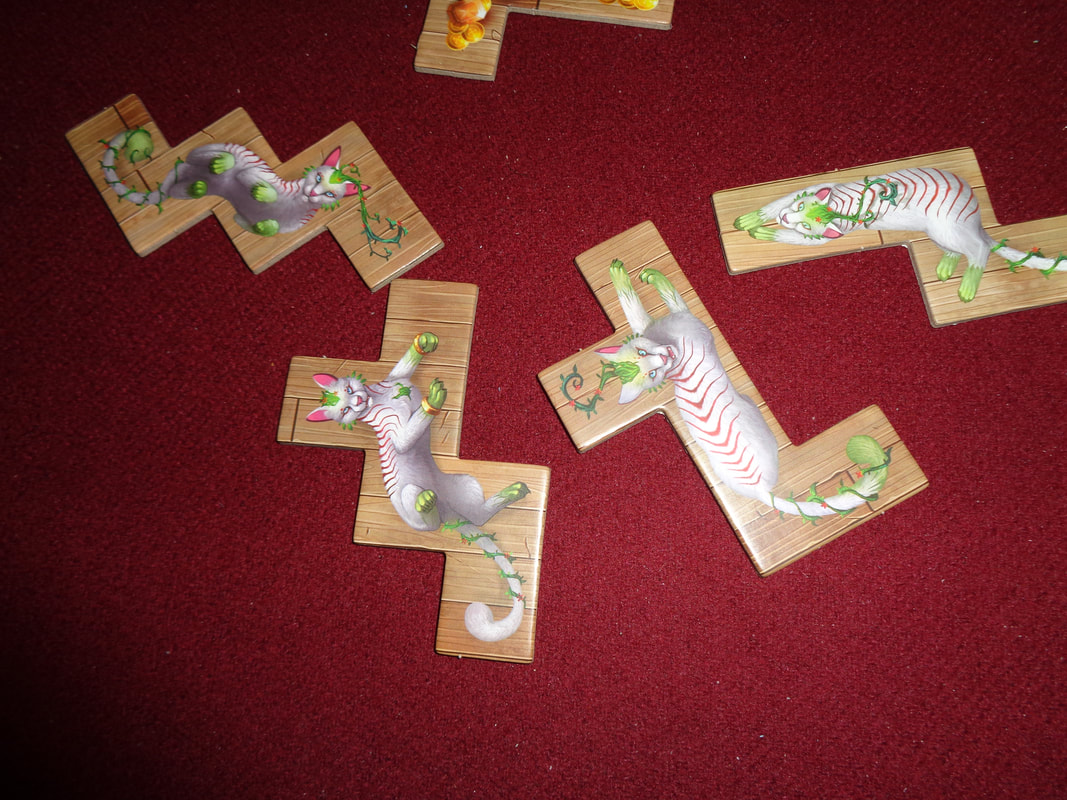
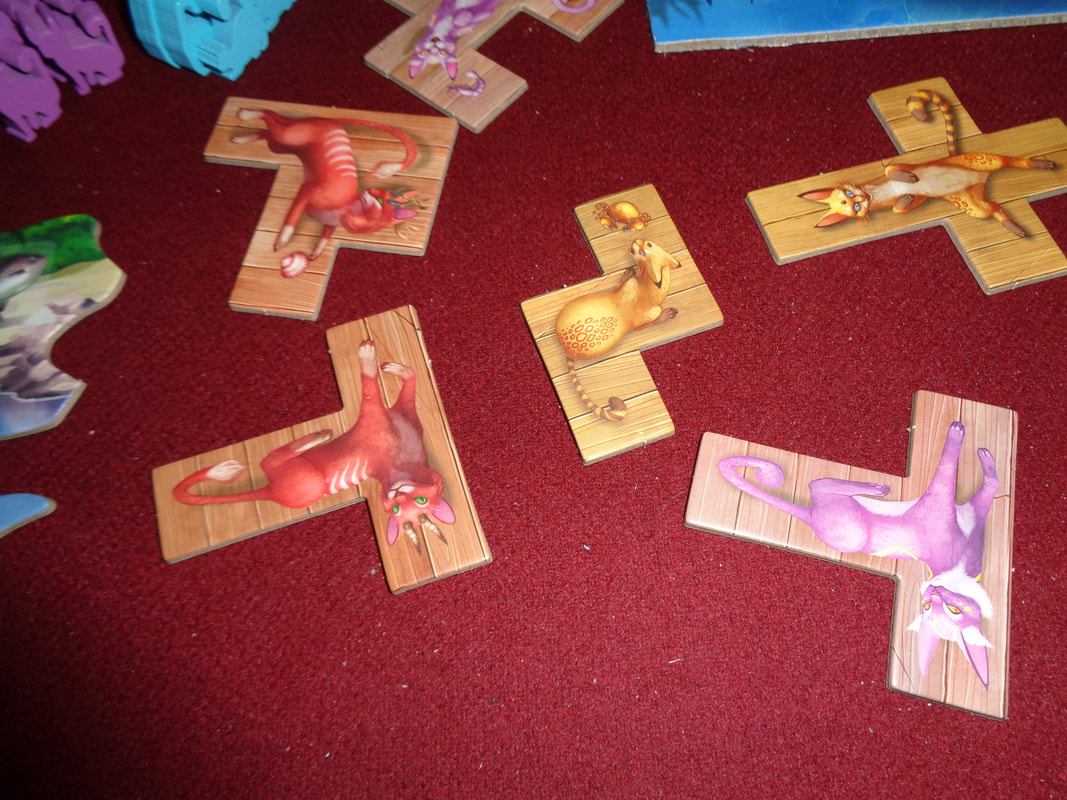
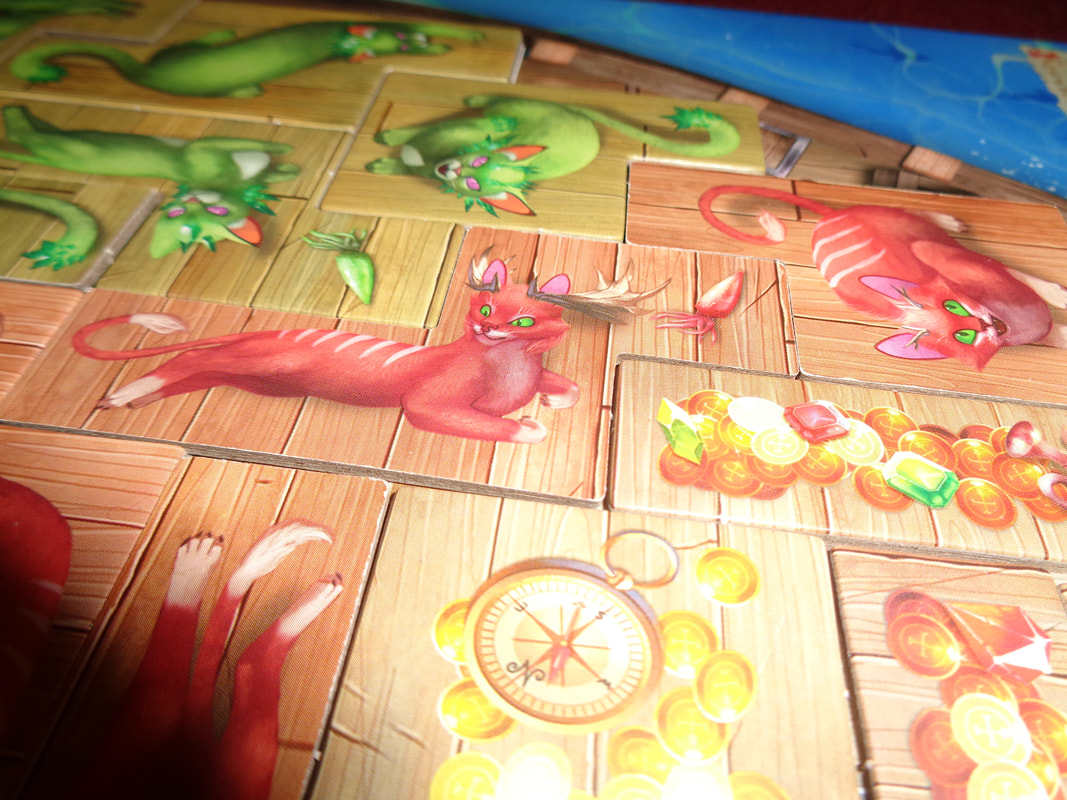
  • Tetrominos: Isle of Cats makes use of numerous different types of sort of 'not-quite' tetromino shaped tiles.
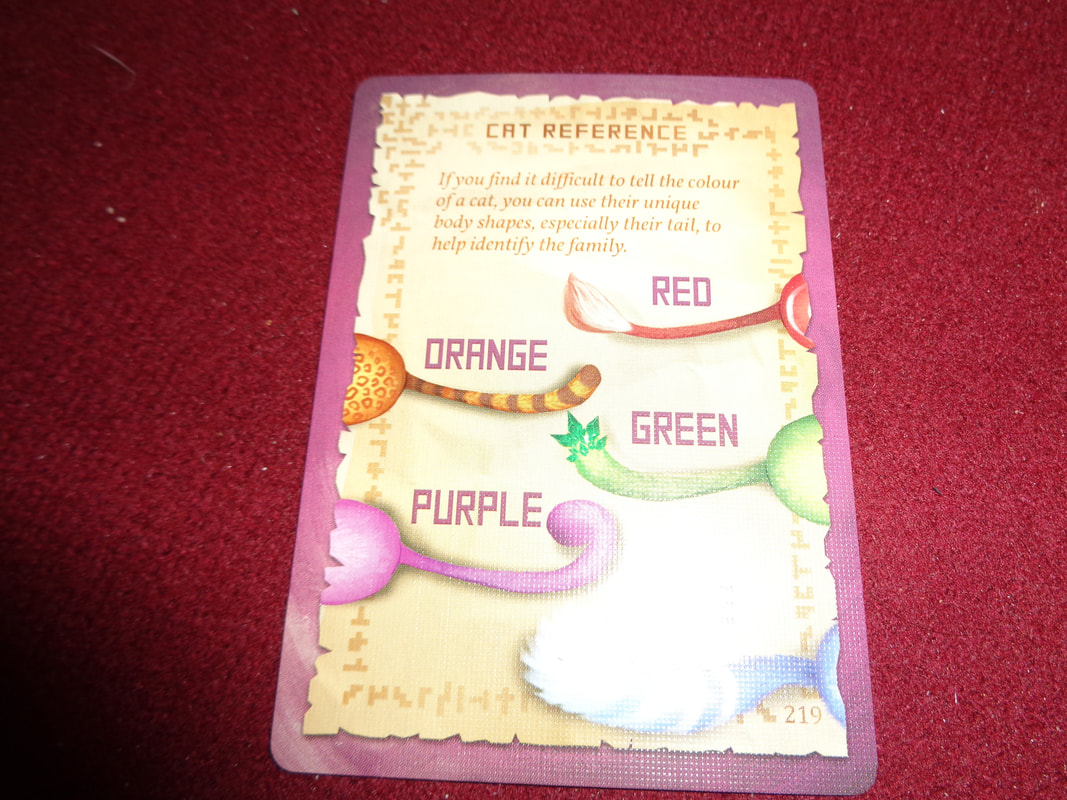
    • Cats: There are 5 breeds or types (Colours.) of cats shown on the tiles. As well as having a different colours, they also have distinctive tales.
    • Oshax: They are the 6th breed of cat found in Isle of Cats and have special rules that apply to them.
    • Common treasures: There are 4 types of 'common' treasure, the art on the tile show the treasures as having a reddish hue.
    • Rare treasures: If there's common treasures, stands to reason there's got to be rare treasures too! Artwork for these depict them with a yellowish colour.
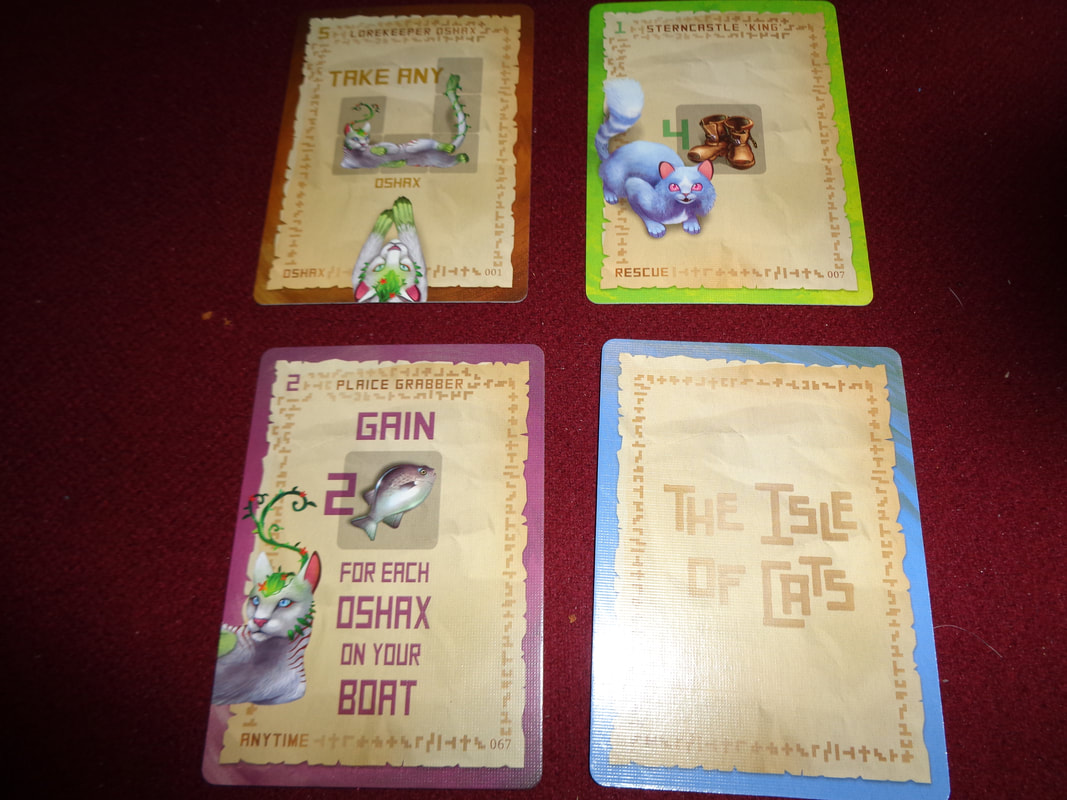
  • Cards: There are a 150 cards in 5 types of cards in Isle of Cats that have different functions and which are delineated by colour. Most cards have a cost which is displayed in the top left corner.
    Collectively they are known as 'discovery' cards.
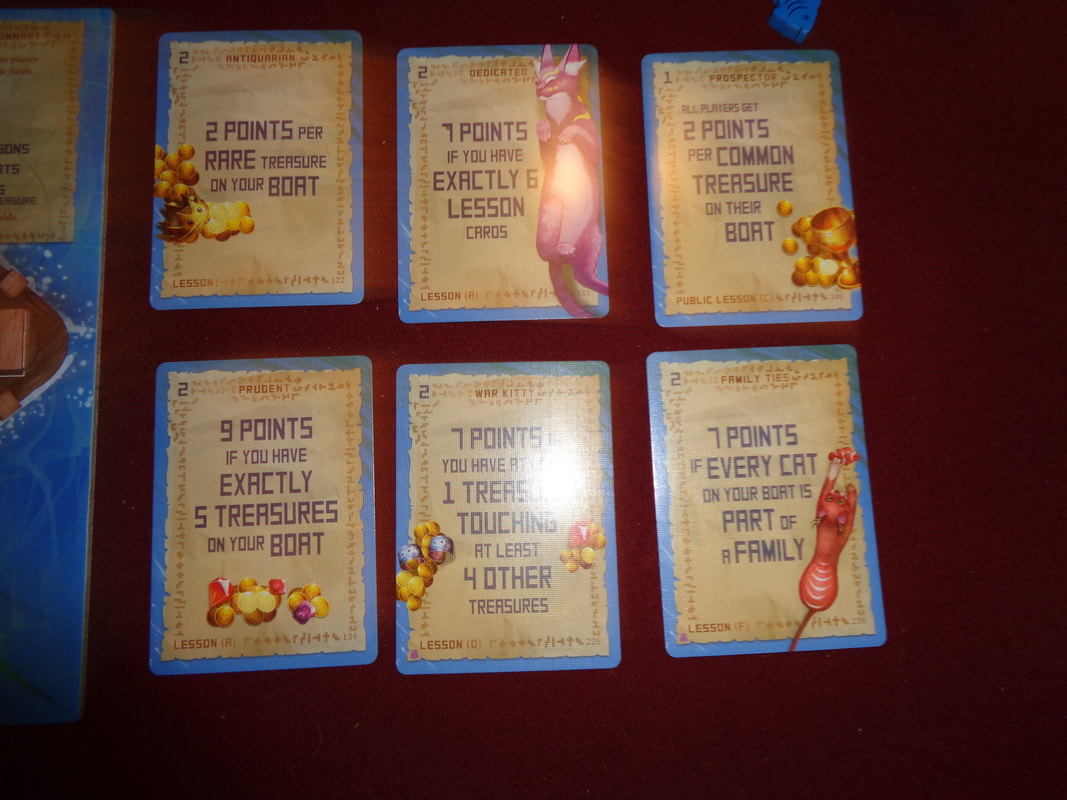
    • Lesson cards: The blue cards are lesson cards, what do people learn from lesson cards? How to earn points obviously.
      Essentially, these are objective cards that earn players additional points.
      There normal and public lessons, the main difference being that all players can benefit from a public lesson card.
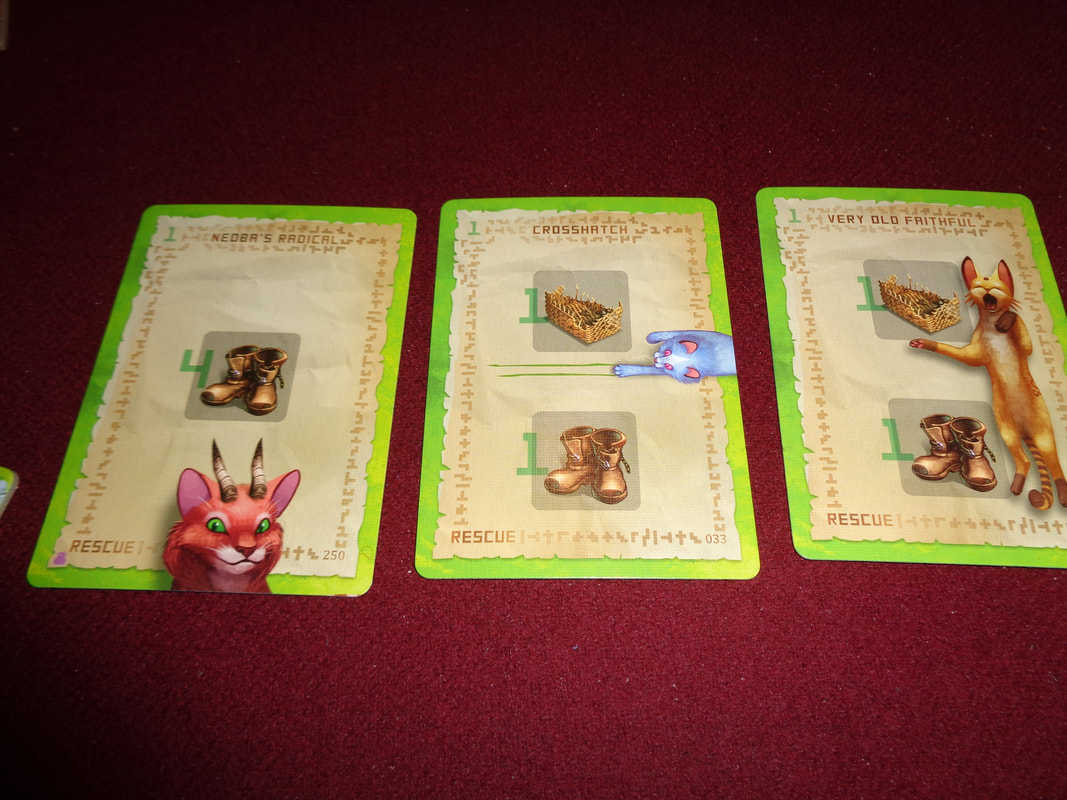
    • Rescue cards: These are green cards and they may depict a number of 'boots' and/or baskets/broken baskets. As the name suggests, these cards are used to rescue cats.
      Boots determine turn order for the round and baskets determine how many cats can be rescued.
    • Oshax cards: These brown cards are used to acquire oshax tiles.
    • Treasure cards: These are yellow and allow the player to... you guessed it, acquire treasure tiles, common or rare.
    • Anytime cards: As the name suggests, these cards can be played at anytime during the any of the phases. Anytime cards are purple and tend to give players bonuses which might be an extra permanent basket or some fish, etc.
  • Tokens: Isle of Cats also makes use of several types of token.
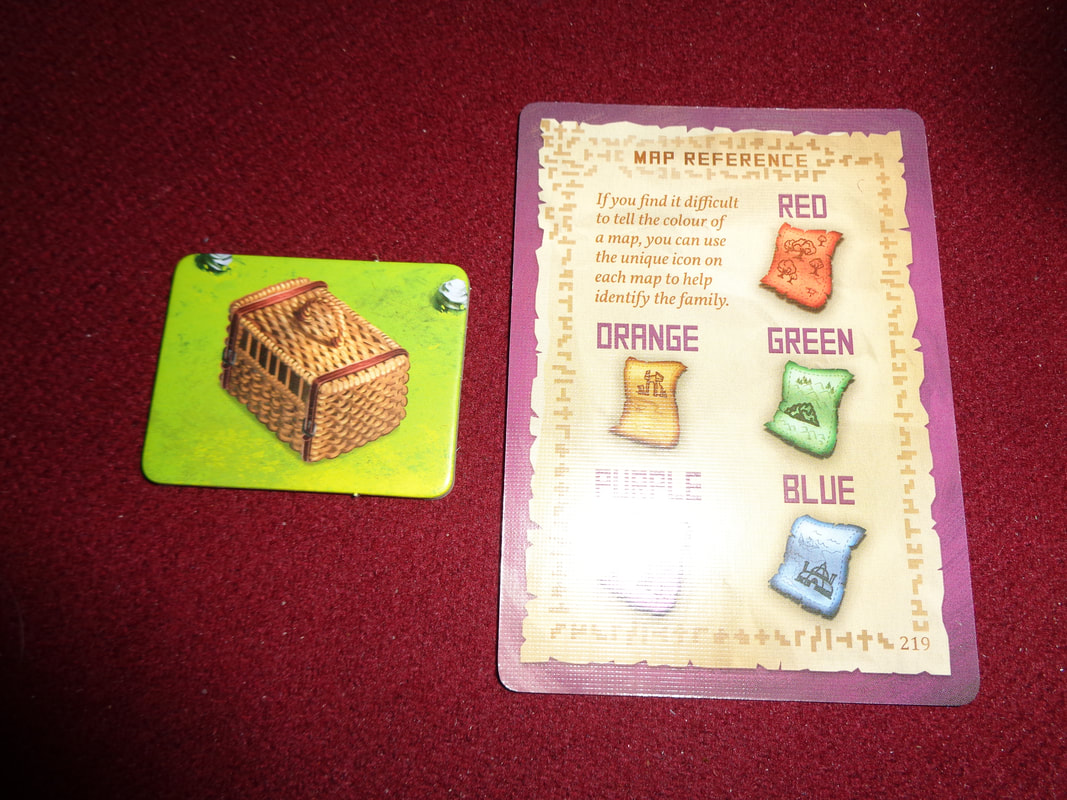
    • Basket tokens: These tokens are used to represent 'permanent' baskets that players have acquired, they're also double sided. Both sides feature a illustration of a basket but one side is greyed out, meaning the basket has been 'used' for the round.
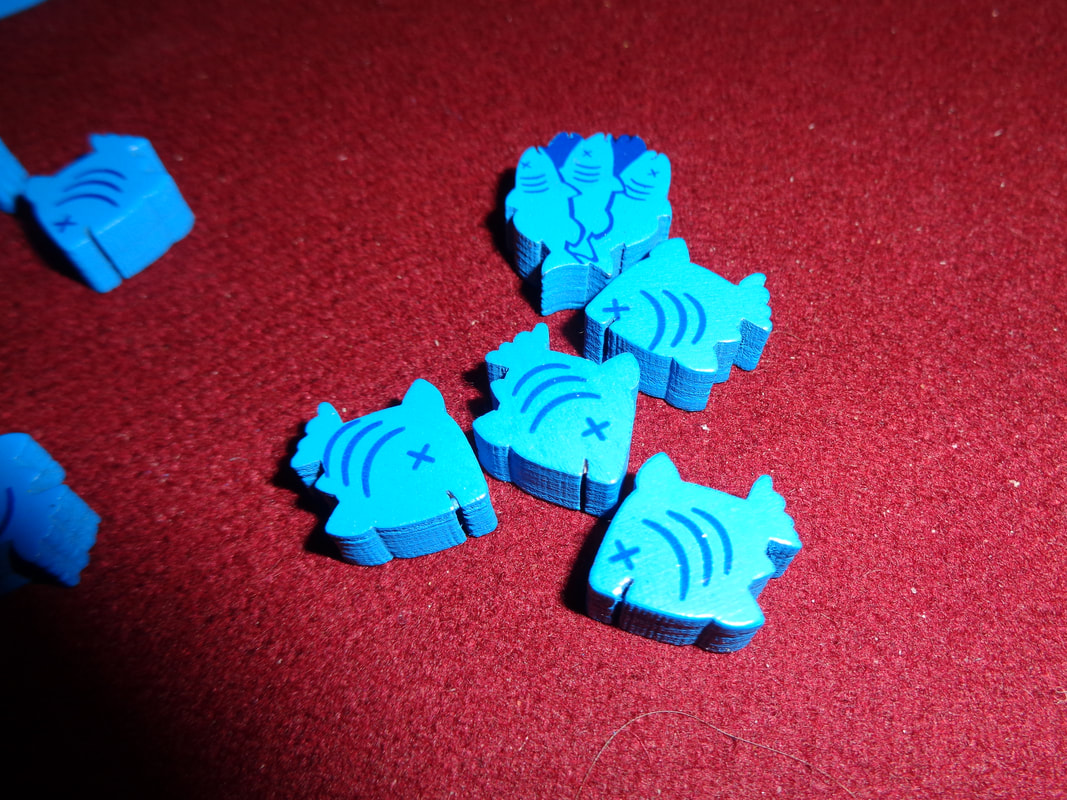
    • Fish tokens: These blue wooded fish shaped tokens come in a 1-fish and 5-fish denomination. Fish is the game's currency.
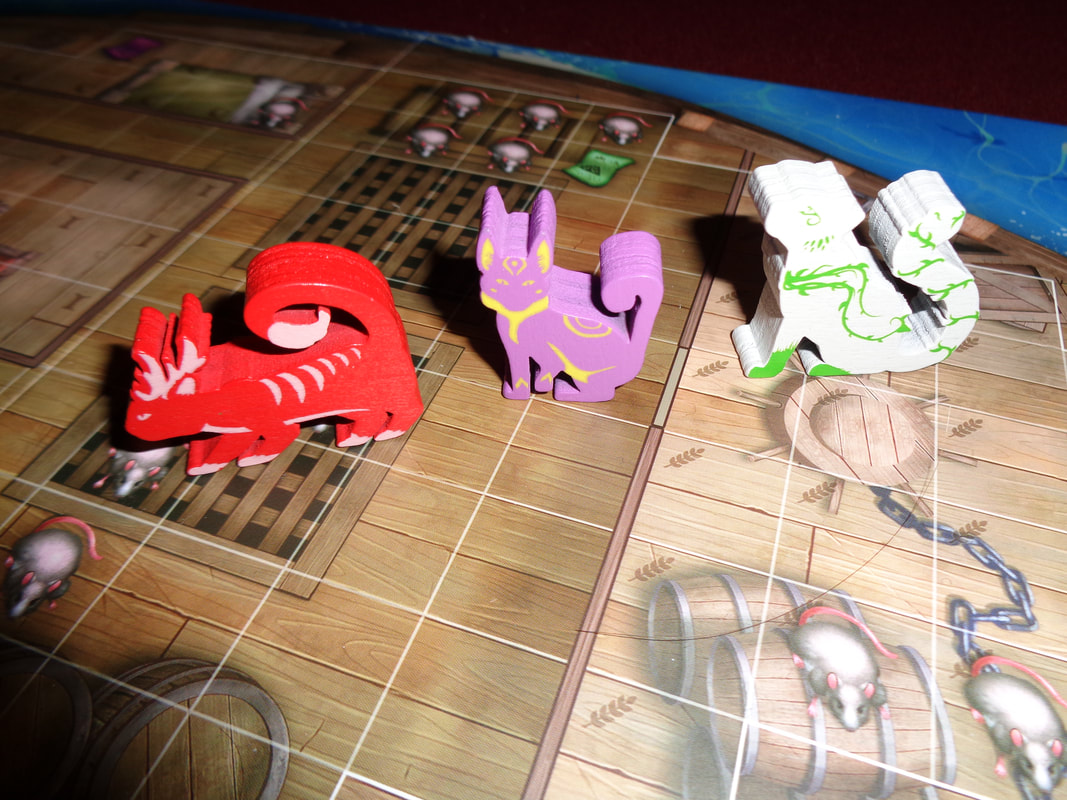
    • Cat tokens: There coloured wooden meeples for each of the game's 5 breed's of cat. Players don't actually gain or use cat meeples in the game but they are used when a specific colour must be displayed to players.
    • Black ship: This wooden token depicts the ominous black ship of Vesh, the evil bad guy coming to the Isle of Cats.
  • Bag: Used to blindly draw tiles.
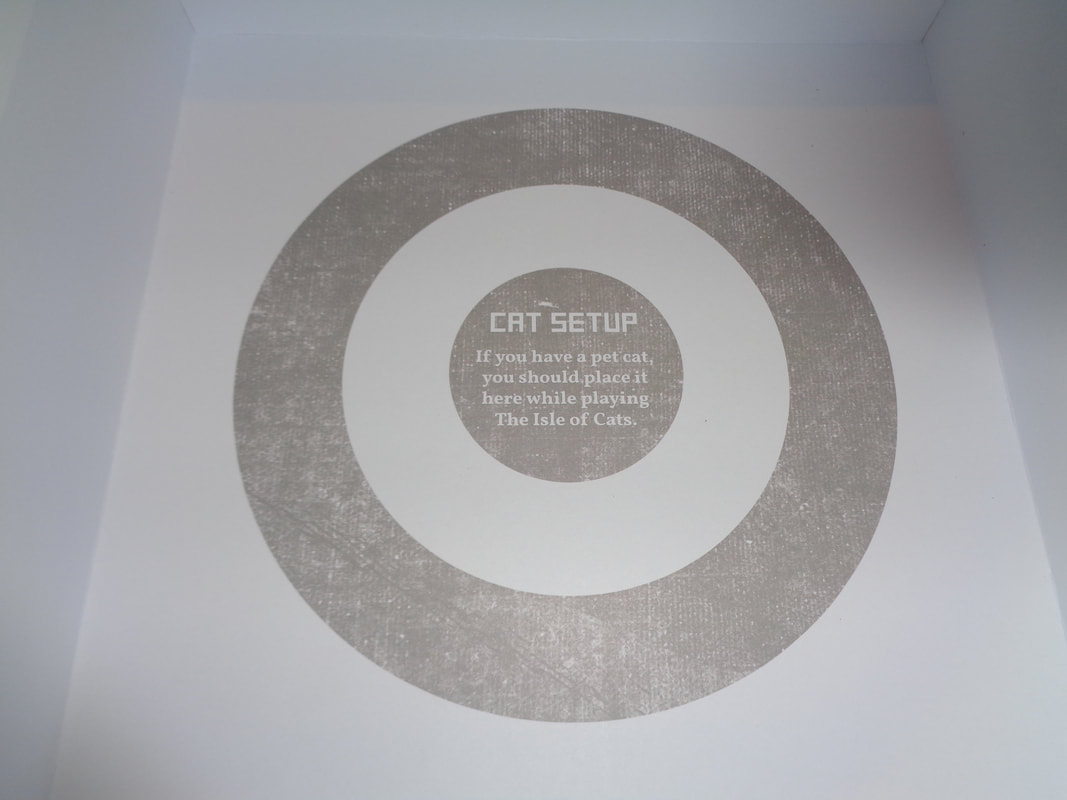
  • Box lid: What, what, the box lid? Yep, the box lid is designated as a special spot for cats to sit!
​
Component quality is for the most part very good. Tiles are suitably thick and chunky and all the wooden tokens. The game boards feel fine too. The only quibble I have is that the cards feel a little flimsy.

The artwork in Isle of Cats is excellent throughout with plenty of illustrations of weird and wonderful looking cats on all the tetromino tiles and many of the cards. The boards and other cards also display nice colourful artwork.
I do have a minor criticism here too: The colours for the common and rare treasures is a little too similar to each other, they could have done with being a bit more distinct.

There are few icons used in the game and they're all clear, however, I do have a of minor grumble.
Each personal game board is divided up into 7 'rooms'. It can be hard to see how the board is split up in this manner, particularly when scoring at the end with all the clutter of tiles. The publisher's were aware of this as they put distinct little icons in the square for each room to help but even so, it's tricky thing to comprehend.


How's it play?
Setup
  • Players: Give each player a player board and a basket tile.
  • Starting turn order: Determine a first player.
    The first player should take a cat meeple of their chosen colour and put it at the top of the player order track. Then going left, all players should do the same with a different coloured cat meeple to determine order for the start of the first round.
  • Island board: Put out the island board and put the black ship on '5' on the turn counter.
    Sort the cat meeples by colour and place them above the board.
    Next sort the common treasures by type and put out a number of each type as per player count, place them beneath the board.
    Then put out the Oshax tiles, also beneath the island board.
  • Cat tiles: Put all the other cat tiles into the bag.
  • Rare treasure tiles: Put the rare treasure tiles into the bag.
  • Blind draw: give the bag a good shake then blindly draw out tiles.
    Draw out an amount of cat tiles equal to the number of players multiplied by four. Half should go in the left field and the other half in the right field.
    Thus; in a 3-player game, 6 cat tiles will be put in the left field and 6 in the right.
    If any rare treasures are drawn, place them adjacent to the common treasures, they do not count as 'drawn tiles' then draw more tiles until you reach the allotted amount of cat tiles.
  • Discovery cards: Shuffle the discovery cards into a face-down pile.

On to play
In Isle of Cats, players are competing to cover as much of the the grid that is shown on their personal board as possible. This is done by acquiring and placing cat and treasure tiles. Players will also be looking to group cats by colour (Or family.) as much as possible as well as fulfilling whatever objectives they gain during the course of the game.
Isle of Cats is played over a number of phases, with players acting in turn order during each phase. Note that the turn order is different to player order in Isle of Cats and can and probably will change from turn-to-turn,
  • Fishing phase: Each player acquires 20 fish from the supply.
  • Drafting phase: Deal 7 discovery cards face-down to each player. Players then look at their cards and decide which 2 cards to keep in their playing area, they should pay special attention to the cost in the top-left corner of each card.
    The remaining cards should be passed to the player on their left. Keep repeating this until each player receives 1 card form the player on their right, this card must kept.
    • Payment: Now that each player has 7 cards, they may decide which ones to keep and must pay for them with their fish. If they do not want to pay for 1 or more card (Or cannot afford to do so.), then those cards must be discarded.
  • Lesson cards phase: Blue lesson cards are played in this phase. All players must play all lesson cards in their hand. Public lesson cards are played face-up while normal lesson cards are played face-down.
  • Rescue cats: Now it's time to rescue some cats. This is done by playing 1 or more green cards.
    • Turn order: Before any rescuing occurs, a new turn order must established. All players must place any and all rescue cards they want to use in this round face-down in their playing area. When this is done, all cards are simultaneously revealed.
      Whichever player has played card(s) with the highest total 'boot's score moves to 1st in the turn order. 2nd highest to 2nd in the turn order and so on.
    • Turns: Now, in the new turn order, players take turns rescuing cats or acquiring cat tiles.
      ​Players can only rescue 1 cat in a turn and must pay the cost to do so (Either 3 or 5 fish depending on the field the tile is in.). A basket must also be used to acquire a cat tile, all players start with 1 permanent basket (Which gets flipped when used.). Rescue cards may also provide temporary baskets and 2 broken baskets count as a single basket. Players can take multiple turns to gain multiple cat tiles but must have a basket available to use for each tile they acquire.
    • Tile placement: When a player gains a tile, it must be immediately placed on their personal board.
      A tile can be rotated and flipped in any way prior to placement. The first tile placed in the game can be put anywhere inside the board's grid but further tiles must be placed orthogonally adjacent to another tile already on the game board. While the board has 7 'rooms', it's OK for tiles to cross between them.​
    • Treasure map: Each player board will have 5 treasure map icons in the same 5 colours as the cat tiles. If a treasure map is covered by a cat tile which matches it's colour, then the active player may immediately take and place a common treasure tile. While common treasure tiles are quite small relatively, they can be useful for filling awkward gaps.
  • Rare cards phase: This is when Oshax and treasure cards are played.  Only 1 rare card can be played per turn but again, players may have multiple turns provided they have multiple rare cards they want to play.
    • Oshax cards: Playing one of these cards allows the active player to claim a Oshax tile and add it to their player board. Oshax cats do not have a colour, instead, when placing an Oshax, the player assigns the Oshax cat a colour by putting a cat meeple of the chosen colour on the Oshax tile. - This colour is independent of the player's own player colour.
    • Treasure cards: These cards can be played to acquire rare treasures - provided they've been drawn from the bag of course.
      As with all tiles, they must be immediately placed into the active player's board. As well as filling gaps, rare treasures score VPs at the game end.
  • Anytime cards: Anytime cards can be played at anytime during any of the above 5 phases.
  • End of round: Once the rare card phase has ended, the end of the round has been reached, the following occurs
    • Clear fields: Any cat tiles which were not claimed during the round are discard out of play.
    • More cats: More cat tiles are drawn blindly to repopulate the fields as per the rules for setup.
    • Carry over: Players carry their hand of cards and fish tokens over to the start of the next round (There's no hand limit or fish token limit.).
    • Move Ship: Move the black ship 1 space along the turn count track.
    • Next round: The next round begins with the first phase by giving 20 fish to each player.

Endgame
Once the 5th round has finished, the game is over and it's goes to scoring.
There are several sources for scoring points and the lesson cards in particular provide many ways to score:
  • Families: A family of cats consists of at 3+ cat tiles of the same colour which are orthogonally liked in a group. Each family of cats score VPs according to its size. The bigger the more VPs.
  • Public lessons: All players can score VPs from public lessons.
  • Lessons: Players now reveal their lesson cards and score them appropriately.
  • Rare treasures: Each rare treasure that a player has in their playing area scores VPs.
Negative VPs
That's right, it possible to lose VPs!
  • Rats!: Each rat icon left visible on a player's board will lose them 1 VP.
  • Unfilled rooms: Any room that has at least 1 unfilled space will cost the player 5 VPs, that means potentially if a player has just 7 empty spots (1 in each room), they could lose a lot of VPs!

Points are tallied, highest score wins.


Overall
​There's a few things to think about in Isle of Cats but it's all paced out fairly well and never feels too complex.
That's not to say there's no strategising to be done - because there is.

The chief concern for players should be the management of their fish! Fish are not only used to buy cats but also discovery cards and they're the route to not gaining more VPs but initiative or gain bonuses.
E.g., if you really want a certain tile, playing rescue cards with high 'boots' is important, but you'll need to keep them during the drafting phase - and pay for them.

Players will need to balance their spending with their priorities and recognise when and what is more important at what time.
Acquiring cat tiles is very important, building families, filling rooms, covering rats and treasure maps are all significant but so are going first or getting lesson cards and so on.

Despite players having their own player boards, there's also a higher level of play about watching the actions of other players.
For example; if another player has a big family of a certain breed of cats, it might be a good idea to deny them a beneficial card during the drafting phase and so

But since this is a drafting game, players will also have to adapt to circumstances as they occur, such as having to take a cat tile that isn't wanted and finding a way to place it to maximise it's potential - or minimise it's damage!

Isle of Cats is a mid-weight game that's pretty easy to learn and combines several mechanics in to a engaging cat-themed game.
Whether it's deciding which cards to keep and later which ones to play, as well as what tiles to take and where to place them, Isle of Cats All nearly always gives players meaningful decisions to make and that's the sign of a good game.
0 Comments


Leave a Reply.

    Author

    I play, I paint.
    ​This is where I talk about what I play.

    Archives

    March 2025
    March 2024
    June 2023
    May 2023
    April 2023
    March 2023
    February 2023
    January 2023
    December 2022
    November 2022
    October 2022
    September 2022
    August 2022
    July 2022
    June 2022
    May 2022
    April 2022
    March 2022
    February 2022
    January 2022
    December 2021
    November 2021
    October 2021
    September 2021
    August 2021
    July 2021
    June 2021
    May 2021
    April 2021
    March 2021
    February 2021
    January 2021
    December 2020
    November 2020
    October 2020
    September 2020
    August 2020
    July 2020
    June 2020
    May 2020
    April 2020
    March 2020
    February 2020
    January 2020
    December 2019
    November 2019
    October 2019
    September 2019
    August 2019
    July 2019
    June 2019
    May 2019
    April 2019
    March 2019
    February 2019
    January 2019

    Categories

    All
    2 Player Only
    50 Fathoms
    Abstract
    Annual Quiz
    Area Control
    Asymmetrical Play
    Auctioning
    Bidding/gambling
    Black Hack
    Bluffing
    Board Game
    Campaign Play
    Card Game
    Clockwork & Chivalry
    Cooperative
    Cthulhu Hack
    Deck/Bag Builder
    Deduction
    Dice Game
    Drafting
    Engine Builder
    Hand Management
    Hidden Movement
    Hidden Role
    In Darkest Warrens
    Legacy
    Memory
    Merry Outlaws
    One Vs Many
    Oubliette
    Party Game
    Programming
    Push Your Luck
    Real Time
    Renaissance
    Resource Management
    Roll And Move
    Roll And Write
    Route Builder
    RPG
    Sand Box
    Savage Worlds
    Set Collecting
    Storytelling
    Tableau Builder
    Team Based
    The Month In Gaming
    The Year In Gaming
    Tile Placement
    Trading
    Traitor
    Trick Taking
    Voting
    Wargame
    Wasted Hack
    WFRP
    Wogglecon
    Word Game
    Worker Placement

    RSS Feed

Powered by Create your own unique website with customizable templates.
  • Home
  • Special Effect
    • Special Effect
    • The Final Return of The Indiana Jones Charity Globe Trot
    • The Warlock of Firetop Mountain Challenge
    • Return of The Indiana Jones Charity Globe Trot
    • Bard's Tale Challenge
    • Fighting Fantasy Challenge
    • The Indiana Jones Charity Globe Trot
    • Mirkwood Charity Walk
    • Middle-earth Charity Walk
    • Dungeon Daze
  • RPGs
    • The One Ring
    • The Evils of Illmire
    • Beach Patrol
    • The Surrendered Lands
  • Game Blogs
    • RPG Blog
    • Gaming Blog
  • Painting Blog
  • Contact