
|
24th May 2022 It's a Tuesday and we're with the Woking Gaming Club in The Sovereigns. Fly as free as a err flying pirate? Libertalia: Winds of Galecrest is set in a world of fantastical aerial ships, anthropomorphic heroes and adventurous voyages to find loot and lost treasure. What's in a game?
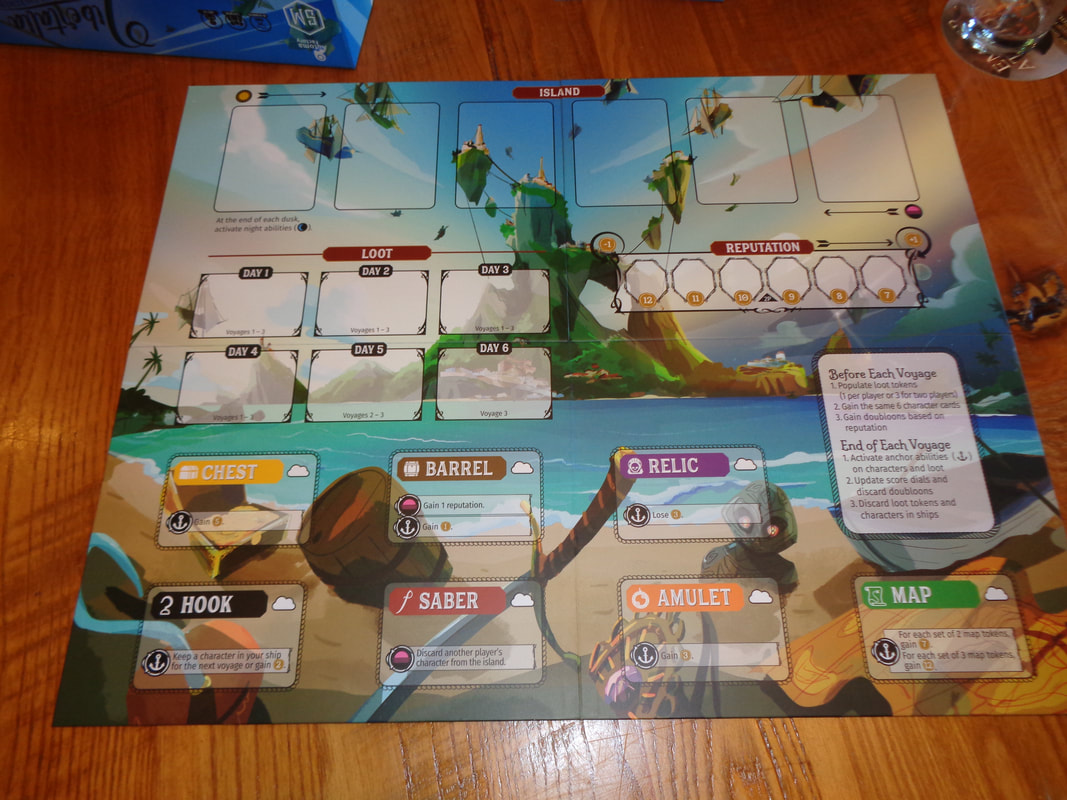
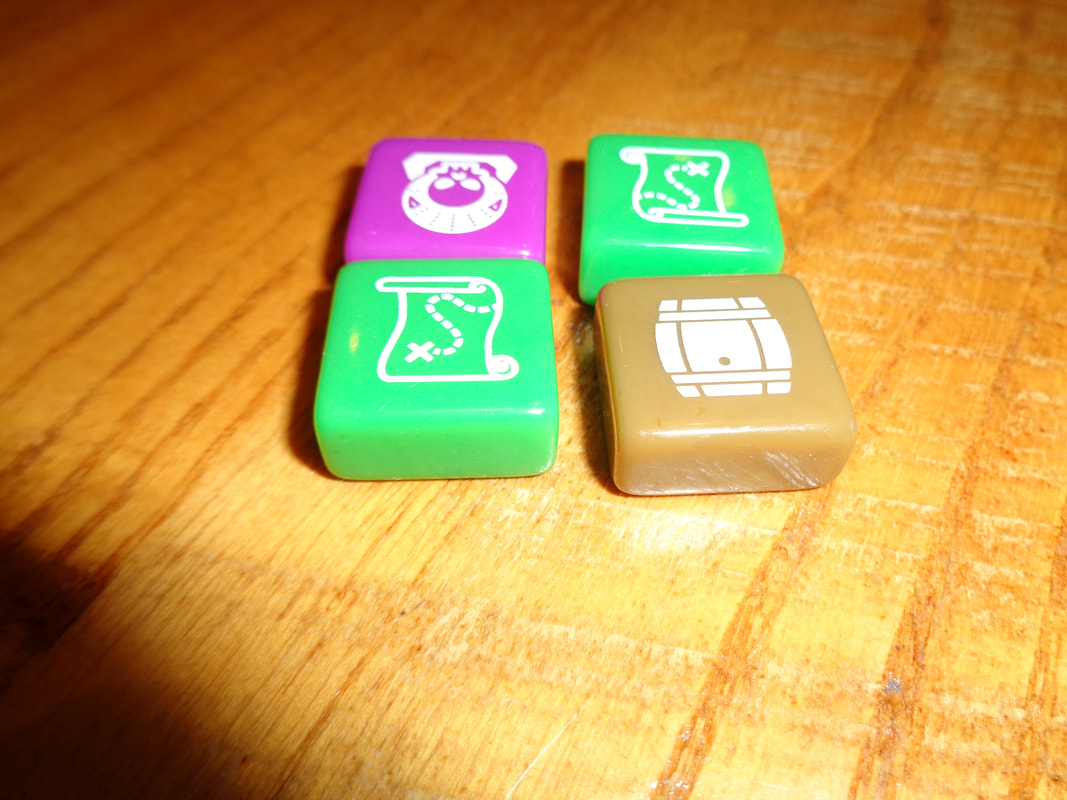
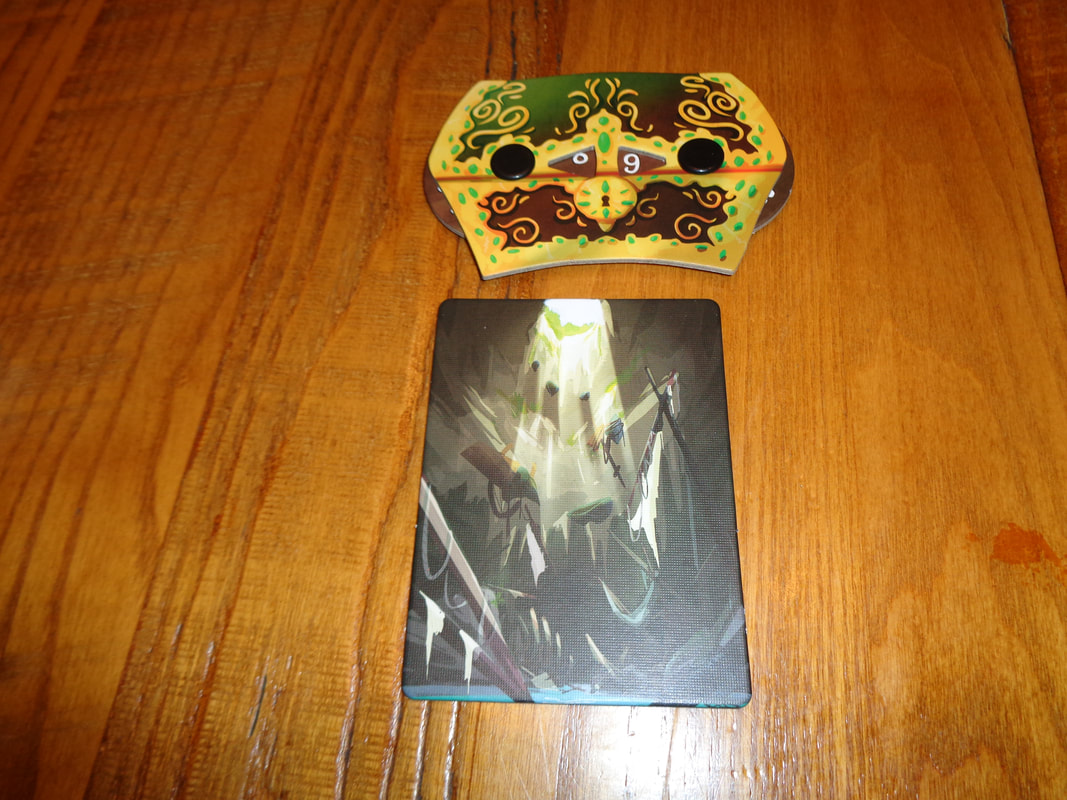
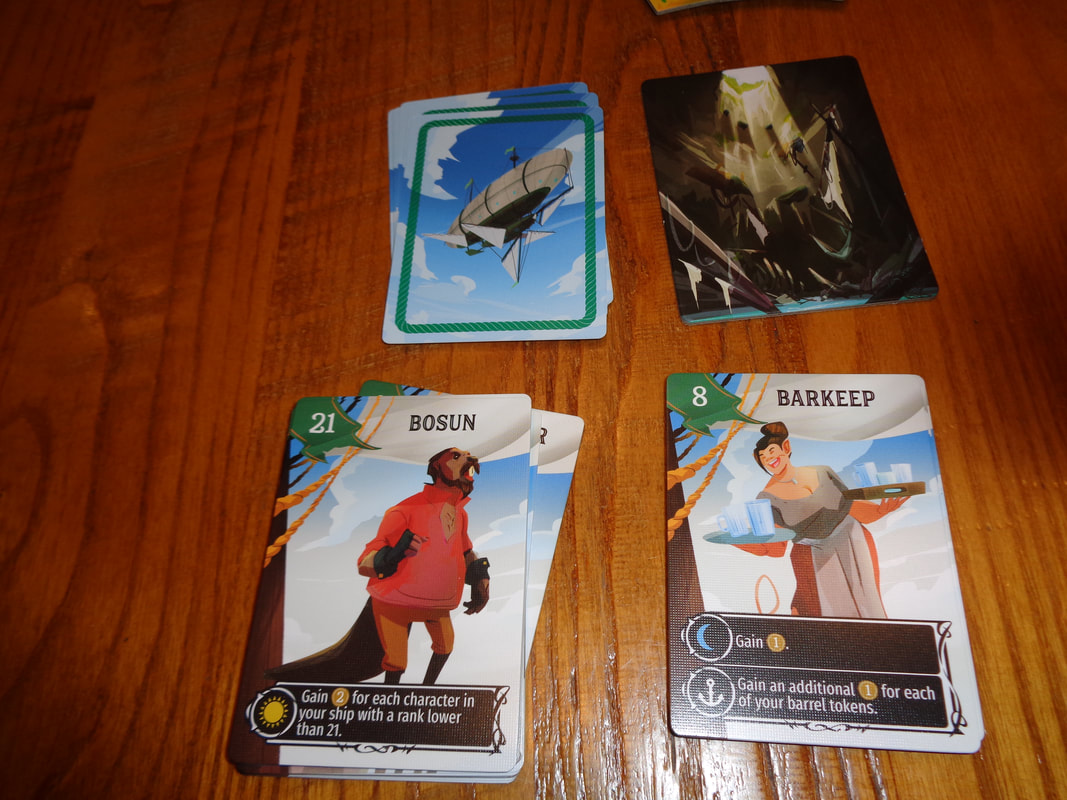
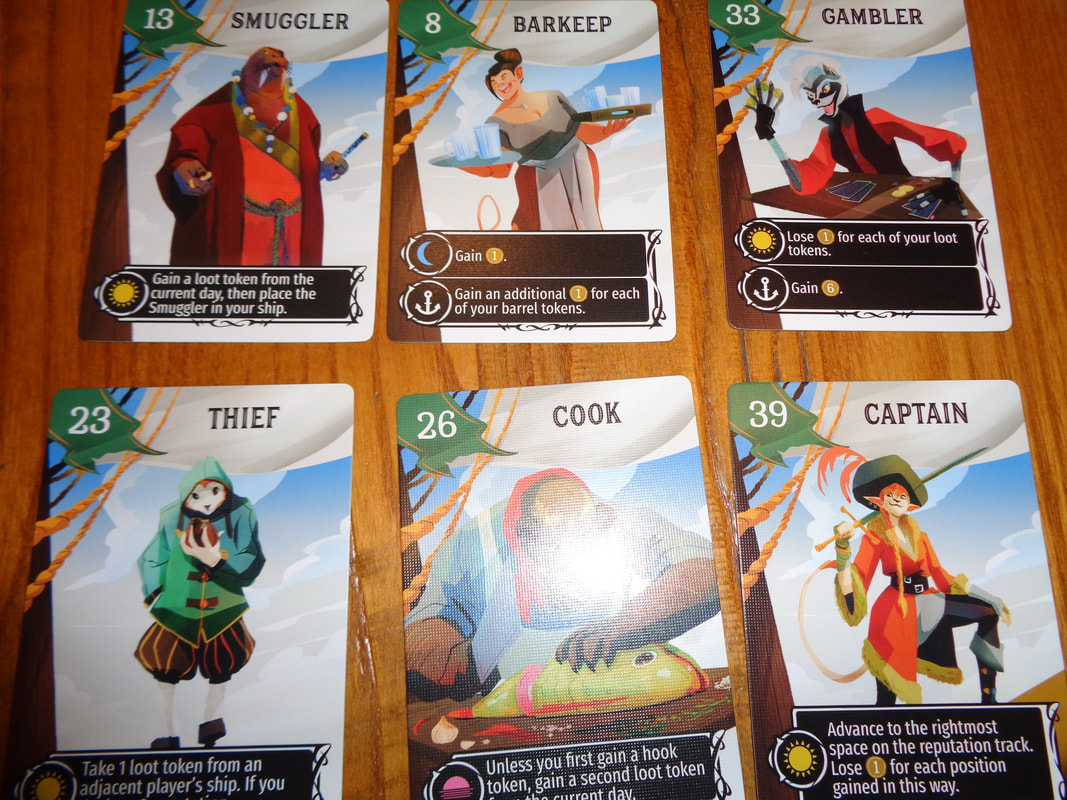
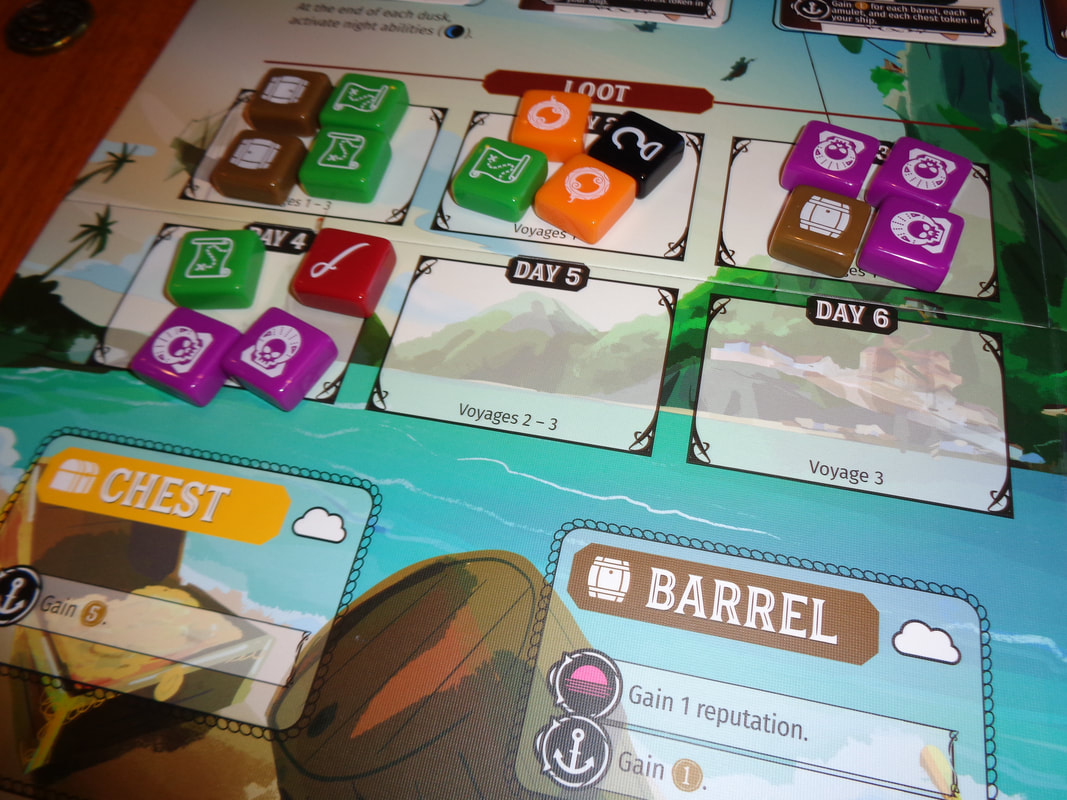
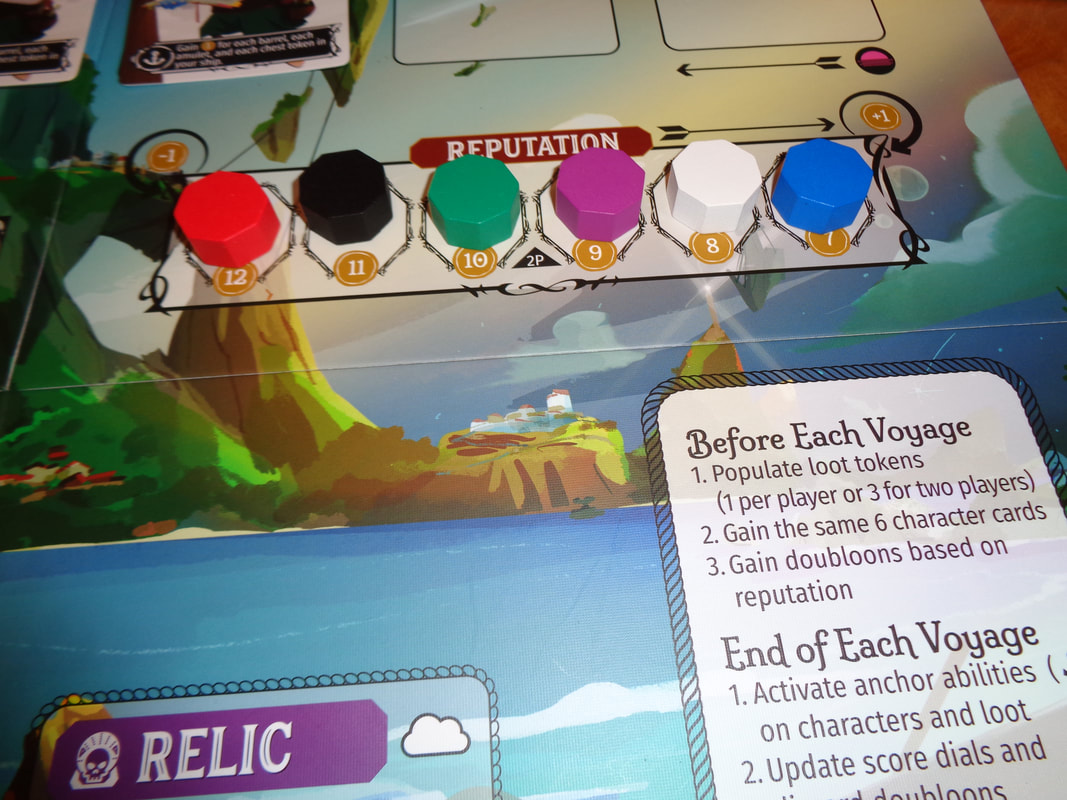
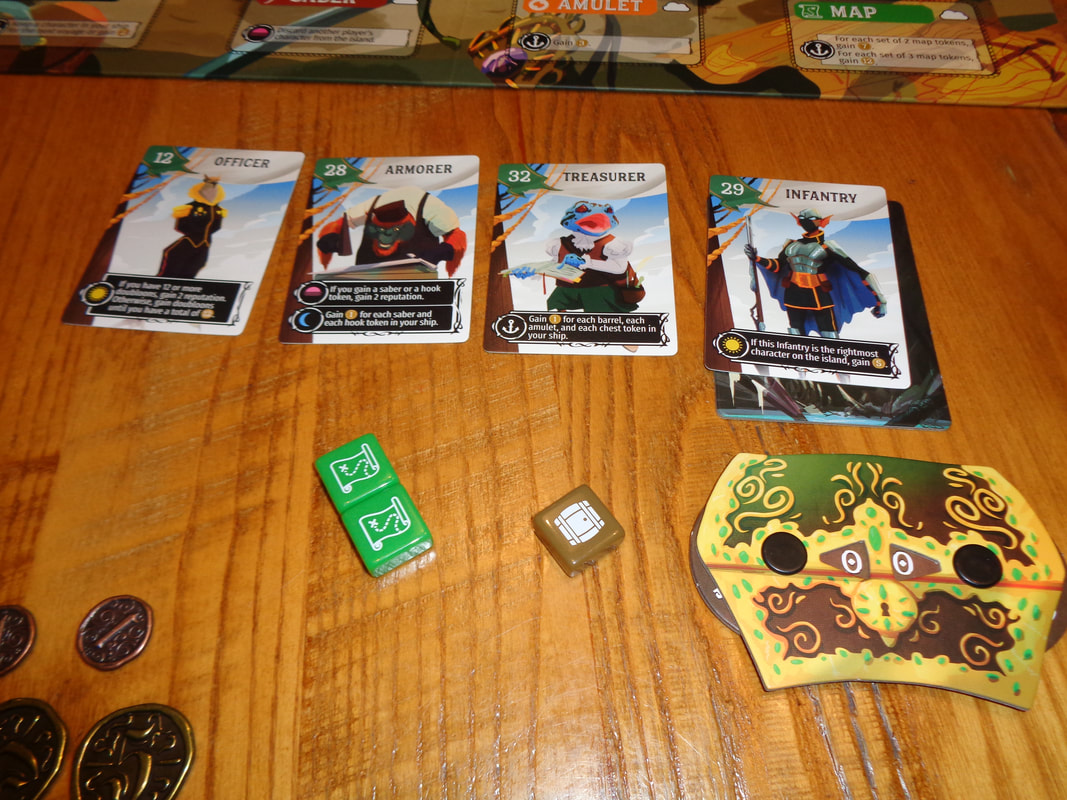
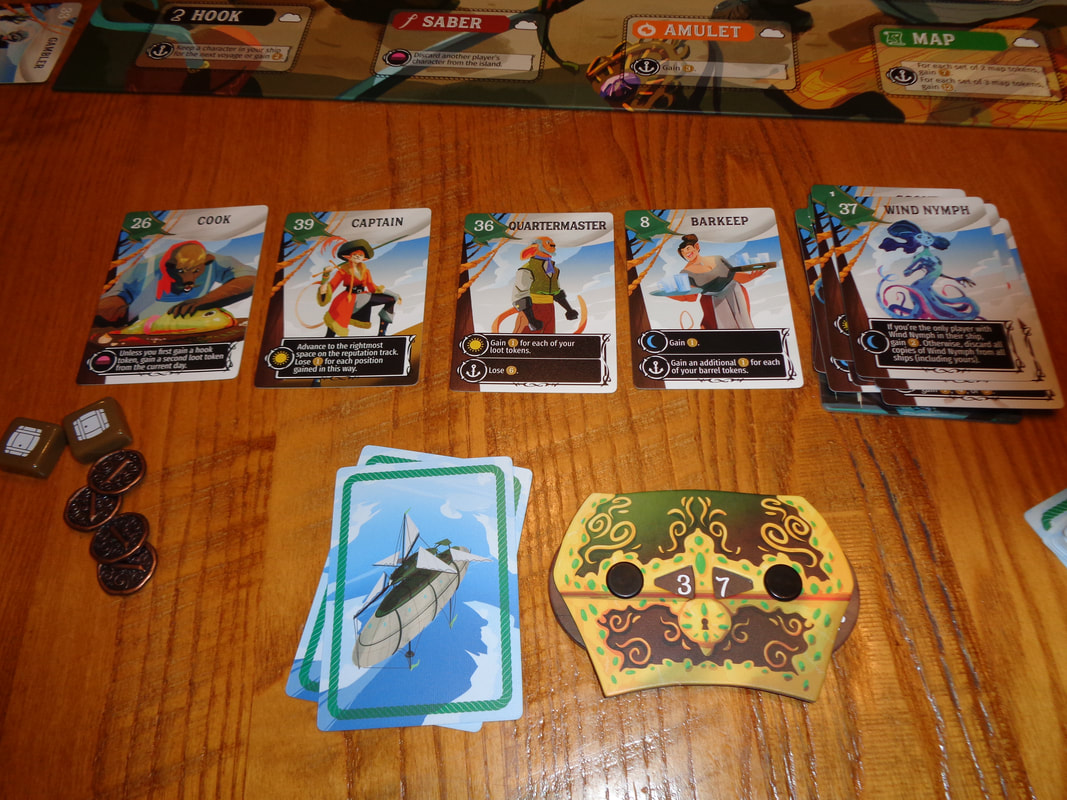
Component quality is solid throughout, cards, tokens and tiles are well constructed but the chunky loot tokens really stand out, even if I have to resist the urge to try and unwrap and eat them. Libertalia: Winds of Galecrest makes use of excellent use of bright, eye-catching, cartoony art presenting a larger than life setting and characters. About a dozen icons are used throughout the game, they are all fairly clear and easily understood. How's it play? Setup
That's pretty much setup done. On to play Libertalia: Winds of Galecrest is played over 3 'voyages' which have a length of 4, 5 and 6 days. For each day, a player will put a character card into play and this is done secretly. Thus over all 3 voyages each player will use 15 character.
Endgame Play progress until the night actions for the 3rd and final voyage are resolved. Players compare their scoring dials. Points are tallied, highest score wins. Overall
Libertalia: Winds of Galecrest feels like a complex game but in practice is quite straightforward. In essence, a character card is played and the resolved up to 3 times. Where the game's complexity comes from is how a character card played interacts with character cards played by other players. Everyone starts with the same hand of cards and will acquire a further identical 12 cards during the course of the game. It means that all players will be using the same 18 cards played over in total 15 actions. But since it's unlikely that all players will make use of the same cards at the same, it means the game encourages players to watch their opponents. Knowing when someone has or hasn't played a certain card can prove very useful. This contextual information can allow players to adapt their tactics and can change the flow of the game. Additionally; Libertalia: Winds of Galecrest injects a dose of 'take that' into the game, the 40 cards have a varied set of abilities that can be brought to play, including being able to eliminate other characters, pulling cards out of the graveyard, etc. It's also worth noting that while the 'calm' side of the game board has the potential for some friction between players the 'stormy' side increases this. The game also provides short and long term goals which require short, mid and long term strategies. Day abilities on cards give players immediate benefits, but dusk and night abilities can also provide desirable benefits. A player may choose to put a high value character card on to the initiative track so they go earlier in the dusk phase to secure a certain type of loot. Which brings me to long term strategy, loot is vital here. Loot typically provides benefits during the end of voyage phase and the loot for all days is openly shown on the board which players must take this into consideration during the whole journey. All of this means that Libertalia: Winds of Galecrest hits a sweet spot of accessible but tactical game play. Players are always given meaningful decisions to make using a degree of imperfect information. I found it an engaging game. Definitely one to try.
0 Comments
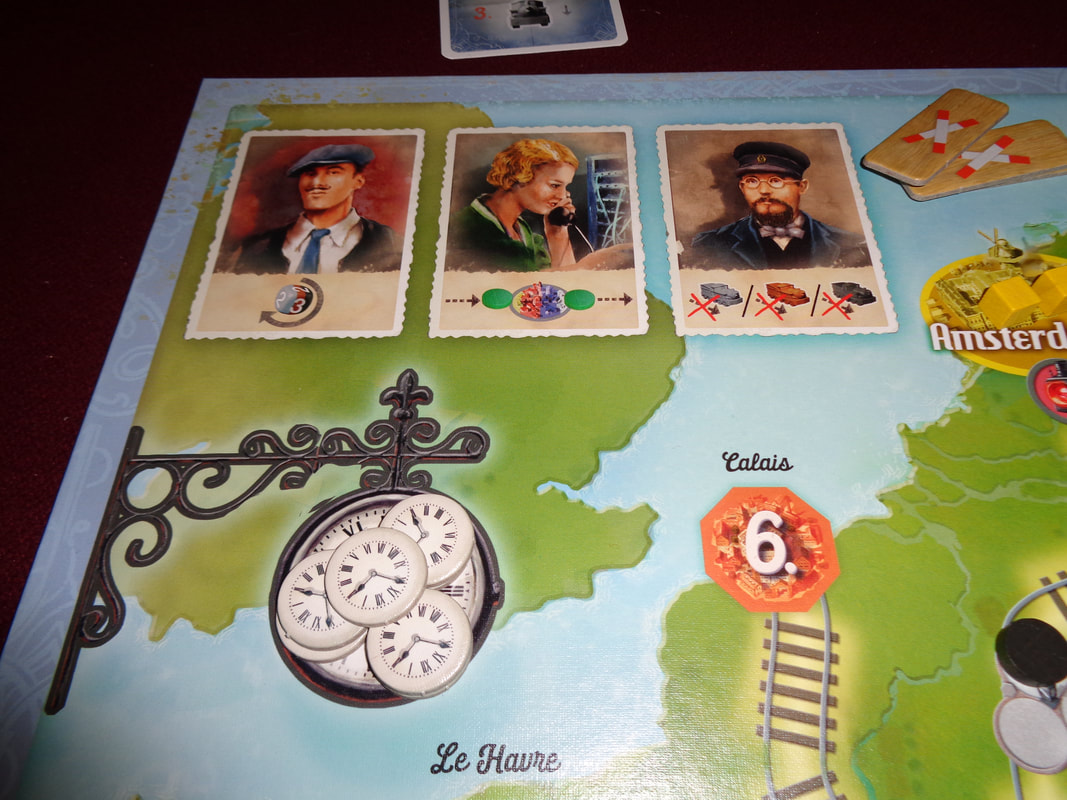
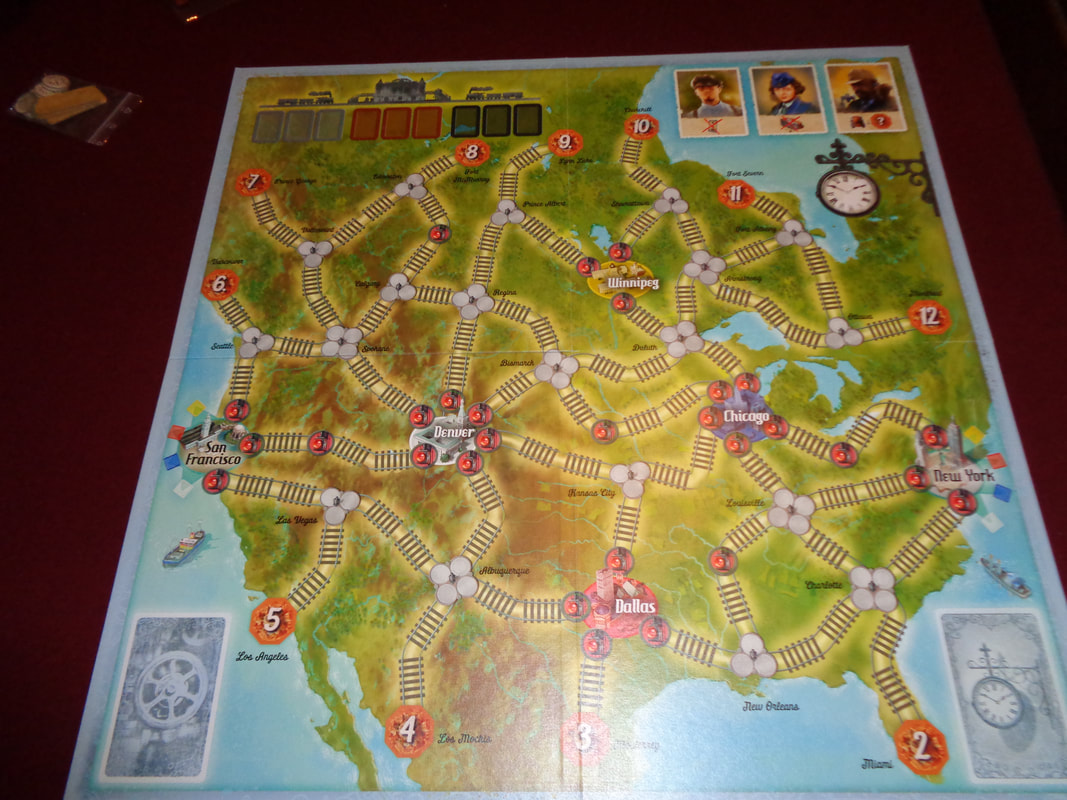
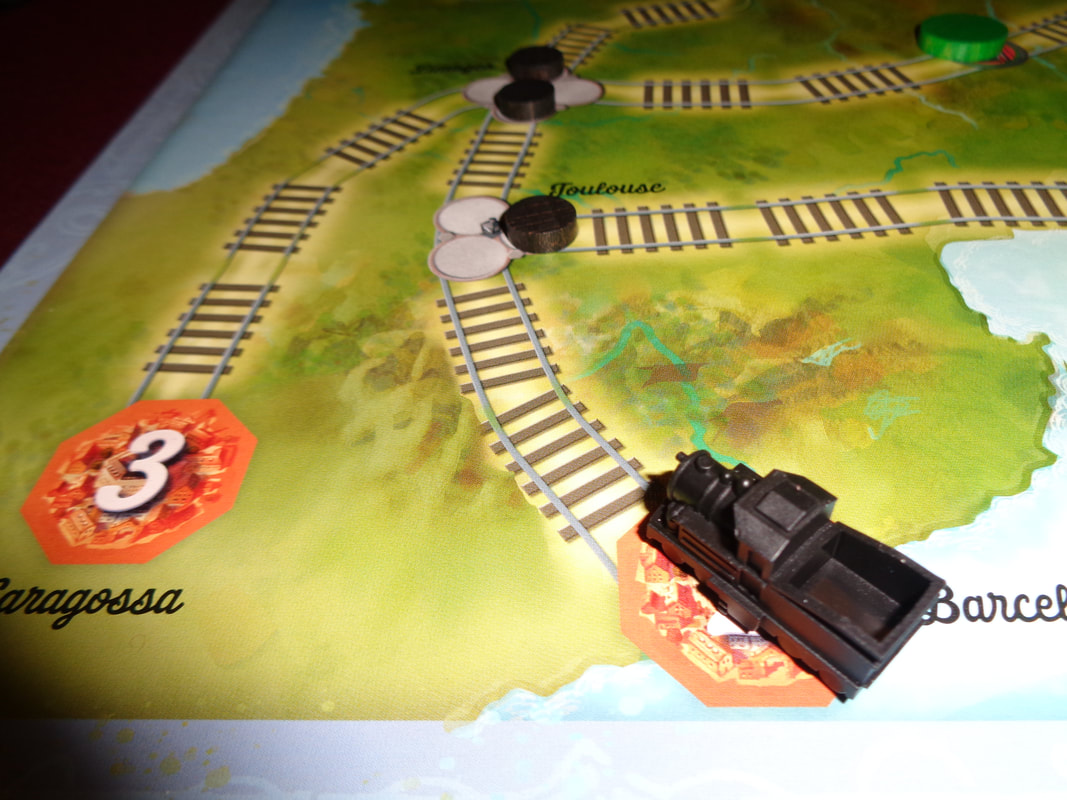
19th May 2022 It's a Thursday and I'm enjoying an evening of gaming in Aldershot for the first time in actual years! Take that Covid-19! Cho chooo! Switch & Signal is a cooperative board game about managing train schedules, that's right - you're playing the generously proportion controller and how do you control these schedules. With switches and signals of course! What's in a game?
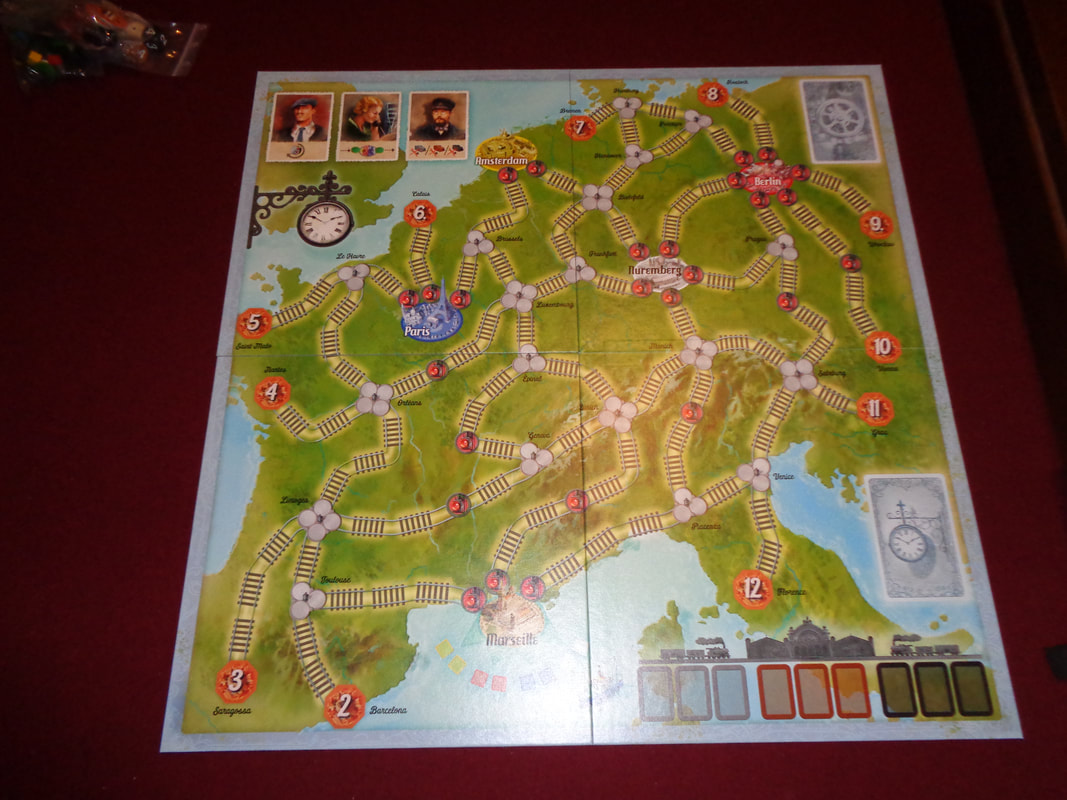
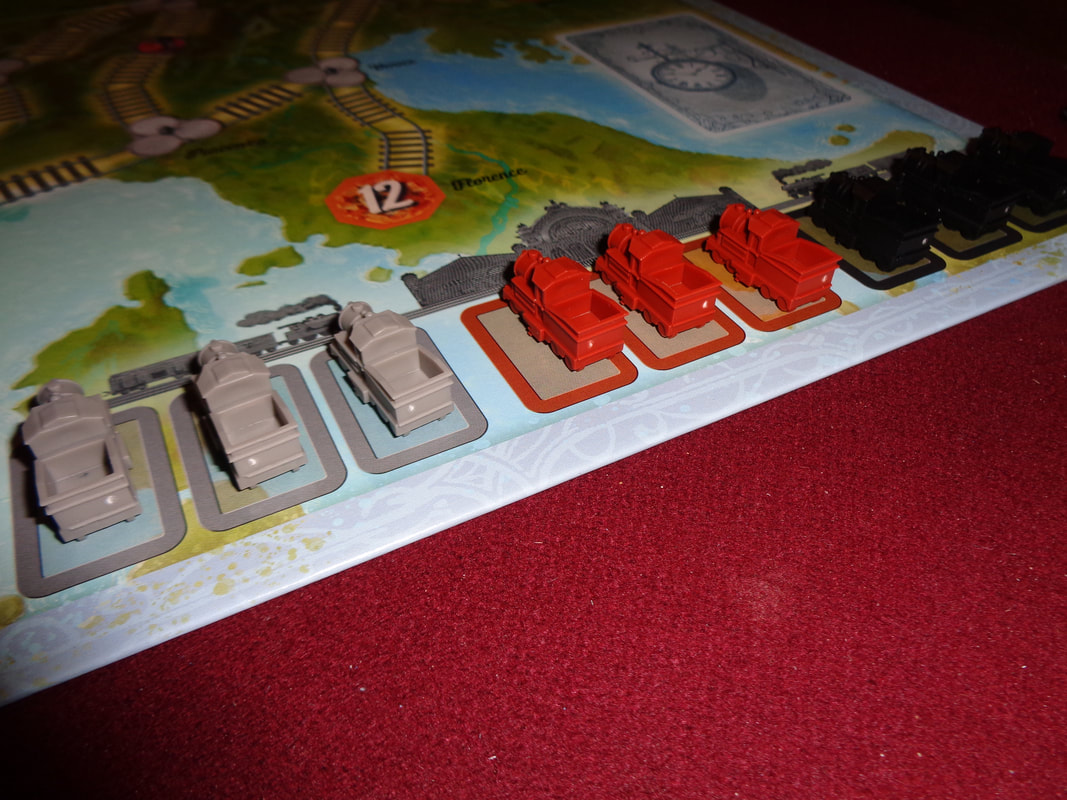
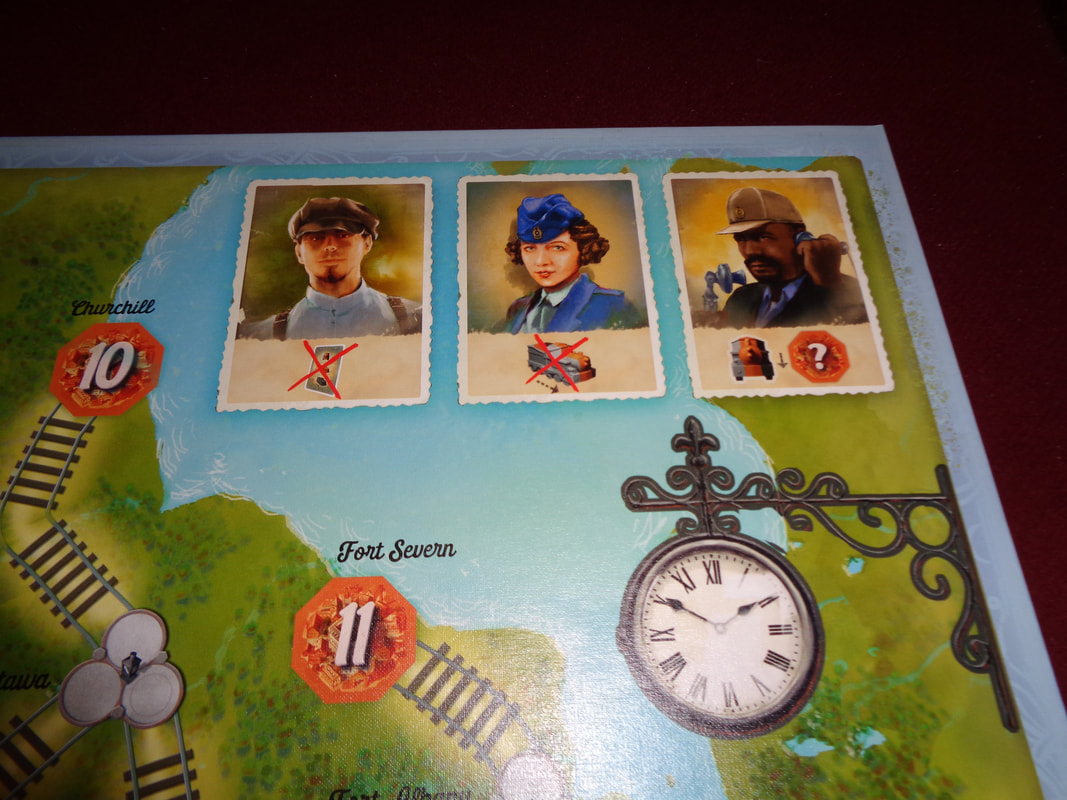
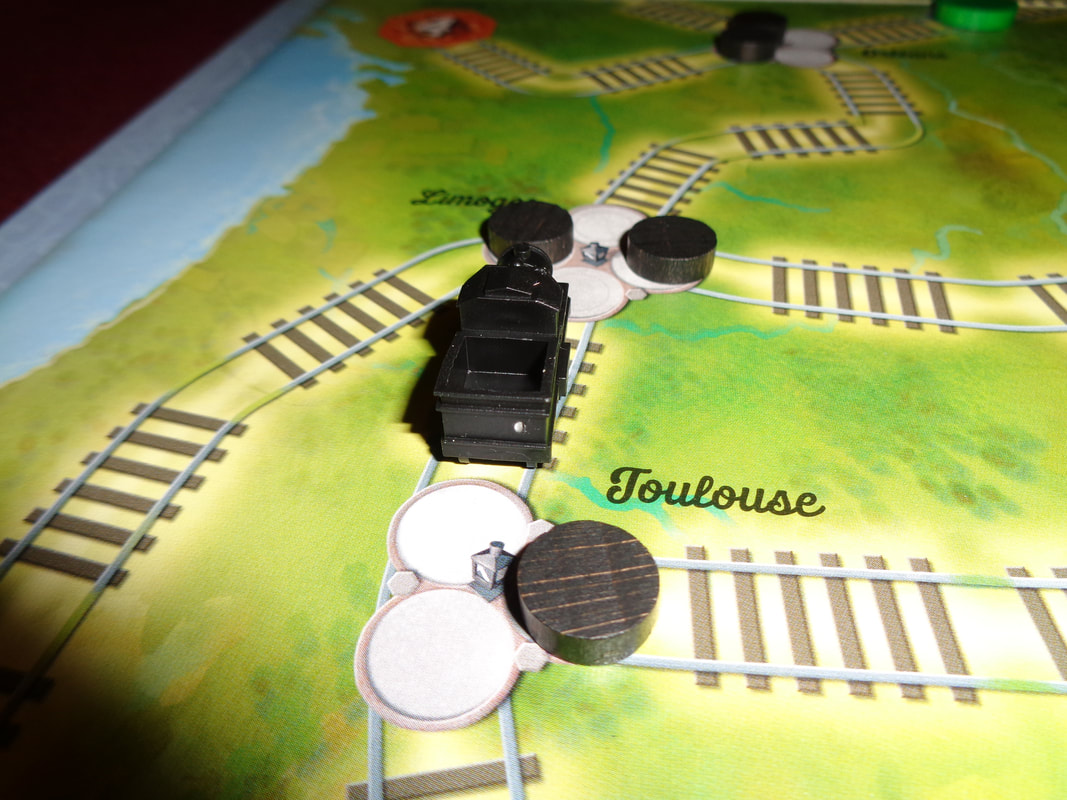
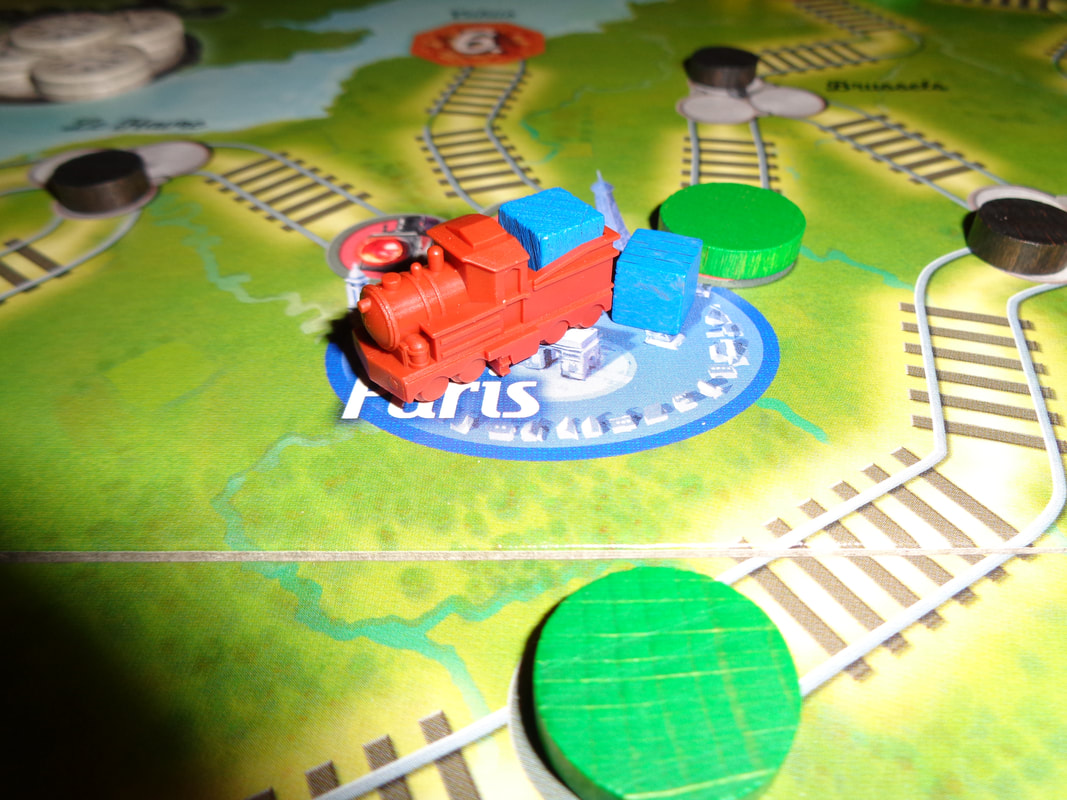
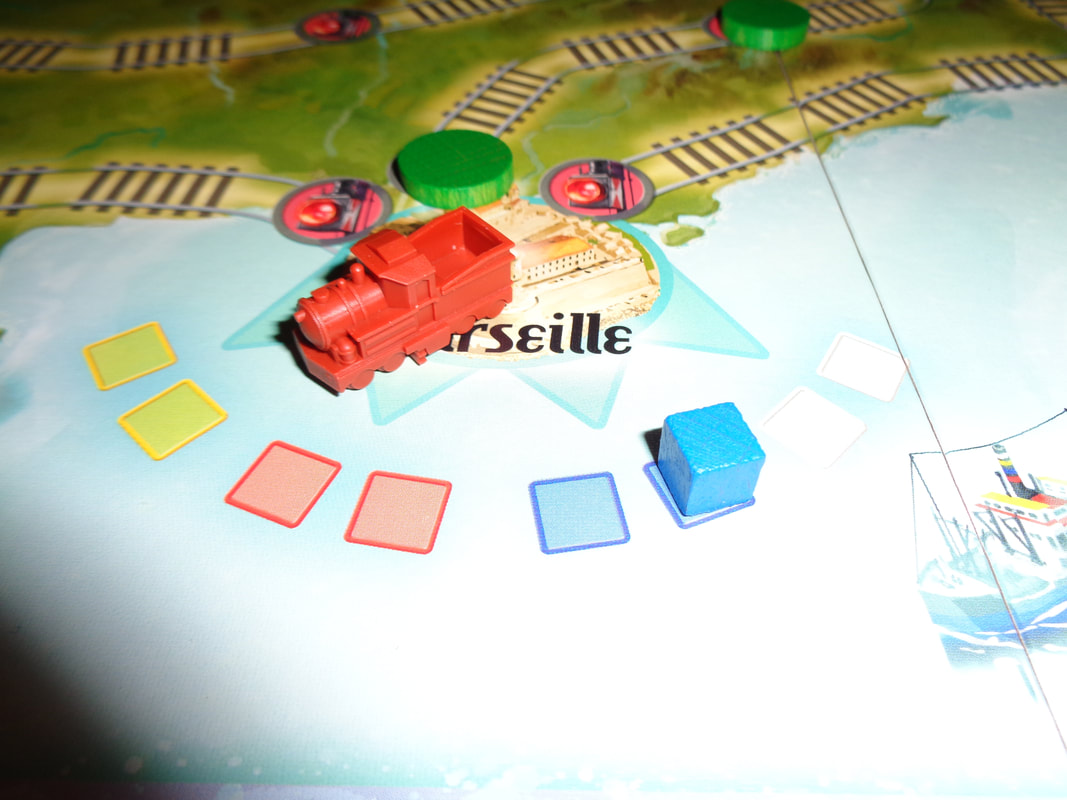
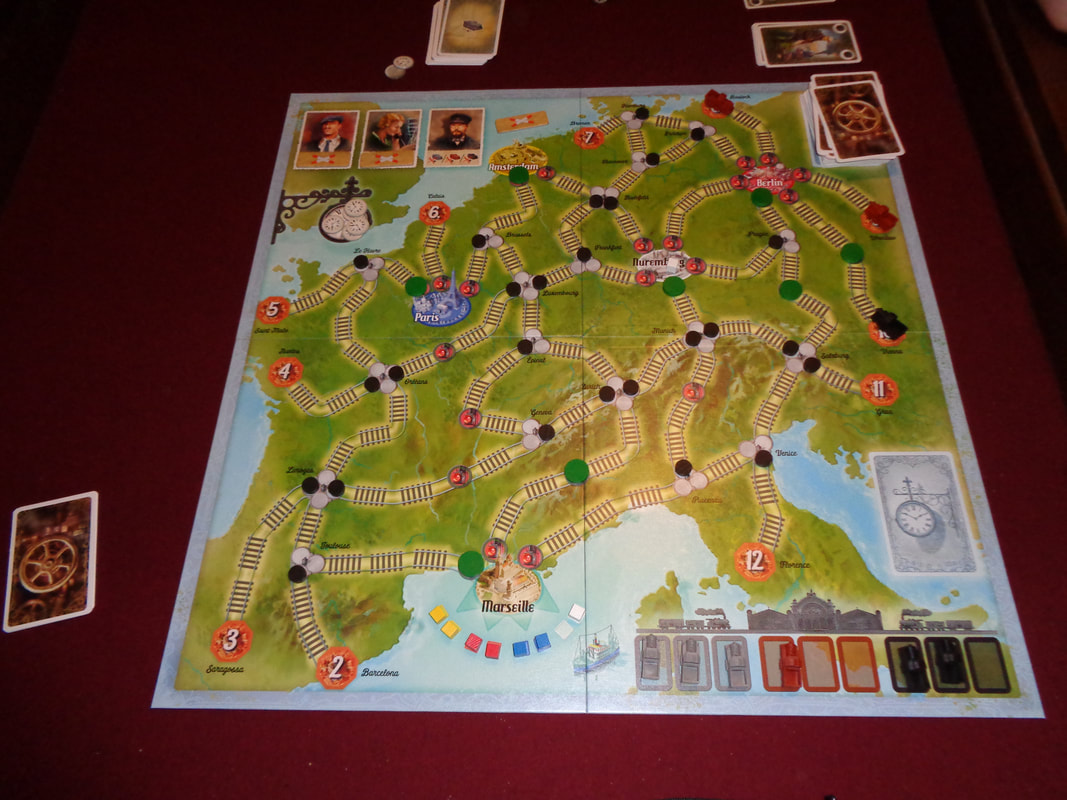
Quality-wise, all of Switch & Signal's components are made to the usual high standard we've come to expect from modern game and nothing feels particularly flimsy. The game makes good use of a wooden components, especially the dice that are nicely rounded and is something I always like. The notable components are the little plastic trains which each contain a space to put a wooden goods cube. The art is good, the boards are colourful and uncluttered with some nice illustrations for various cities. The art on the cards is equally good. The game's use of iconography is straightforward, easily understood and doesn't prove an obstacle. On to Play Setup This set up is for the European beginning default game, the rules provide options to alter the game's challenge and the U.S. side has some different rules.
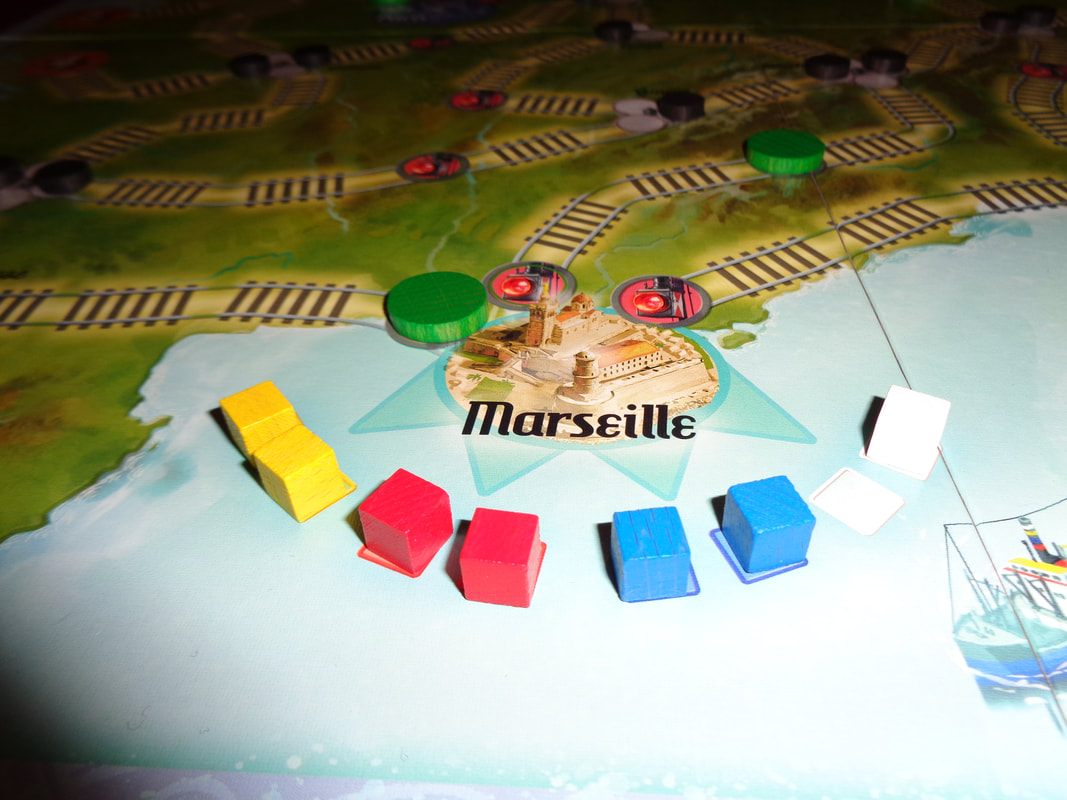
On to play The objective in Switch & Signal is to collect all 8 cubes from the 4 cities using the trains and deliver them all to Marseille. Switch & Signal functions much like a lot of cooperative games; that is the active player flips a card and resolves it's actions on the board. Then the active players takes their action(s).
Endgame Play continues until one of the following conditions is met. If the players run out of departure cards and they have to draw one, then they collectively lose. If all 8 cubes are delivered, then the players immediately win. Overall
If you play a lot of cooperative games, the basic mechanics will be familiar here: Turn over a card and resolve it's action which will create obstacles for the players, then have them perform some actions and choose between progressing the objective or mitigating the problems caused by the drawing of cards. Rinse and repeat. Something about Switch & Signal feels a little different though. Maybe its because the departure cards are so contextual. The trains being moved by the departure cards are both the cause of problems for players and also the means to victory. On more than one occasion, we wanted to move a train but didn't want to spend a card to do so, instead we left it to the 'game' and departure cards to do the job for us. It's pretty rare for players to want the 'bad things happen' card to actually do something in a cooperative game. How trains are moved is vital. Not only do players have to move them into cities to pick up goods, they'll need to manage the different speeds they move at. Getting a fast train behind a slower one is a disaster, no two ways about it. This is exacerbated by the random nature in which trains are deployed on to the board by the dice. Players will also to manage the titular switches and signals. They'll look to create clear routes with full green lights to the port and funnel trains down that route in the correct order. It's a real balancing act though, it's hard to get the junction points where you want them and there's are never enough green lights. I have to say, that when it works, it feels extremely satisfying. I've never been a train controller but Switch & Signal genuinely makes me feel a little like one as I think about how to prioritise trains and set up routes with minimum card expenditure. This brings me to a final point about the game. I said earlier that being forced to discard a departure card is not good and I meant it! Switch & Signal is a well balanced game and it seemed every victory, every loss came down to the wire, came down to the last departure card or two and losing one felt very risky. I found it a lot of fun. If you like train-themed games, Switch & Signal is worth a look, how many cooperative trains games are there? If you like cooperative games, you really should give this a try. It's blend of familiar and unique mechanics makes it easy to get into yet different to other cooperative games. 15th May 2022 It's a Sunday and we're logged into Board Game Arena for some online board gaming fun. Diced Tomatoes, a game about tomatoes that uses dice - what it says on the tin er... box! Caveat: we've only played this game digitally. What's in a game?
There's not much art to speak of in Diced Tomatoes, understandably, the minimalist art is red-themed. How's it play? Setup
On to play Points are scored in Diced Tomatoes by creating vertical lines of 4 dice (Vines if you will.) in either straights or sets of-a-kind. In a turn, the active player takes their actions which will involve rolling and placing dice, which may result in them or other players scoring points.
Endgame There are 2 criteria that can trigger the game end. If there are no dice left in the central pool at the end of the active player's turn, then the game immediately ends. Alternatively, once any player has filled all 6 spots on their scoring board, they score 2 bonus VPs, current round is played out and the game ends. Players now calculate their finishing scores from the following sources.
Points are tallied, highest score wins. Overall
Despite Diced Tomatoes being a fairly light game with an unusual implementation of trick-taking mechanics (In that you don't really take other players' tricks - well you can ruin them instead!), it does give players lots to think about. Firstly players will want to create their own vines. The order in which seeding dice are scored can be very important because getting it right will earn bonus points. This is particularly true for the early scoring spaces. A value 1 seeding die earns 6 VPs when placed on the 1 slot but a value 6 seeding die placed on the 6 slot only earns 1 bonus VP. Secondly, because players can put dice on to the vine tokens and vines of other players, it means that they can try to complete them to gain karma. Alternatively, they can try and mess with other player vines to disrupt their scoring. E.g., if another player has a vine with 3 '1s' which they are intending to put into scoring slot 1, adding a 1 value black dice would complete the vine, but the black die would lower the seeding die's value to 0 - wiping that vine out. Or adding a gold die would add 1 point making the seeding die worth 2 when completed, this means the other player would not gain the star fruit bonus when putting it on scoring slot 1. So while they've gained a VP from the gold die, they've lost the bonus from not matching the scoring slot, collectively losing 5 VPs! So it seems sometimes, players will want to wipe out their own vines to keep a scoring opportunity open! As you can see, Dice Tomatoes provides quite a lot of interaction between players and a quite lot of opportunities for 'take that' moves and depending on how you feel about this style of play, may or may not be your kind of thing. Personally I'm a bit ambivalent about it - especially in a game that's a quick and light filler. One thing I'm not a fan of is having your vines wiped when your score goes above 6. I know why the rules are that way but it feels a bit mean spirited and counter-intuitive to lose points by gaining points. Diced Tomatoes is a not difficult to learn, fairly quick to play filler game. Mechanically it's fairly solid and has a unique spin on trick-taking. I'm struggling to find any genuine criticism but then, I'm also struggling to find any reason to play it again. I feel that the ease in which players can interfere in each other's plans is a bit of a frustration and it left me unengaged. It also feel like it prolongs what could be a short and sweet game. It's not a bad game but there's just other game's I'd rather play. Of course YMMV and maybe you'd get more out of it but Diced Tomatoes isn't one for me. 14th May 2022 It's a Saturday and I'm in Aldershot after a impromptu get together with some friends. Flip City AKA Design Town is a light and uncomplicated push-your-luck deck building game about developing a city. What's in a game?
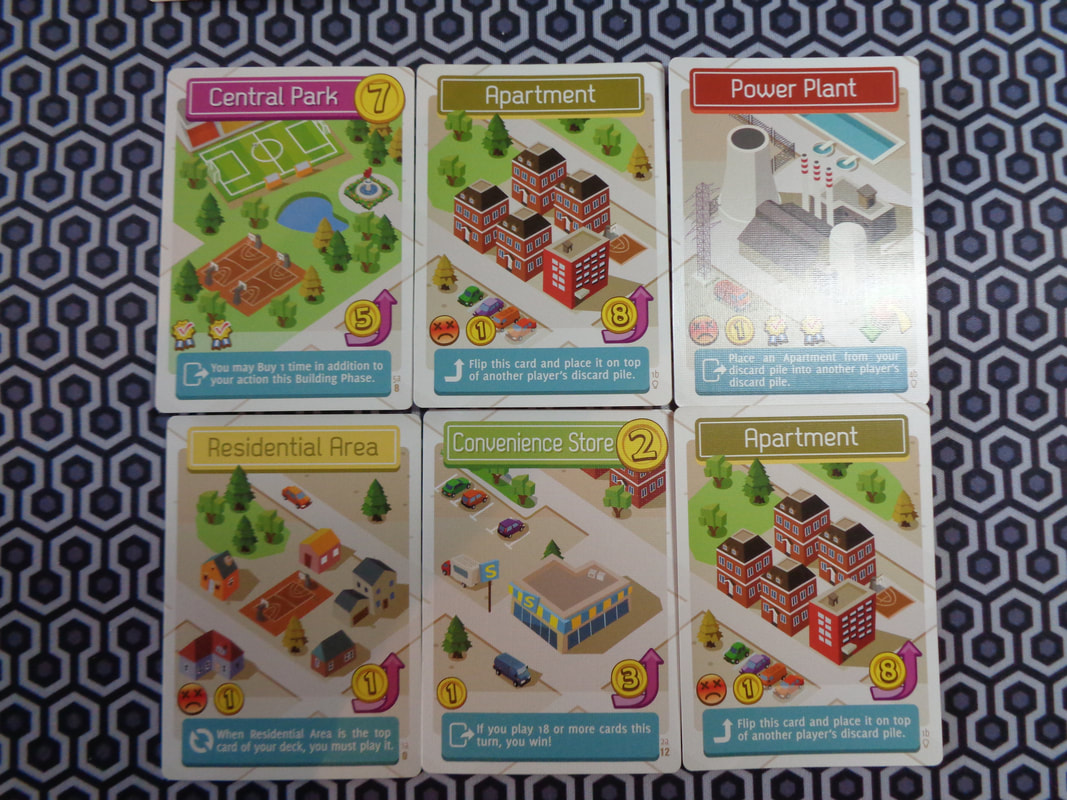
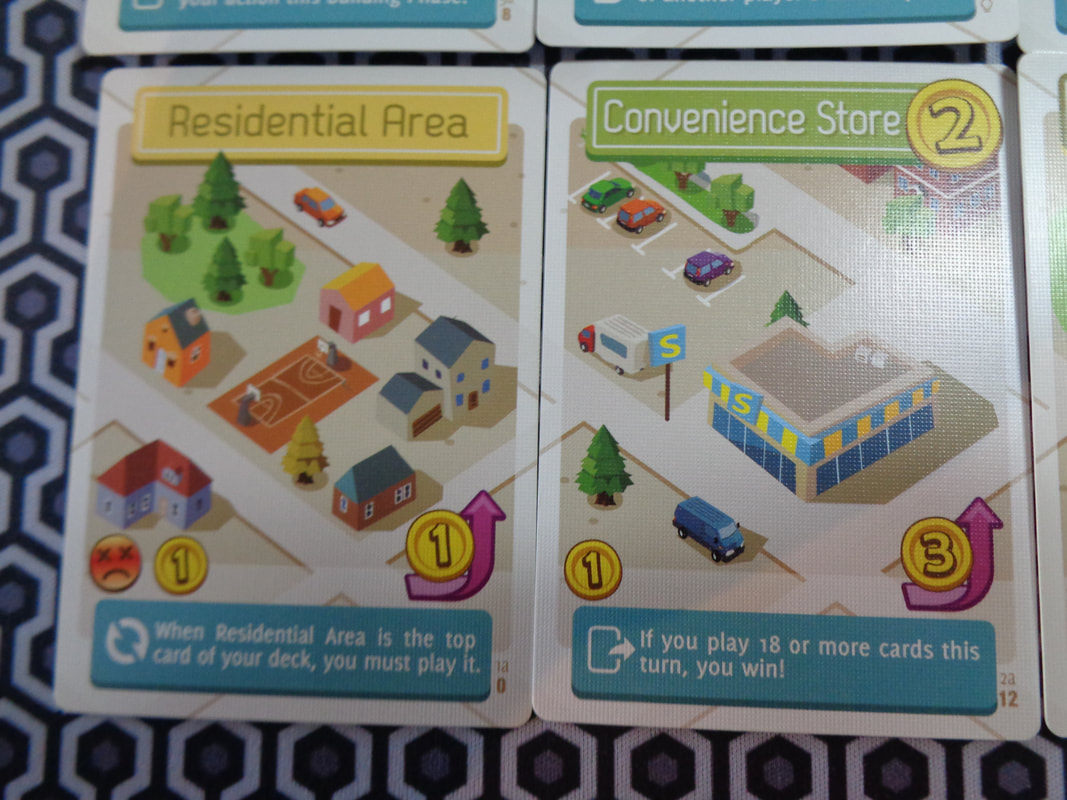
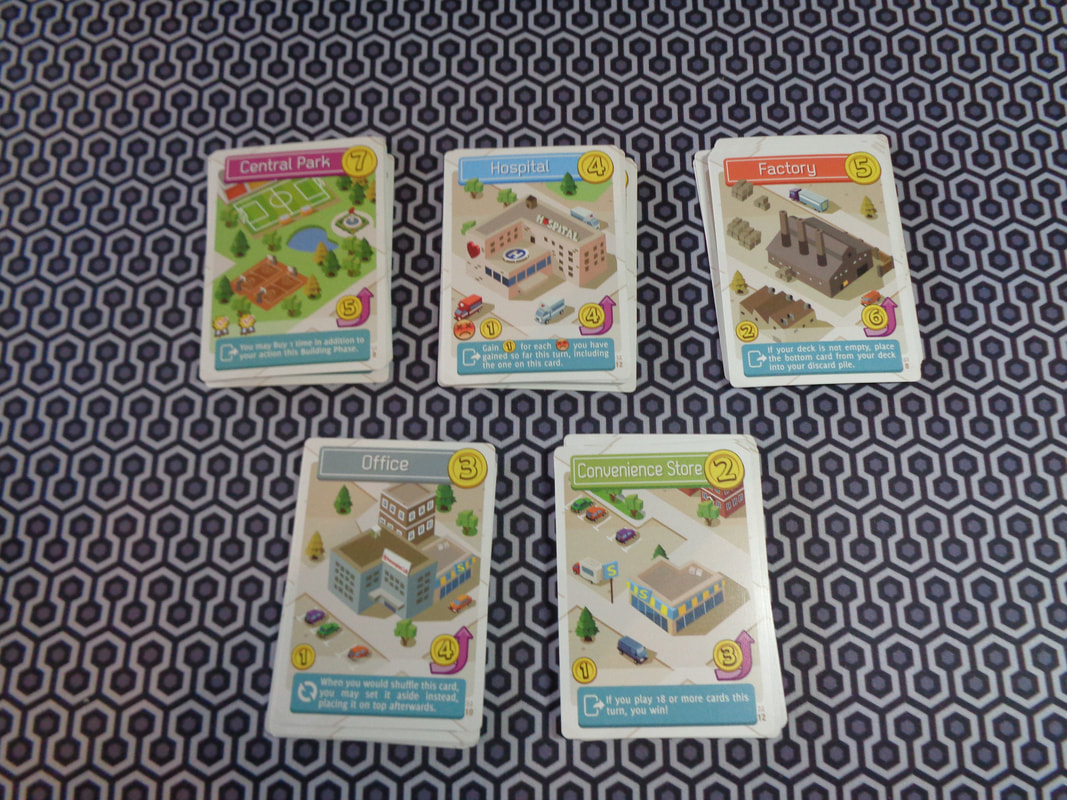
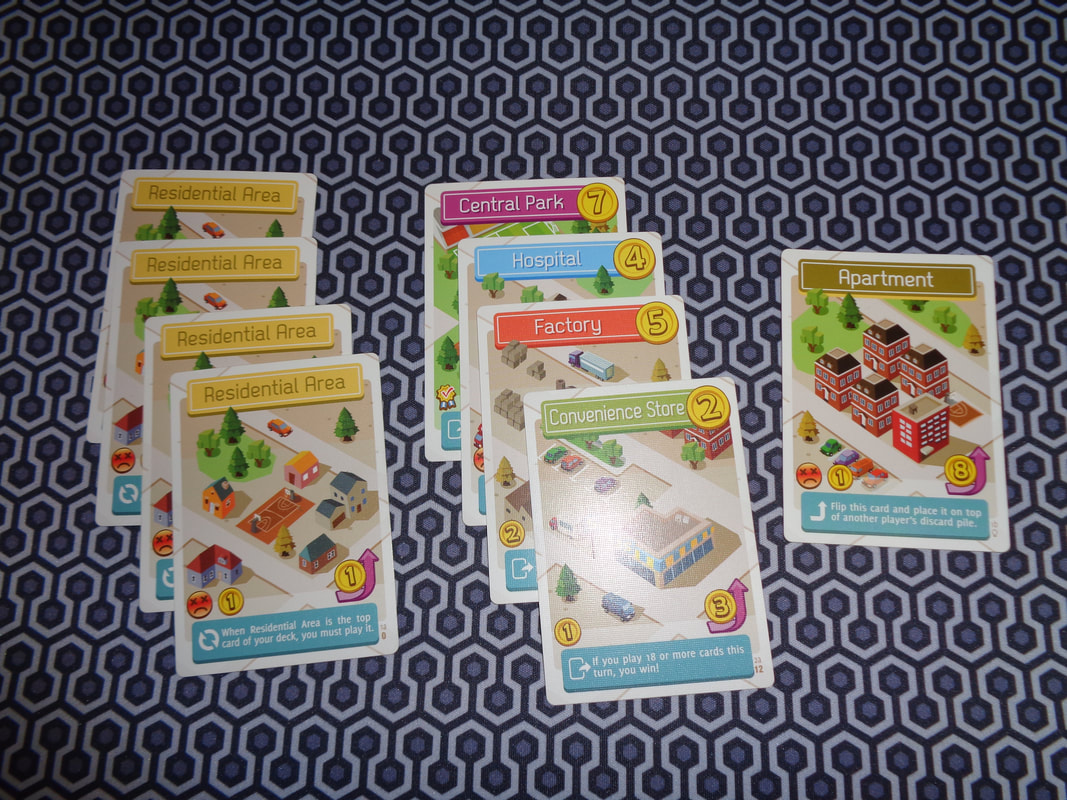
The cards are all the standard quality you'd expect from a card game. The game uses brightly coloured stylised art throughout and I always like this kind of artwork and I think it looks good here. additionally, the cards can be placed next to each to make a city landscape. Yes, it's unnecessary but it's a nice touch and shows some extra thought has gone into the presentation. Flip City uses some iconography, but all of it is clear and easily learned or understood. How's it play? Setup
On to play Each's active player's turn will consist of up to 2 phases, a play cards phase in which they play as many cards as they want or go bust and a buying phase.
Endgame Play continues until 1 of 2 winning criteria is met.
Overall
Flip City describes itself as a microdeckbuilder and it's not really wrong. Most deck-builders come with a supply-market of 10 card types or so but Flip City makes do with 4 types (5 if you include the micro-expansion), although they are double-sided, so there are actually 10 types of card. Even so, it's a very compact feeling game. For me however, where Flip City differentiates itself from other games of its kind is the implementation of a push-your-luck mechanic. It works well here, especially in conjunction with meeting the winning conditions, essentially forcing players to continue drawing cards and pushing their luck until they either have 8 VPs or 18 cards in play. As a result, Flip City is a little different to many deck-builders, which at their core are more-or-less about creating cash-generating engines to purchase cards that will earn them more cash during the early-game or VPs during late-game play. In Flip City, generating cash is still important because it allows players to acquire more cards but some of those cards will have to work towards being able to draw 8 VPs or 18 cards. Flip City is a quirky, charming, fairly light and quick to play pocket-sized deck-builder that presents players with some meaningful paths to winning and choices as well as some unusual game play and a nice little risk-and-reward mechanic. Given it's light nature, I'm not sure how the game will hold up to repeated play but that's sort of missing the point. This is a fun filler game that is good to ply every once in a while. It's worth a try and if deck-builders are you thing, then this will probably appeal to you. 13th May 2022 Friday the 13th continues and we in Farnborough for some more after work gaming goodness. Many games have small components that could be considered choking hazards, that however is not the case with... Joking Hazard, a game inspired by the Cyanide & Happiness comic strip. What's in a game?
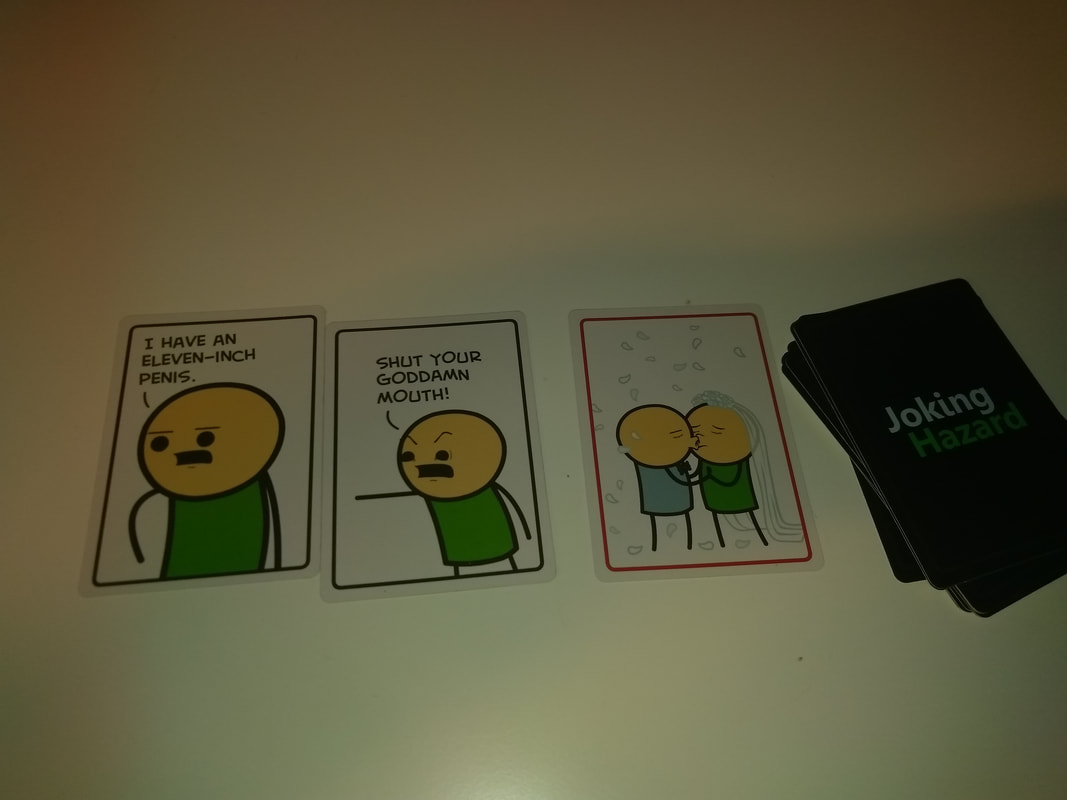
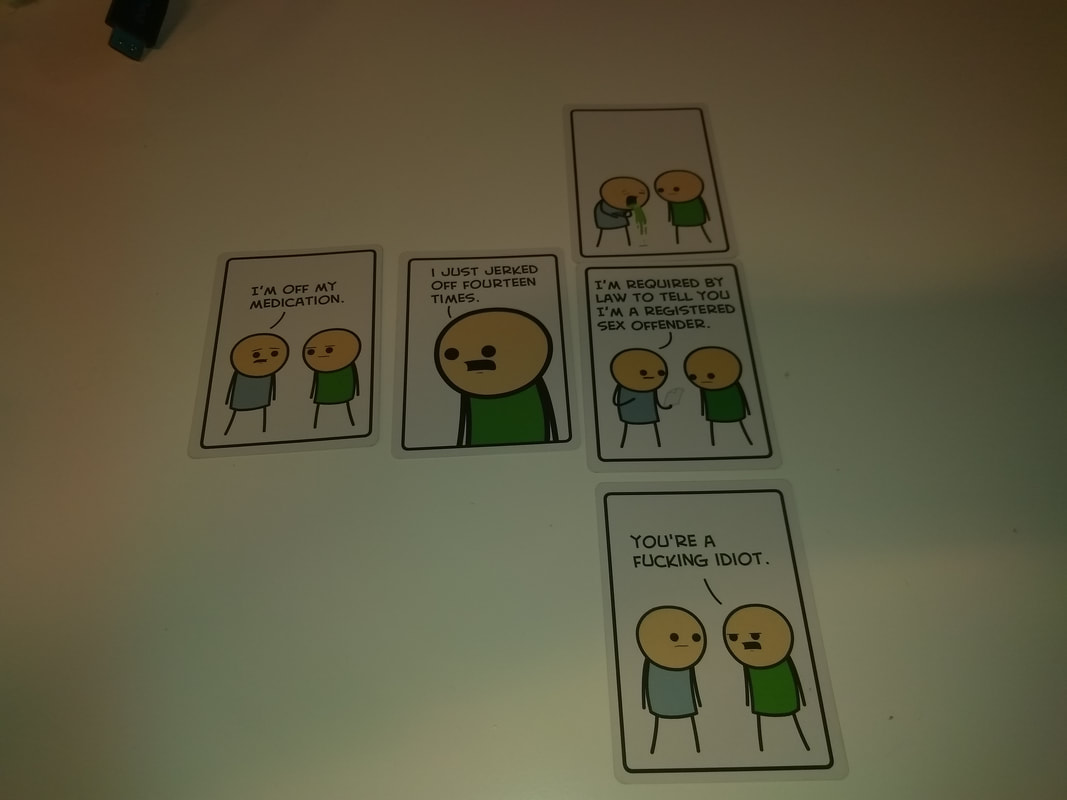
There's not much more to say about the cards, they're quality is pretty good, considering the game's origin, the artwork is exactly what is expected and the game uses no iconography. How's it play? Setup
On to play Individual cards in Joking hazard essentially have no context and this is a game about putting them into context by constructing jokes out of 3 comic panels, only the comic panels will be to some degree randomly created.
Endgame The first player to win 3 points, wins! Overall
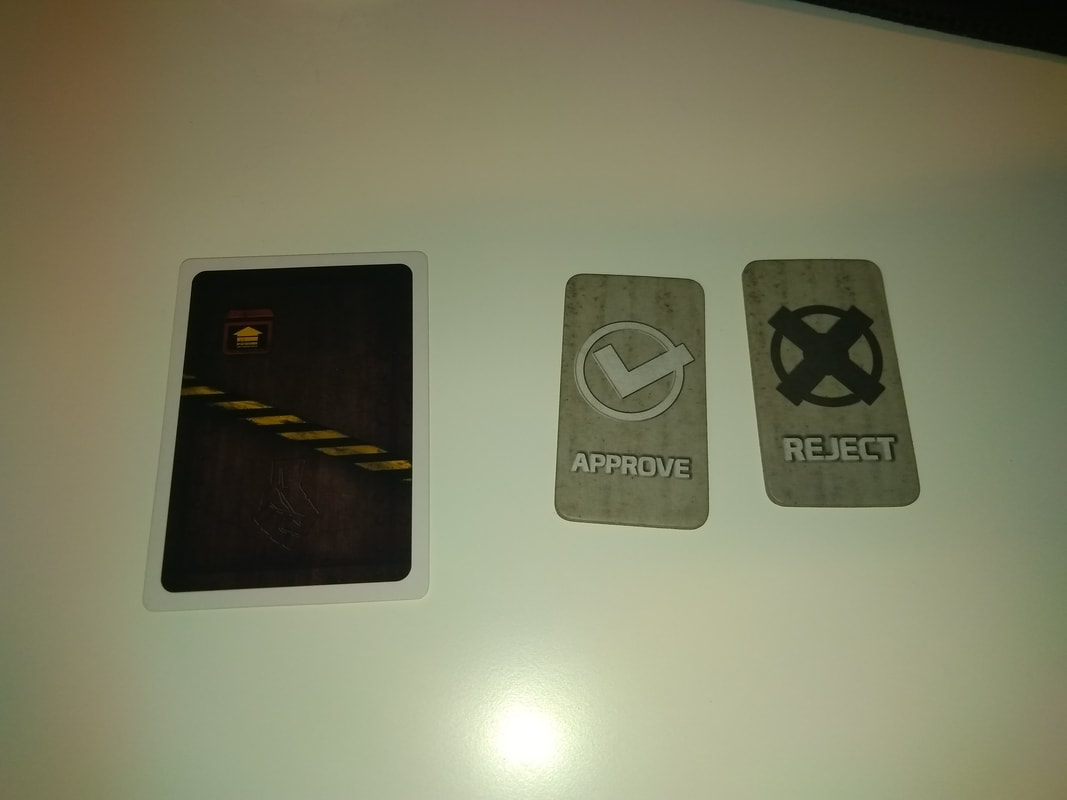
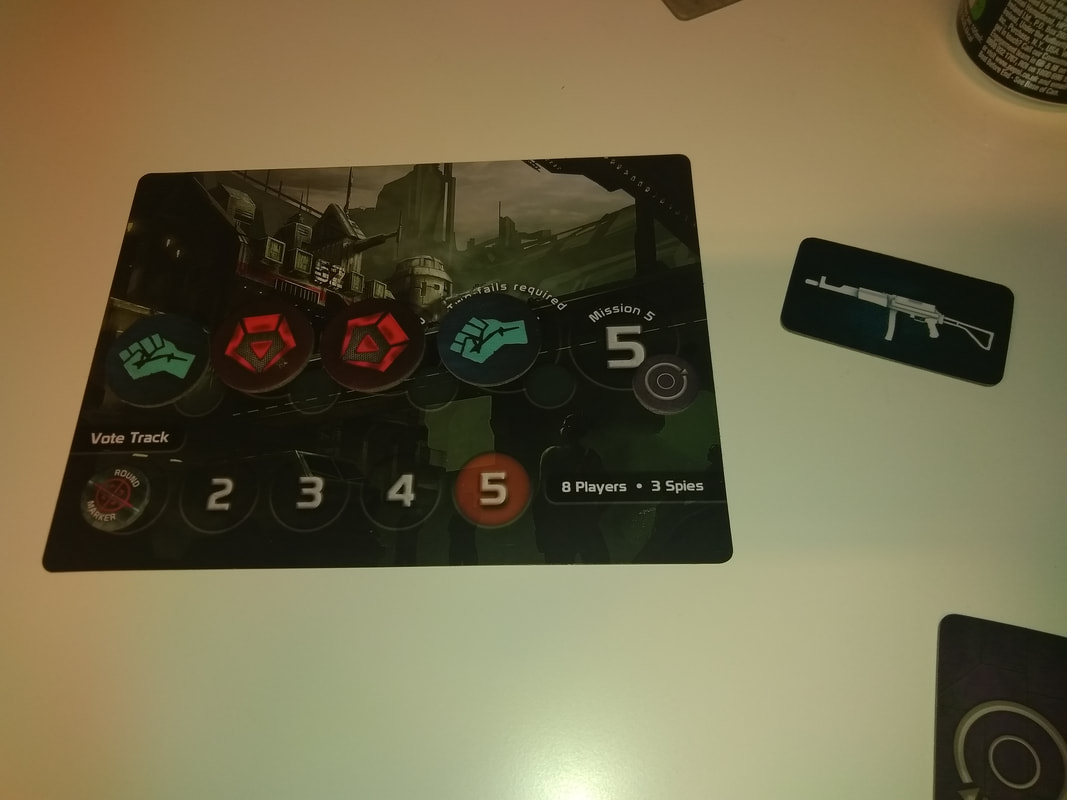
Joking Hazard is an accessible party game that can be played by up to 10 participants and is equal parts mildly amusing and mildly offensive. Well... as offensive as the Cyanide & Happiness comic it's based on. So I guess if you're easily offended, you might want to give this a miss. From a gameplay perspective, you would be forgiven for thinking Joking Hazard is just the same as other 'you be the judge' games. However, Joking Hazard differs because individual cards have no context. There is no statement A and answer B. The players create context themselves, which gives the game a slight edge. Is it any good though? The answer is; sort of, which to be honest, is not a good answer really and a bit of a cop-out. But the truth is; this games clearly sits in the domain of beer-and-pretzels. If you're going to be playing it with a bunch of slightly dour-faced gamers who usually play 6 hour empire building, resource managing, epoch spanning games, no one's going to enjoy this. However, if you play it with some work colleagues or non-gamers who's only understanding of games is 'Is it like monopoly?' then they'll probably have a blast, especially if they've had a drink or two and that's who the game is targeted anyway. 13th May 2022 Friday the 13th! And I'm in Farnborough with work colleagues for some gaming fun. Viva la resistance! Will you overthrow the tyrannical oppressive government or welcome your new overlords? Let the cards decide. Resistance is a hidden role card game that is also the predecessor of Arthurian themed The Resistance: Avalon and as such is mechanically almost identical to that game. In fact The Resistance or at least the basic version of it is actually a simpler game than The Resistance: Avalon. Reading my blog about The Resistance: Avalon will tell you everything you need to know about The Resistance. A full write-up here would be pointless. There's only 1 notable difference: The basic version of The Resistance only has 2 role cards, resistance fighter and spy. Otherwise the games play identically. At the start, each player is given a secret role as a resistance fighter or spy. The key thing here is that the spies know who each other are and are trying to sabotage the missions while the resistance fighters are trying to uncover the spies. The mission leader chooses a team and all players vote on whether to approve or reject that team. When a team is finally chosen, they all go on the mission. This involves the team voting on whether a mission succeeds or not. Resistance fighters must choose to succeed at missions but spies can choose to either succeed or fail. All of these decisions and voting are done in secret and resistance fighter will need to watch the voting, who votes in what and the outcomes of the voting. Spies will need to be patient, revealing their hand too early will flush them out. If by then of the fifth mission, the spies have not sabotaged 3 missions, then the resistance wins. If 3 missions are sabotaged Overall
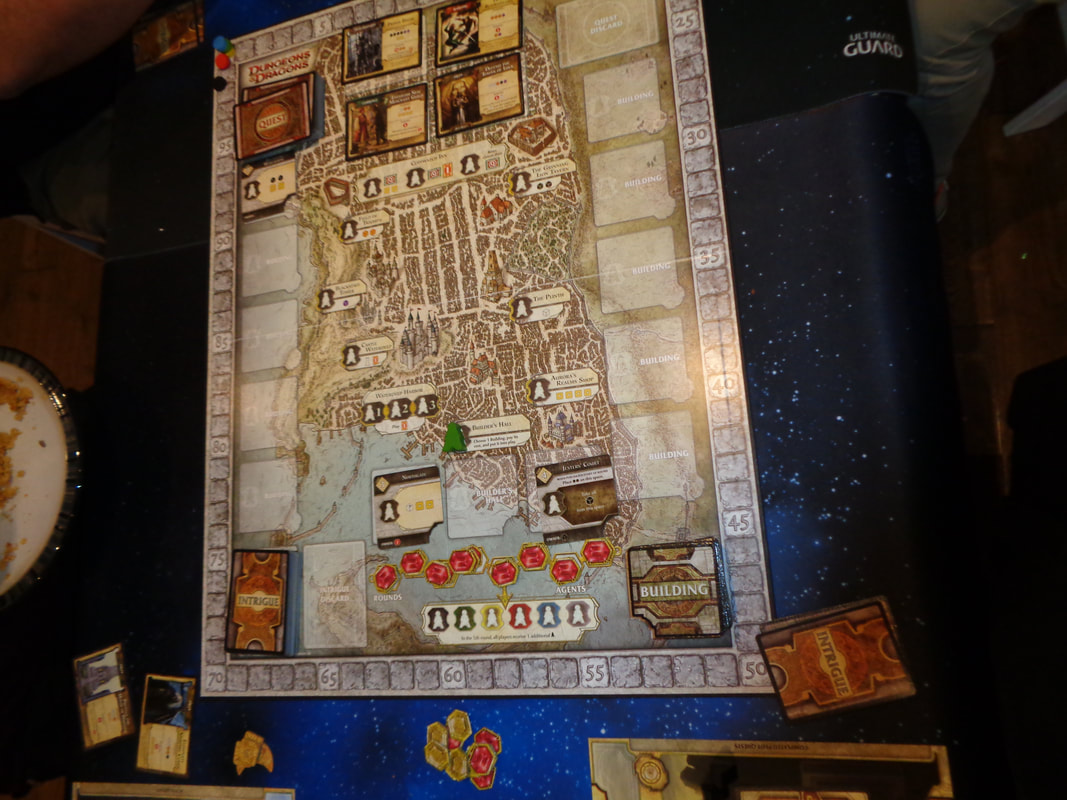
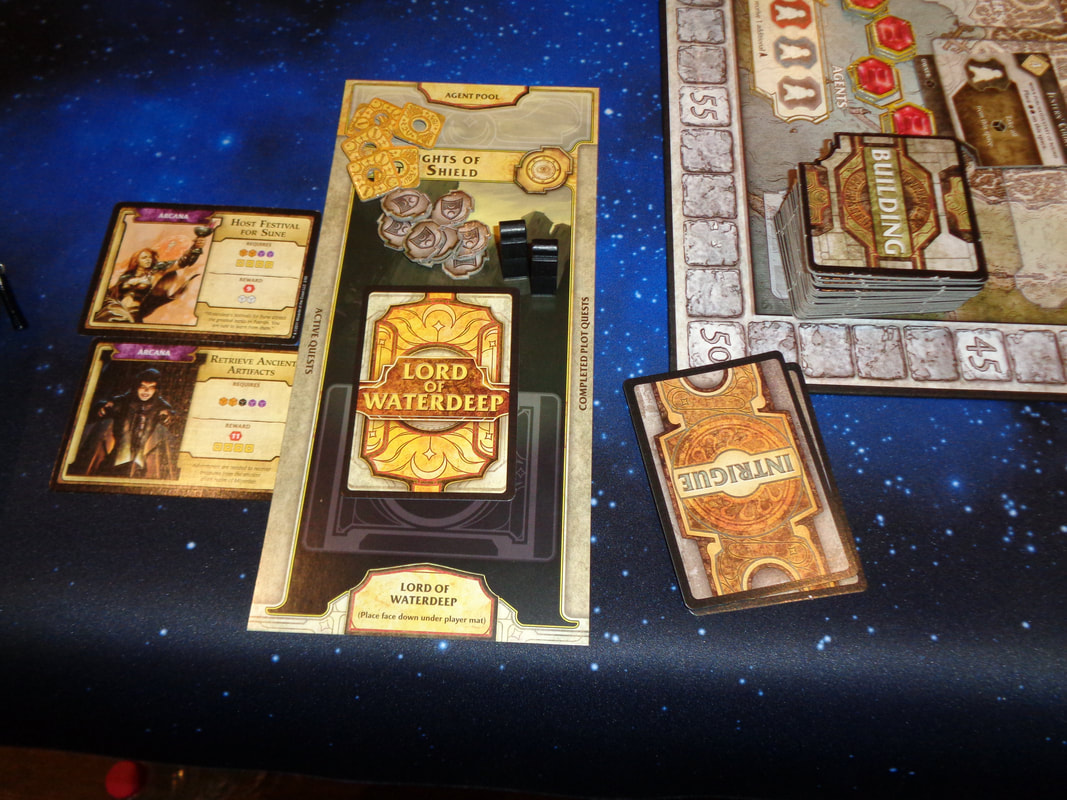
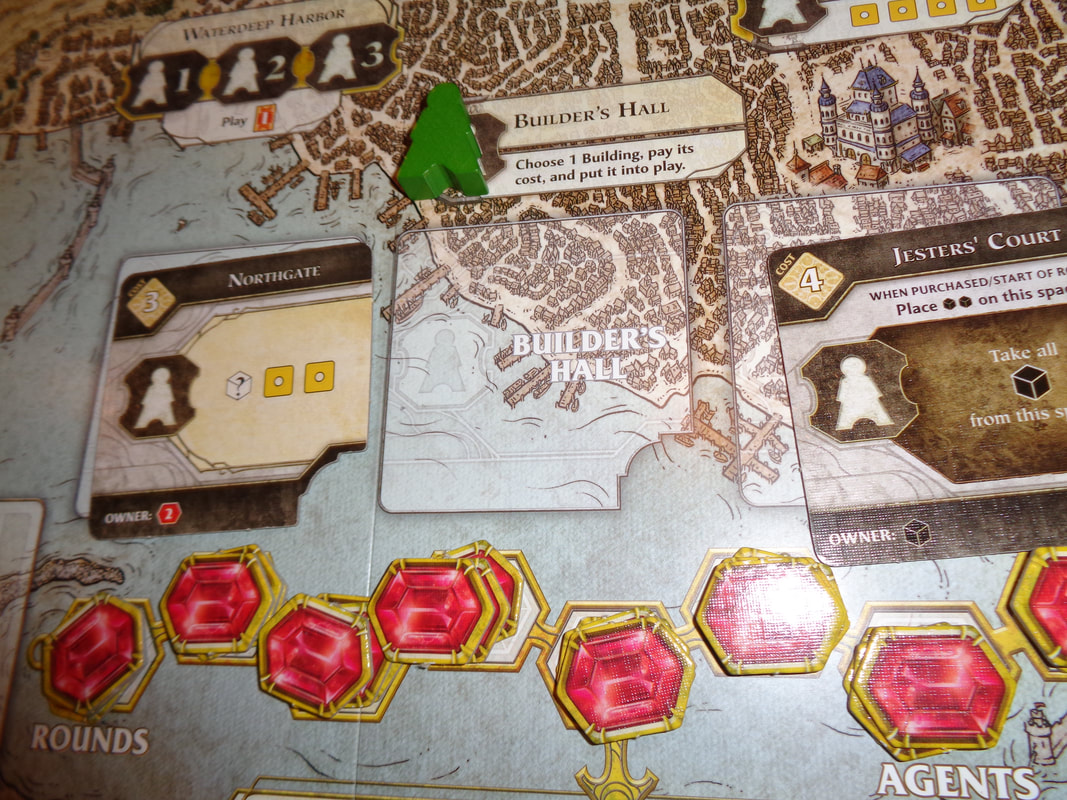
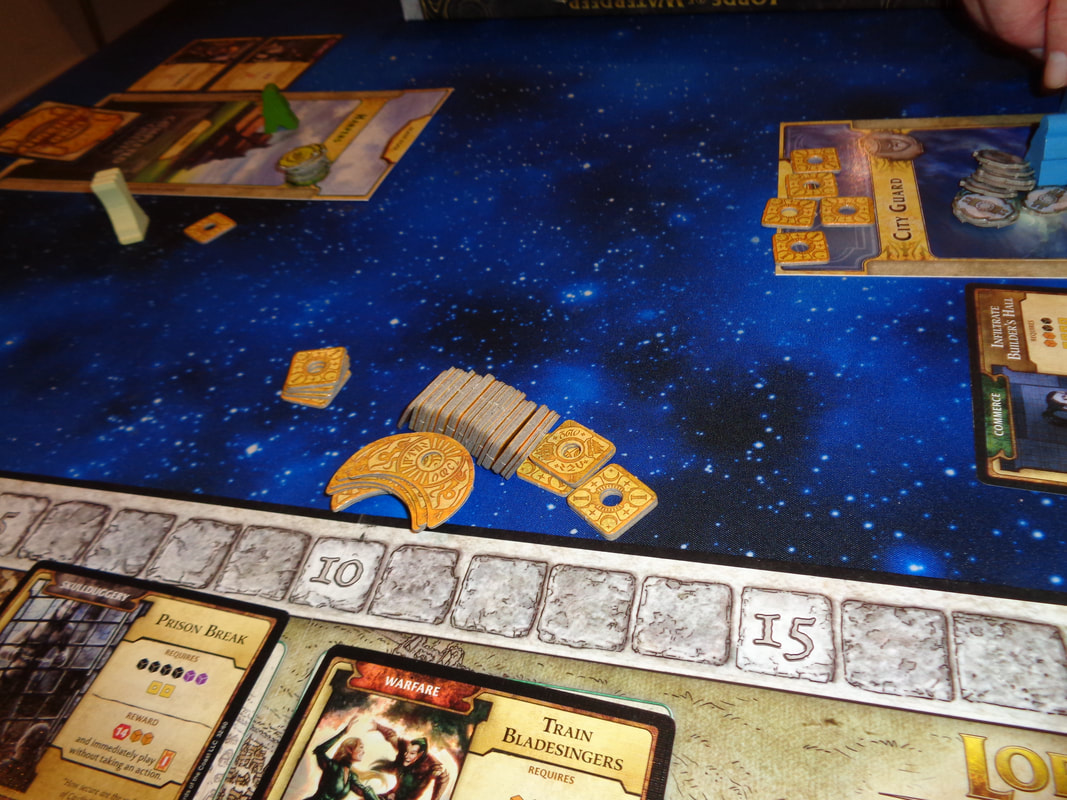
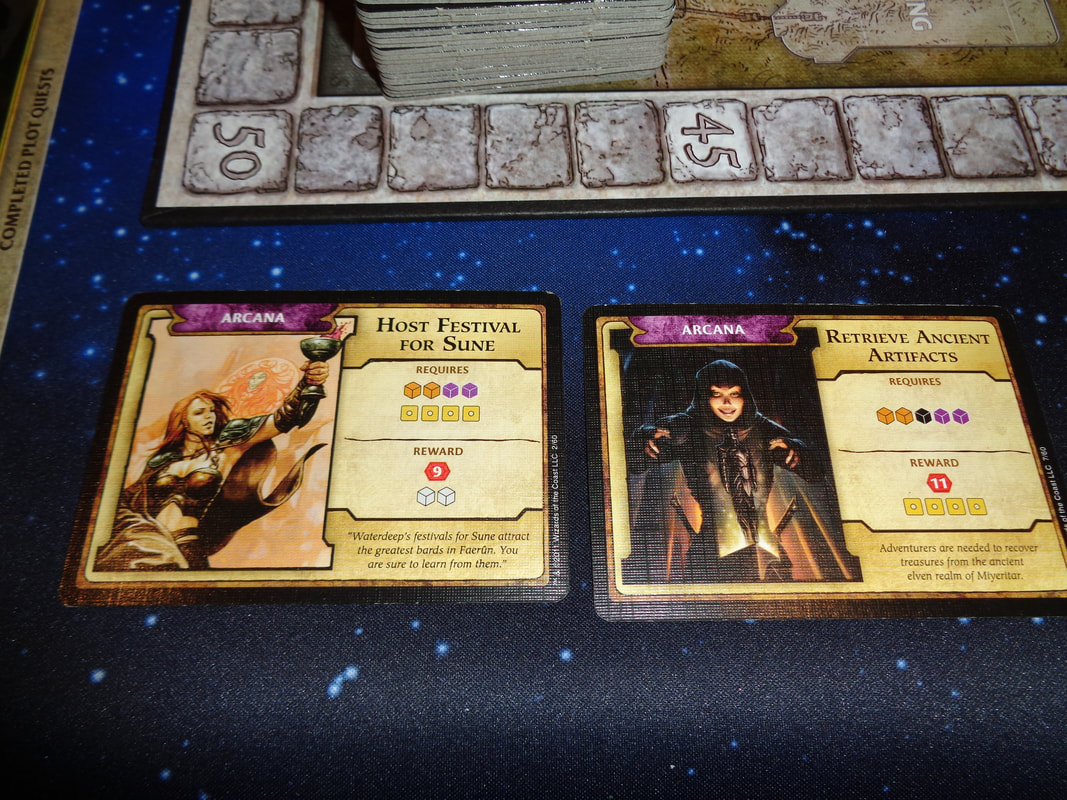
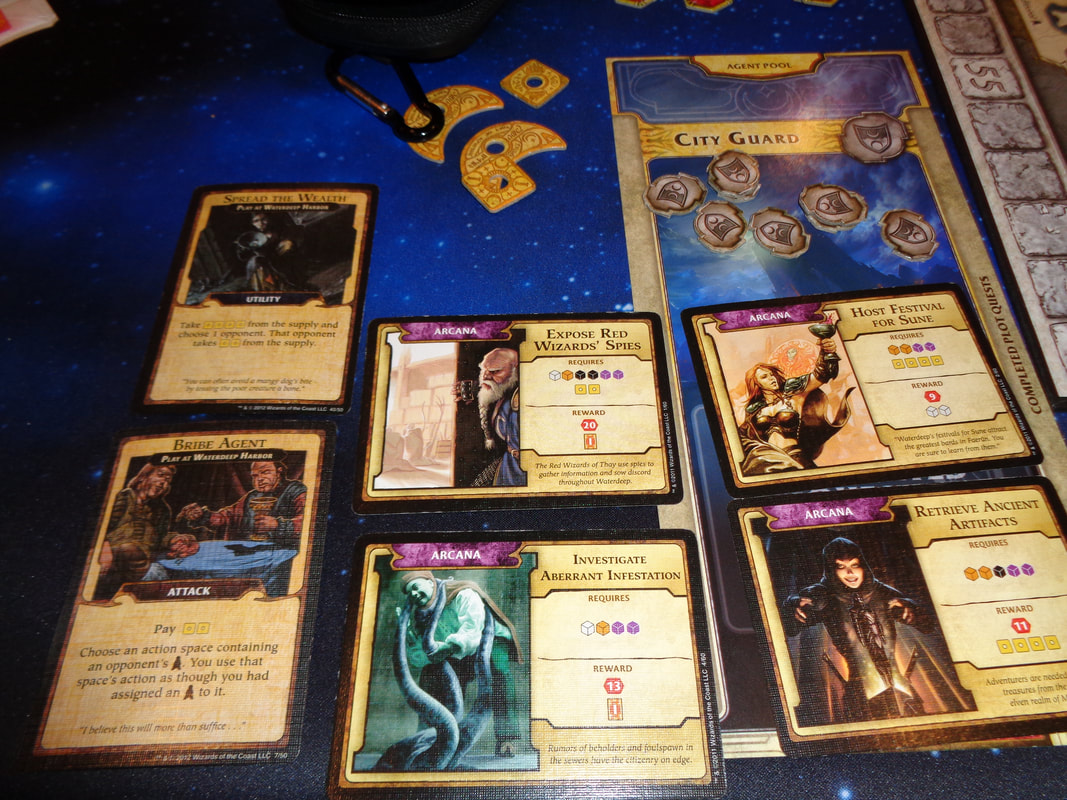
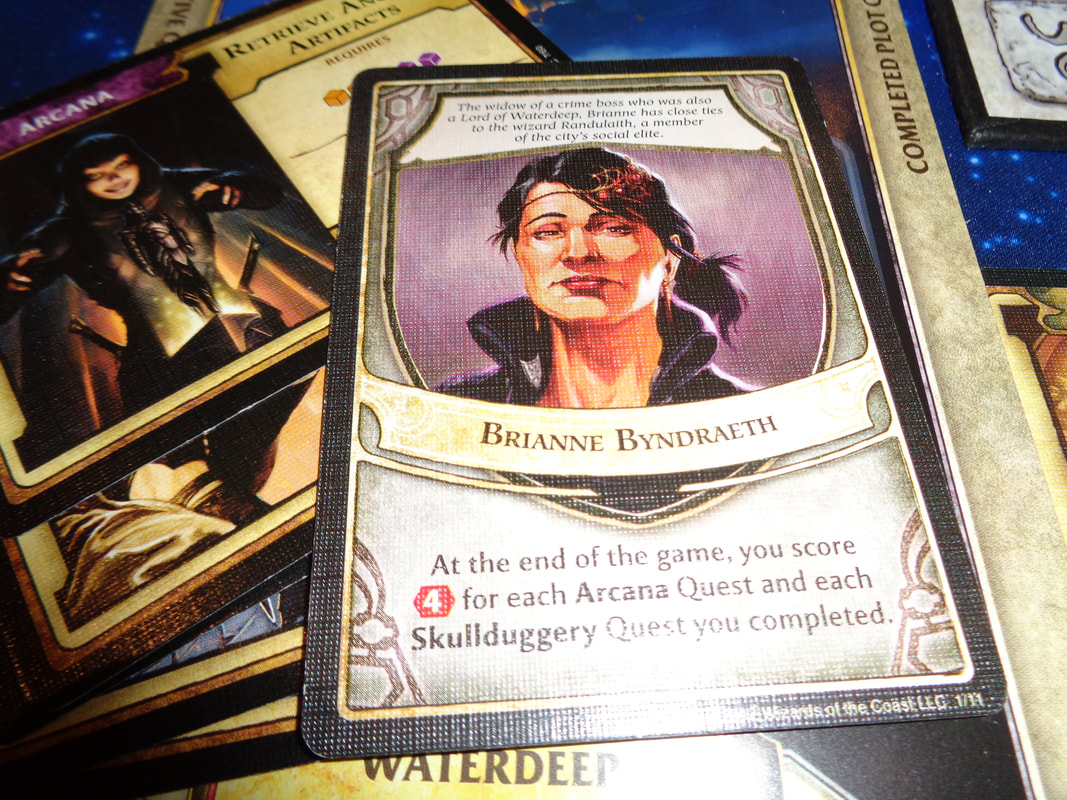
There's not too much to add here, everything I said about The Resistance: Avalon also applies here, but that was sometime ago and I can't remember exactly what I said. So I'll summarise here. Mechanically, The Resistance is pretty solid with a easily understood set of rules that give opportunities for lying, deception and deduction. There's nothing to fault there. The quality of the game though, comes almost entirely from the participants. Players who love to bluff and mess with other players will revel here and be in their element. Whilst those who aren't fans of this type of game are likely to find it slightly uncomfortable, won't enjoy it and thus probably won't play it as well. So if you're fan of hidden role games and are playing with like-minded people, The Resistance is definitely worth trying. 2nd May 2022 It's a bank holiday Monday and we're round Simon's for some gaming fun. Waterdeep, famed city in The Forgotten Realms and home to many a adventurer, ready to brave the wilderness in the search for treasure and glory... oh wait... This Dungeons & Dragons setting licensed game is nothing to do with Dungeon & Dragons... It's actually a political-intrigue themed worker placement game! What's in the game?
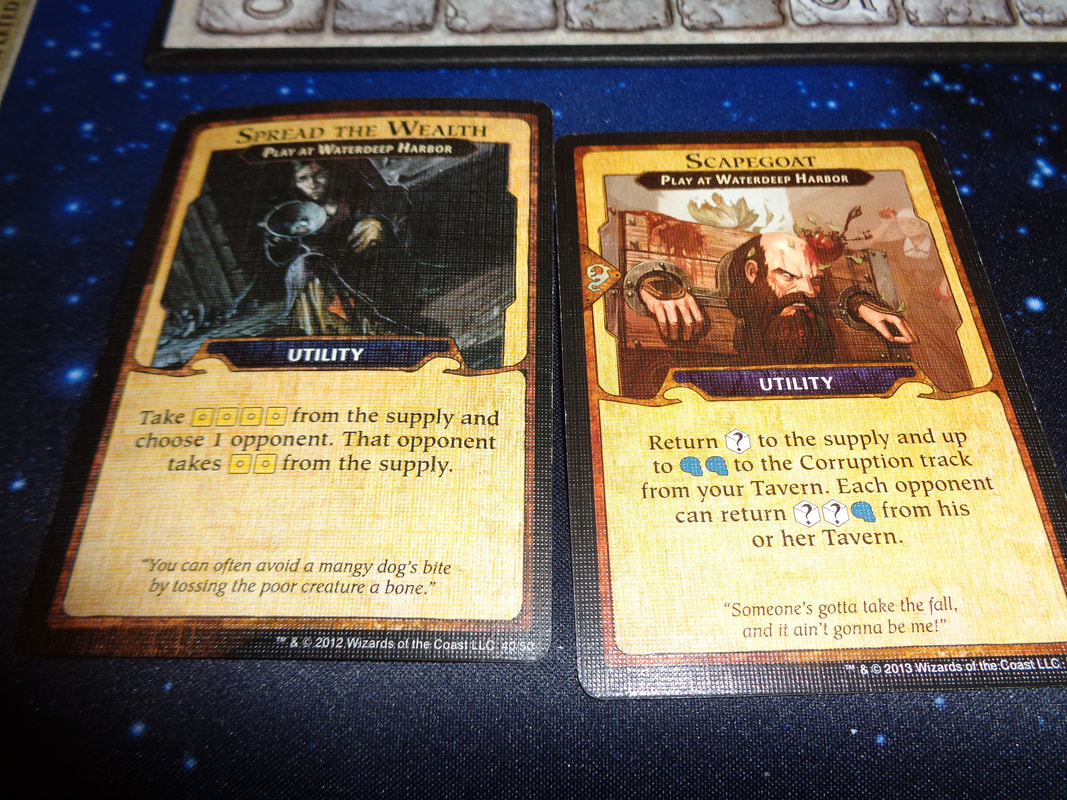
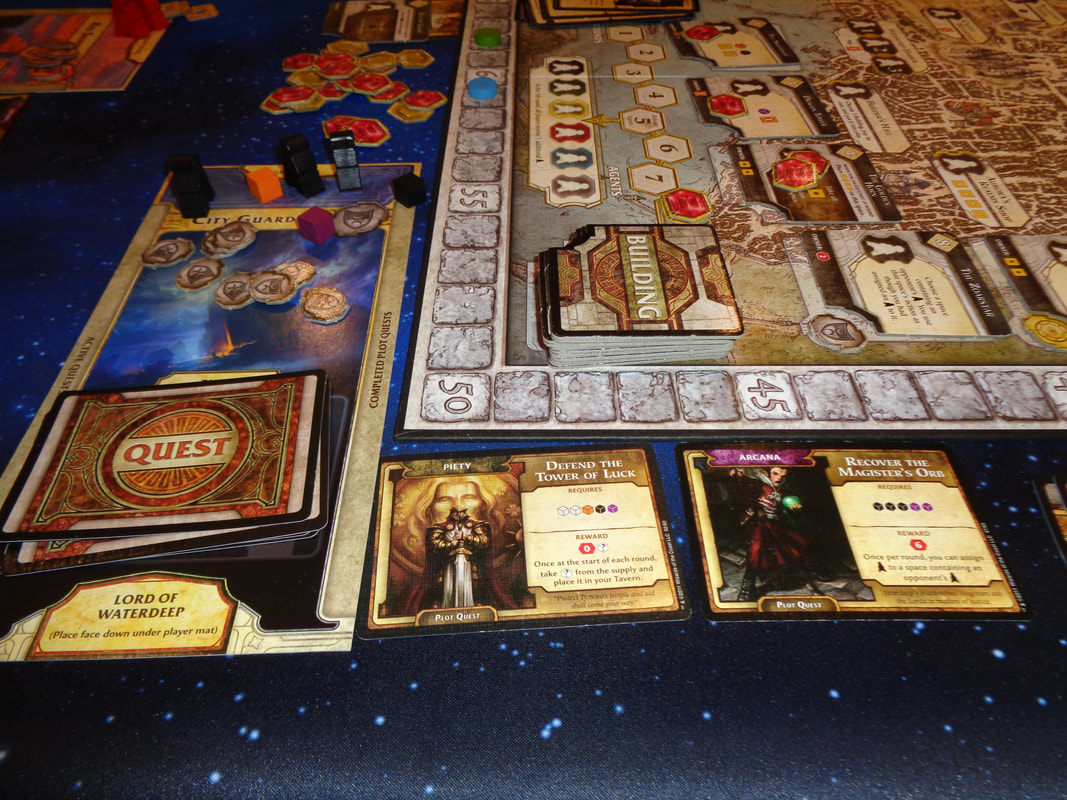
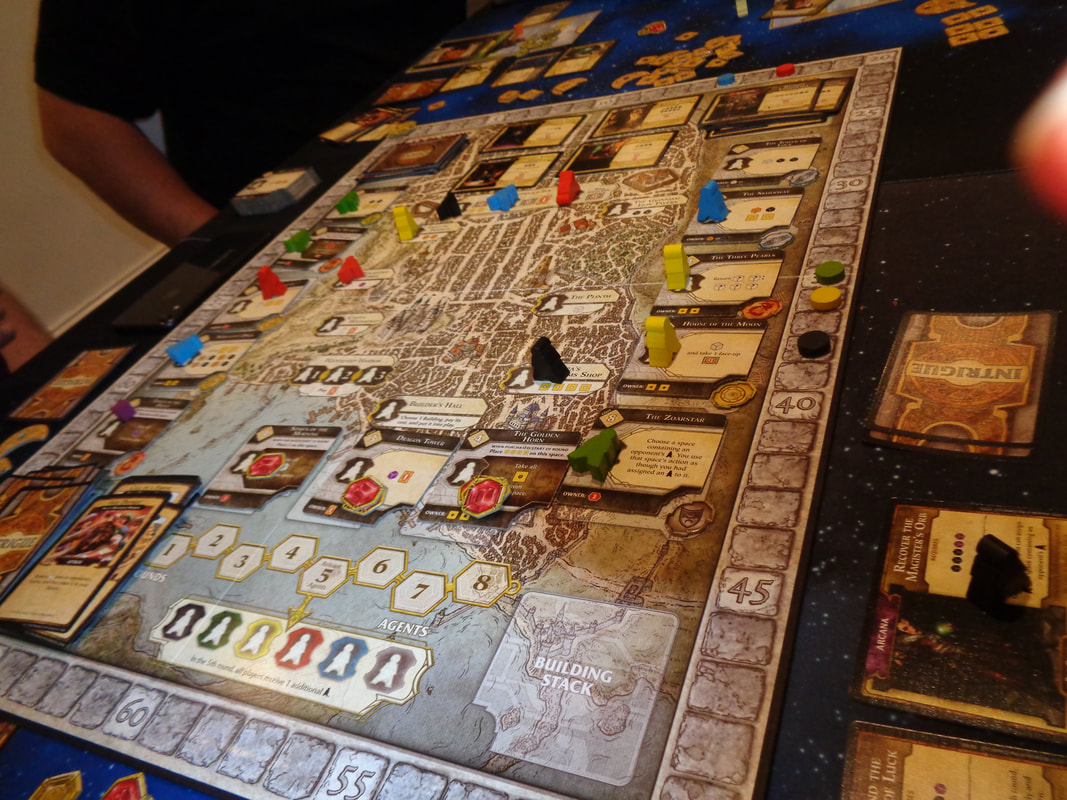
There's a lot of excellent art throughout the game. I'm not sure if it's been created specifically for Lords of Waterdeep or sourced from the large amount of Forgotten Realms/D&D artwork that's been produced over the decades but either way, it's good quality and generously used on all the game's cards. The other piece of significant artwork is the map on the board, it's very well detailed, although it does make the board look a little 'busy'. Regardless of this I still quite like it. The game does use a fair amount of iconography, for the vast majority of icons, it's pretty clear what they mean and there was minimal need to refer to the rules. How's it play? Setup
On to play Lords of Waterdeep uses the traditional turn structure with the active player taking an action and play progressing to their left. When someone is the active player, they can act in 2 phases. Firstly they must take their action, a player can only pass when they have no more agents to play. finally, the active player may complete a quest if possible.
Endgame The game ends at the end of the 8th round and goes to final scoring. VPs come from the follwing sources.
Points are tallied, highest score wins. Overall
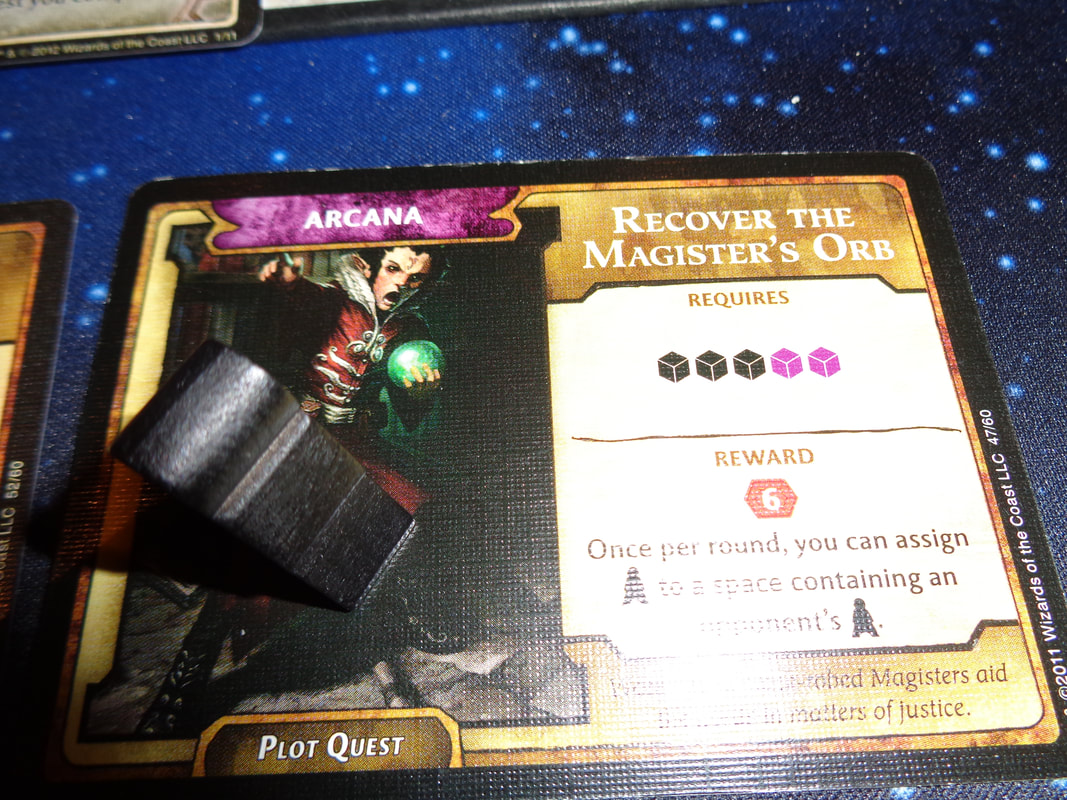
Now, I'm by no means whatsoever particularly knowledgeable about the Forgotten Realms setting but it's quite impressive how Lords of Waterdeep manages to marry a worker placement game with the flavour of the setting, or at least a part of it that takes place in Waterdeep. It's not vital to the rules or gameplay but conversely, neither is it jarring or hindering. The game is all about optimising actions to gain required resources as efficiently as possible to complete quests which must also be acquired while at the same time trying to predict and out manoeuvre other players: Most of the locations that confer resources will only have space for a single worker, making it unlikely that players will get all the resources they want in a single round, prioritising is very important because completing quests is very important, not only do quests provide VPs, they can confer useful benefits as well. This ties in with the Lord cards which are essentially secret objectives. Not only may players be competing for certain quest types and their respective resources, there's also a higher level of play where resources and quests can be denied to other players, provided their objectives can be guessed of course. The advanced buildings is an interesting proposition, it adds an element of emergent strategy to the game, changing the status quo, giving players new options and making them re-asses their plans. Constructing a useful building also has the benefit of earning the builder its bonus and inevitably, it'll be used by other players. There's not much else to say really, the gameplay is solid if somewhat unremarkable; players of worker placements games will find themselves on familiar ground here which may or may not be good thing - depending on your mileage. Perhaps the playing time is a touch too long for what it is but none of this stops Lords of Waterdeep from ultimately being an enjoyable game. If the Forgotten Realms setting doesn't put you off for some reason and you want to try a worker placement game, then Lords of Waterdeep is probably worth a look. 1st May 2022 It's a Sunday and we're logged into Board Game Arena for an evening of gaming. Azul; not a game about a villainous god-entity from Ghostbusters but actually a game about creating mosaic, decorative wall patterns with multi coloured tiles. My friend's a plasterer, wonder if he'd be good at this! Caveat: We've only ever played Azul digitally. What's in a game?
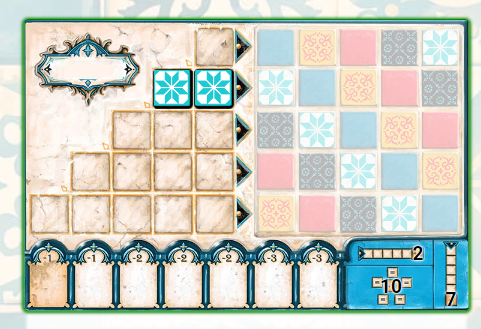
Azul doesn't make use of icons and the relationship between tokens and a player board is clear. How's it play? Setup
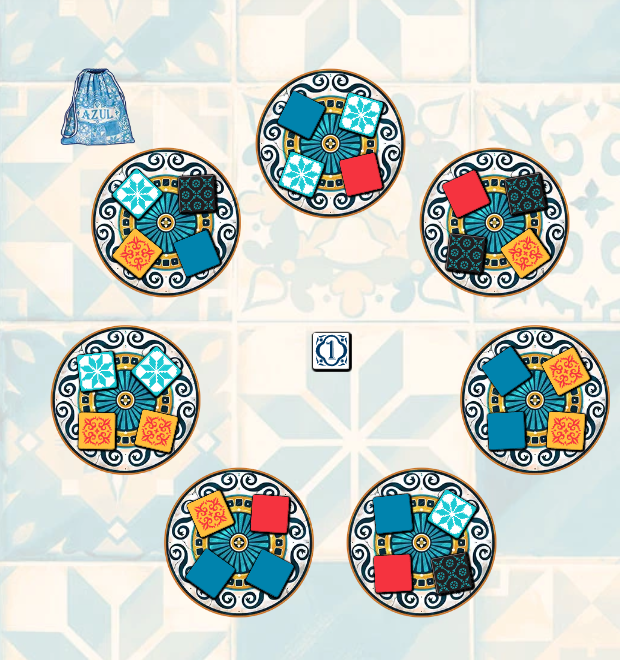
On to play In Azul, the player's objective is to place tokens on to their respective spots on the wall grid of their player board, which scores them VPs. This is done by filling in the horizontal lines in the pattern lines grid; players must collect tokens of the type they need and place them in the spaces on the respective horizontal line. Depending on the line, it will require 1-5 tokens to fill a line. When a line is filled, one of those tokens can be placed in the matching space on that line at the end of the round. All tokens will score 1 or more VPs when placed, tokens can also score again at the game end. Azul makes use of a traditional turn order, with the active player performing their action (Which will involve taking 1 or more tokens of the same type.) before play progresses to the player on the left.
Endgame When any horizontal line in the wall grid on any player's board has been filled, the endgame is triggered. The current end of round actions and scoring are completed and the game goes to final, bonus scoring. Bonus VPs can be scored scored by the following:
Points are tallied, highest score wins. Overall
On a rudimentary level, Azul's mechanics involve drafting handfuls of tokens and then placing them on to a board where their relative positioning scores varying amounts of VPs. It's a mechanic (Or a variation of that mechanic.) that have been employed in several other games and I'd say that Azul is a mid-weight iteration of it. As written the rules feel a little opaque and counter-intuitive but in application, they're pretty straightforward. Where Azul get its weightiness comes from two areas of the rules; how the drafting - particularly drafting from mats works and then where and when tiles should go on the grids. As a basic concept, collecting as many tokens as possible to fill out the pattern lines and consequently get tokens on the wall grid is the way to go. However, there's more to it than. For example, simply collecting too many tokens can sent the excess to the floor line and cost VPs, this is more important than it sounds, because as tokens are taken from the mats, it's inevitable that other tokens will build up in the centre and trying to predict this can be very important. Depending on circumstances, a lot of tokens of a particular type may well build up in the centre. A player may want 4 red tokens for example, should they try and take them in drips and drabs from several mats over several turns or wait for them to accumulate in the centre? Provided of that they do accumulate in the centre, what if too many go to the centre? There's definitely a higher level of play where watching what other players are doing is important. Quite often it's clear what they're prioritising, what they want or don't want in the next few turns. If they have a single token in the 5-space line on the left, it's likely they'll be looking to fill that out. Conversely, if they've already got 1 or more scoring tokens on the right side, they'll be unlikely or unable to use more of those tokens. Being able to predict other player's objectives will help when making decisions. It can also allow a player to try and deny tokens to other players and curiously, on some occasions force other players to take tokens they don't want. Players will also want to think about how and when to place their scoring tokens. Putting them down willy-nilly is a sure way to minimise points. Obviously in order to optimise points, tokens should ideally be put on to the wall adjacent to other tokens. Placing them vertically is a good way to go, since completed vertical lines earn an additional 7 VPs each, unless a player is looking to end the game, in which case they can go for the horizontal line! This brings me to an interesting facet in the mechanics, scoring the diagonal, i.e., putting all the tokens of 1 type on to the wall grid scores the biggest bonus; 10 VPs but as they are diagonal, they can't score off of each other! Additionally, once a diagonal of a type has been completed, the player can no longer score tokens of that type at all, collecting those tokens will now just incur penalty points in the floor line. Should a player hold off getting the diagonal until later which lowers the risk of sending tokens to the floor line or wait? Waiting will mean risking not completing it at all. I have to say I'm not fond of mechanics which lose players points especially if it can occur out of their control, it irritates like a unreachable itch and can be a little stress inducing. I find that's the case with Azul as well. However, having said that, the truth is; this is what makes Azul a good game and gives it depth. It means that collecting tokens either earns VPs (Or contributes towards acquiring VPs.) or loses VPs. It's always a meaningful decision. Other iterations of these mechanics are a little less stressful, brain-boiling and perhaps more accessible. But if depth is what you're looking along with a dollop indirect interaction between players, then Azul is worth a try. These are the game totals for April '22. The numbers all up by 1 compared to March '22. Total games: 41 Different games: 29 First plays: 7 Sunday 3rd on Board Game Arena
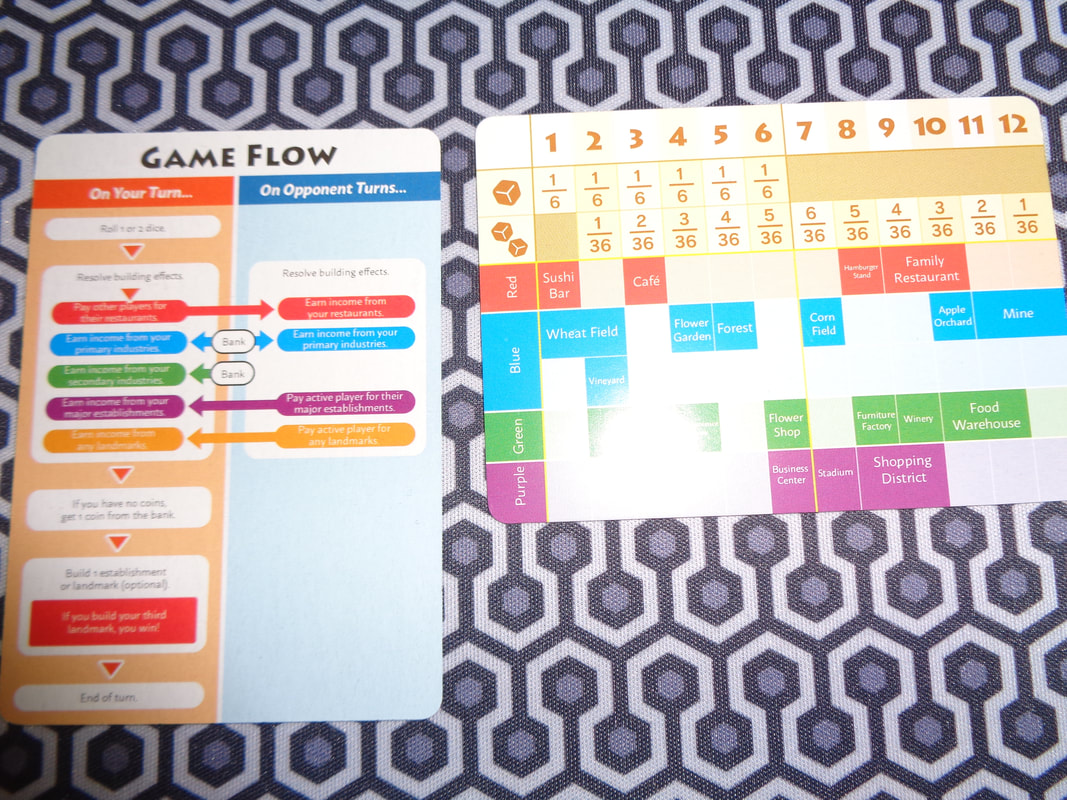
Hanabi - 2 Railroad Ink - 22 Space Base - 9 Stella - Dixit Universe - 4 Lucky Numbers - 16 Tuesday 5th at The Sovereigns with the Woking Gaming Club Raids - 2 Muffin Time - First Play! Sunday 10th on Board Game Arena Las Vegan - First Play! Splendor -17 Loco Momo - 6 Lucky Numbers - 17 Railroad Ink - 23 Tuesday 12th at The Sovereigns with the Woking Gaming Club Muffin Time - 2 Bang: The Dice Game - 4 Deep Sea Adventure - 4 Tiny Epic Defenders - 3 Friday 15th on Board Game Arena Boomerang: USA - First Play! Cloud City - 11 Can't Stop - 14 Stella - Dixit Universe - 5 Sunday 17th on Board Game Arena Dice Forge - 11 Carcassonne - 7 Potion Explosion - 12 Railroad Ink - 24 Lucky Numbers - 17 Tuesday 19th at The Sovereigns with the Woking Gaming Club Babylonia - First Play! Port Royal - 19 Thursday 21st at Simon's Unlock The Escape Game: Star Wars - First Play! Sunday 24th on Board Game Arena Loco Momo - 7 Space Base - 10 Lucky Numbers - 18 Railroad Ink - 25 Can't Stop - 15 Tuesday 26th at The Sovereigns with the Woking Gaming Club Hellapagos - First Play! Codex Naturalis - 20 Friday 29th at Farnborough Port Royal - 20 Saturday 30th at Wogglecon 3 Century: Eastern Wonders - 4 Sushi Go! - 12 Machi Koro 2 - First Play! Tiny Epic Galaxies - 6 Quacks of Quedlinburg - 4 30th April 2022 It's a Saturday afternoon and Wogglecon 3 with the Woking Gaming Club is in full swing. The next game of the day was Machi Koro 2 which is the follow up to the most excellent original Mach Koro and which you can read about here. Like its predecessor, Machi Koro 2 is a tableau and engine building card game all about constructing a city, What's in a game?
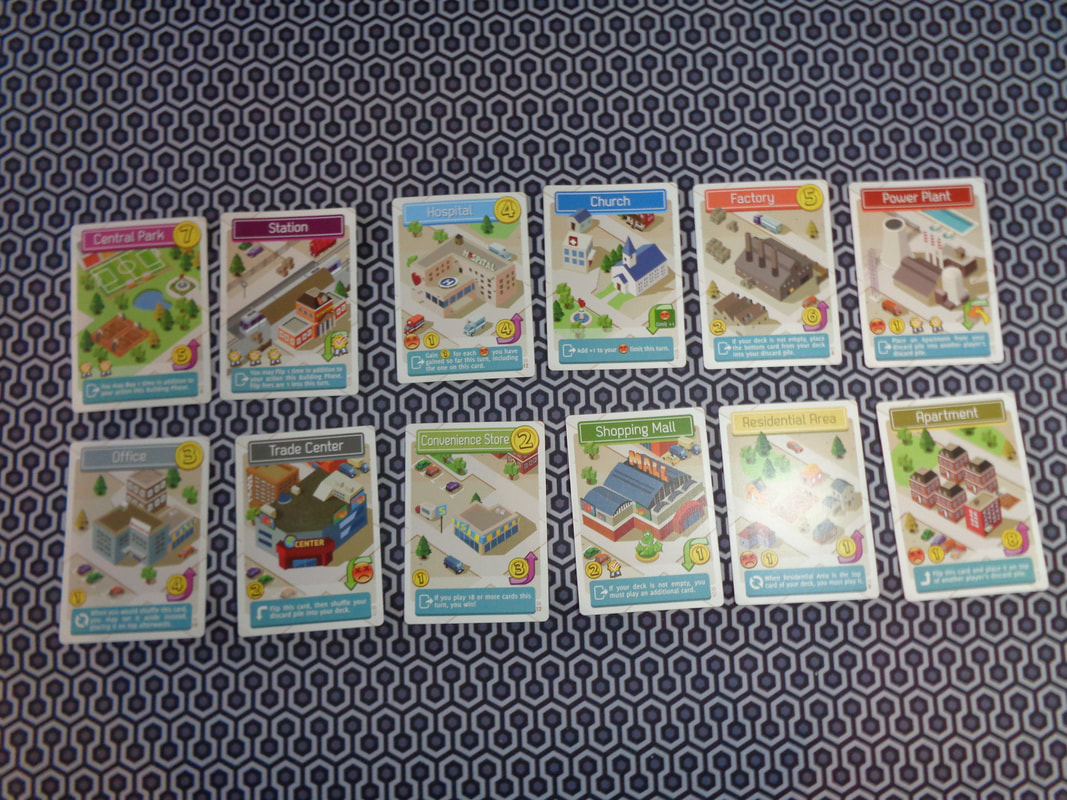
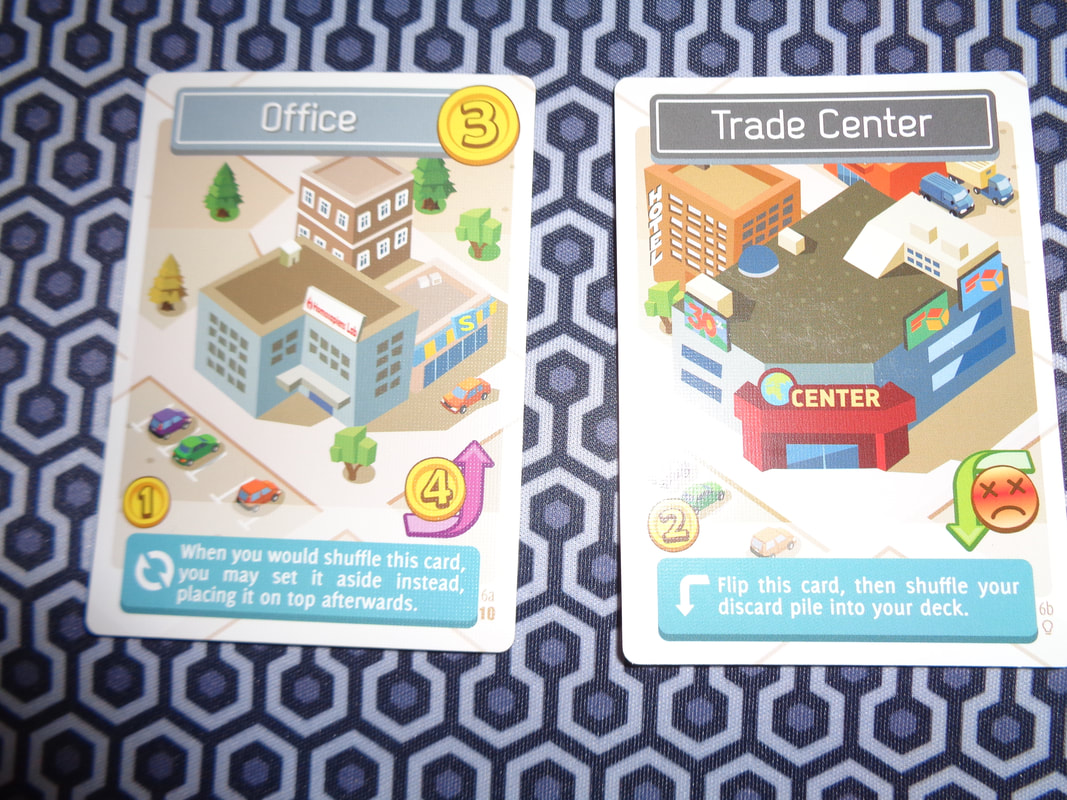
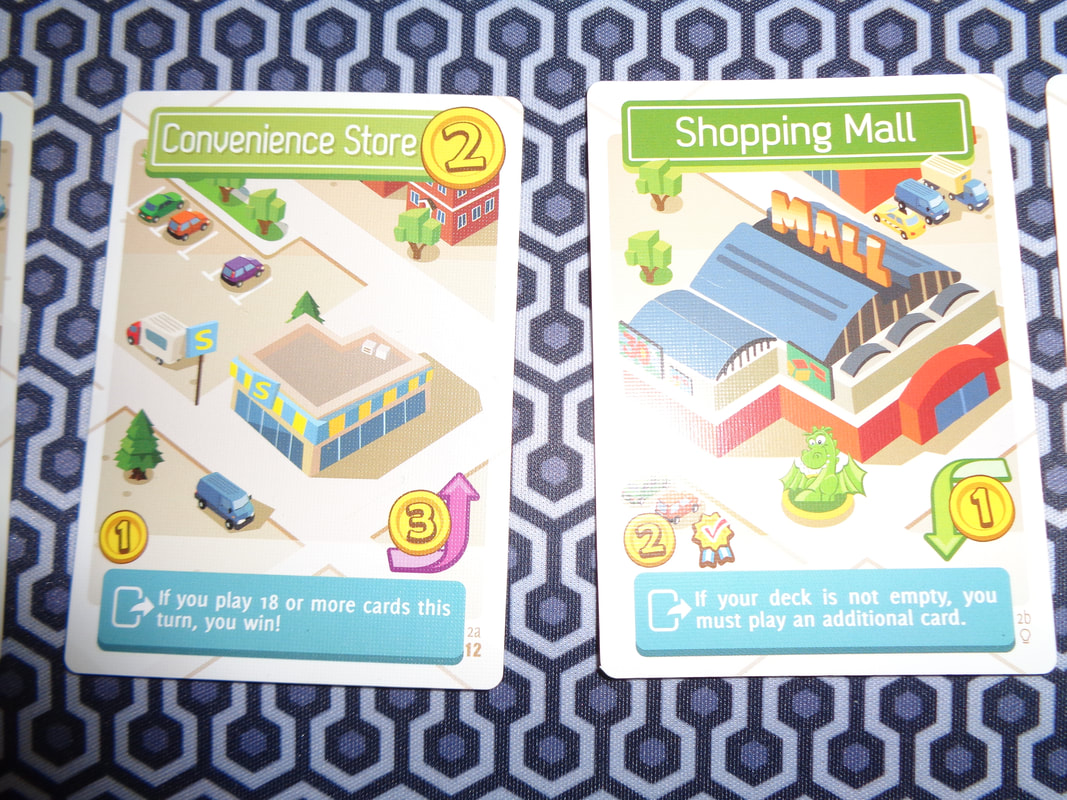
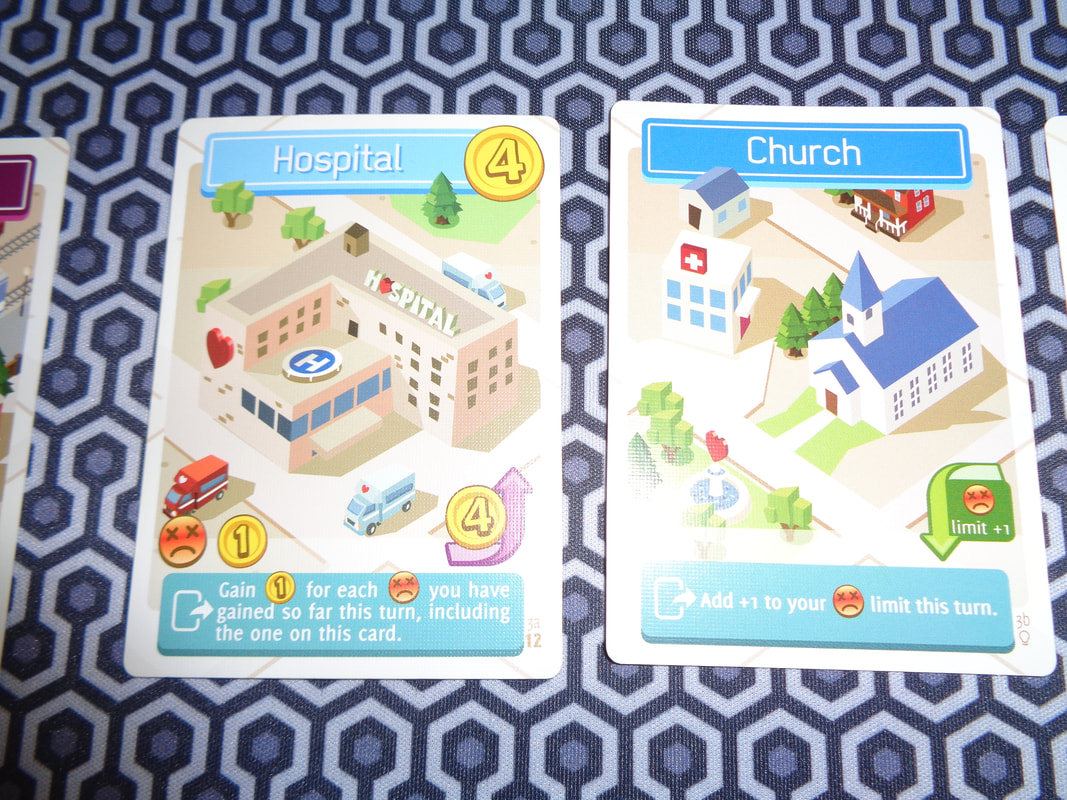
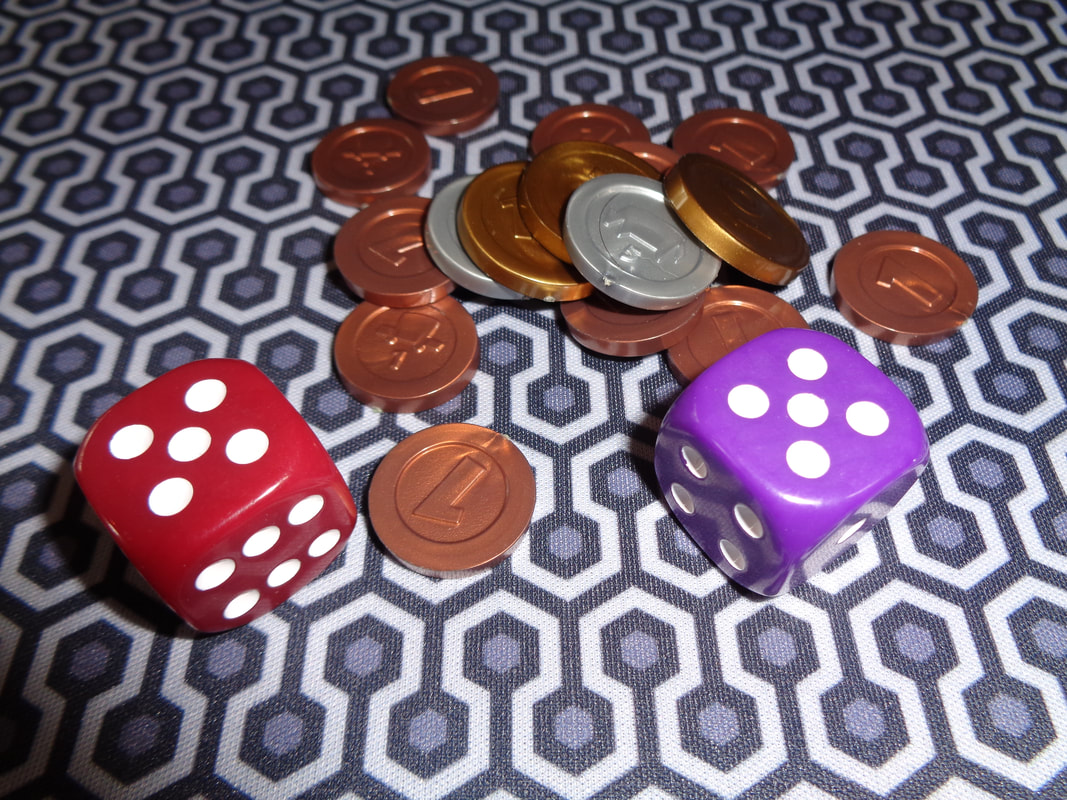
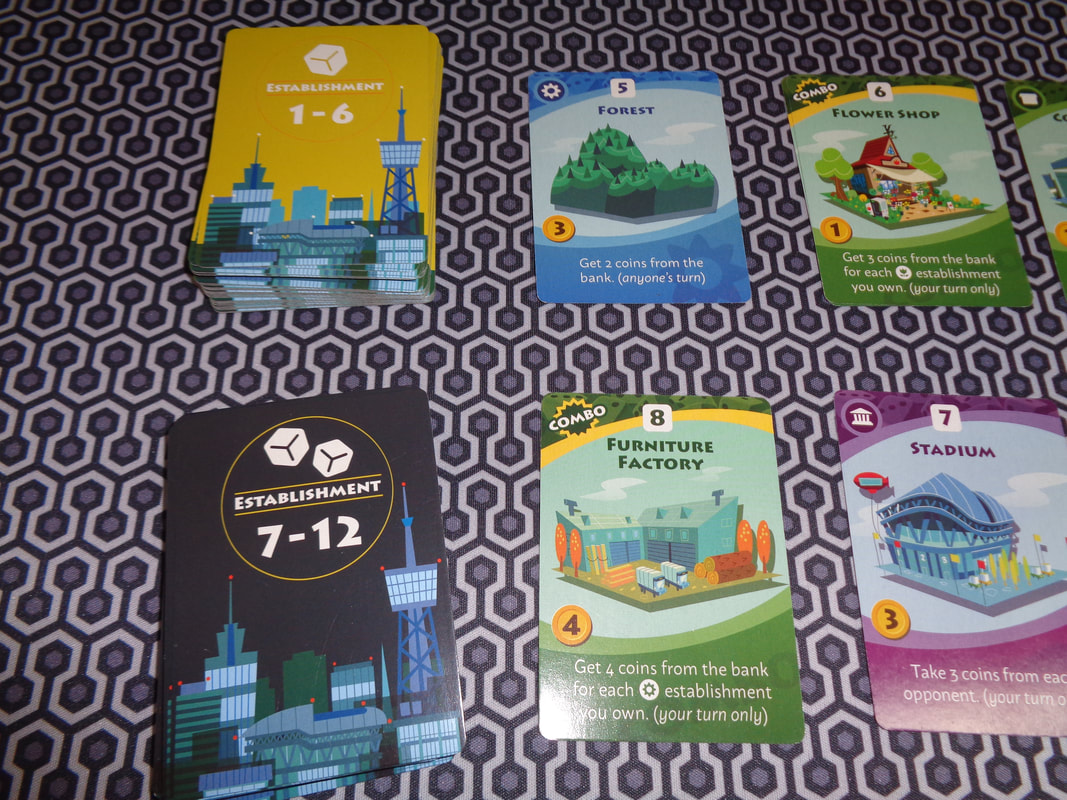
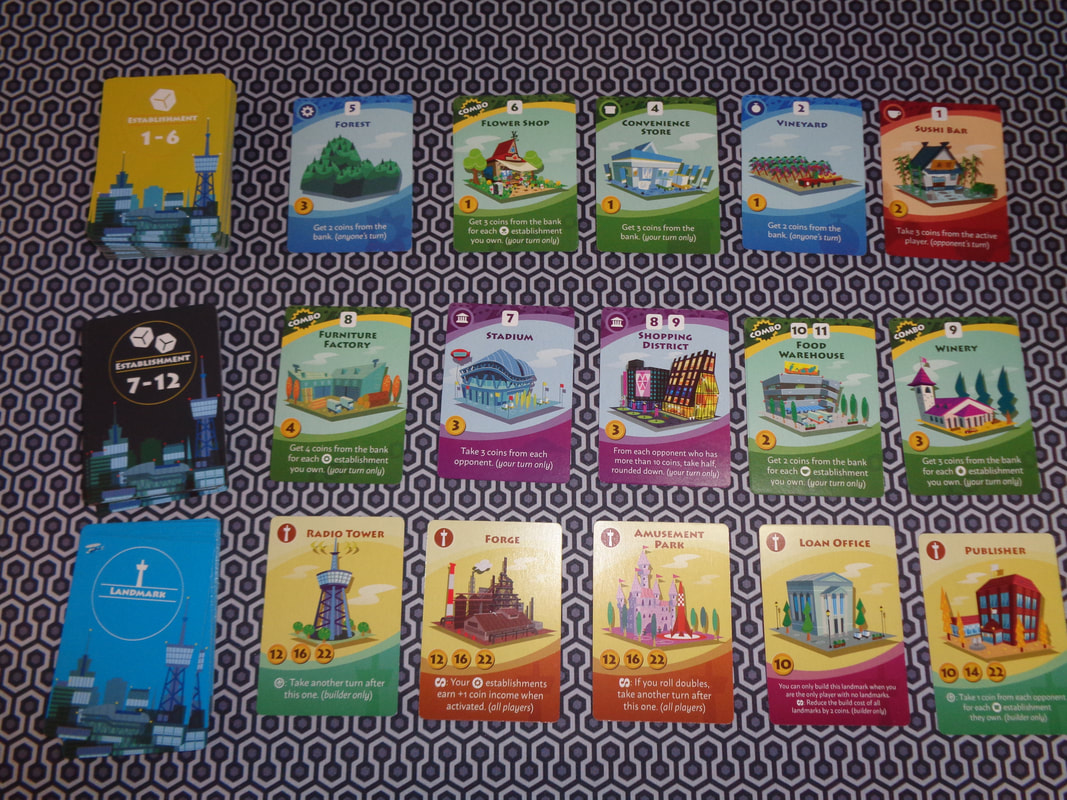
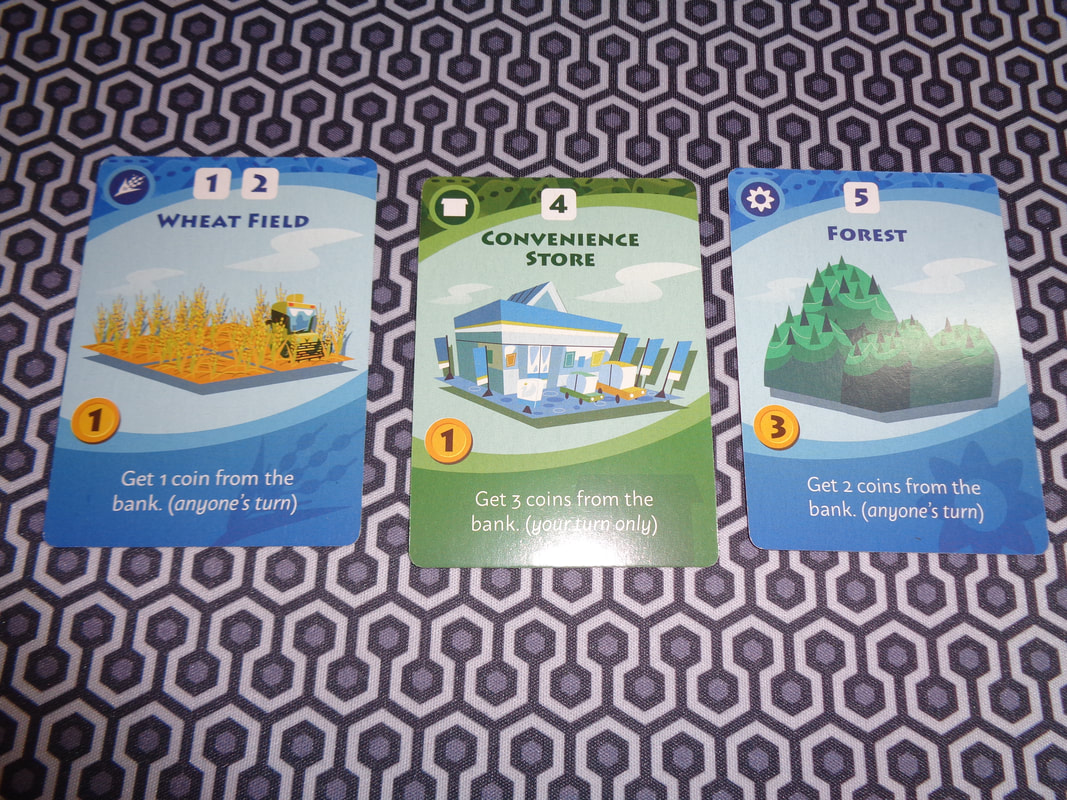
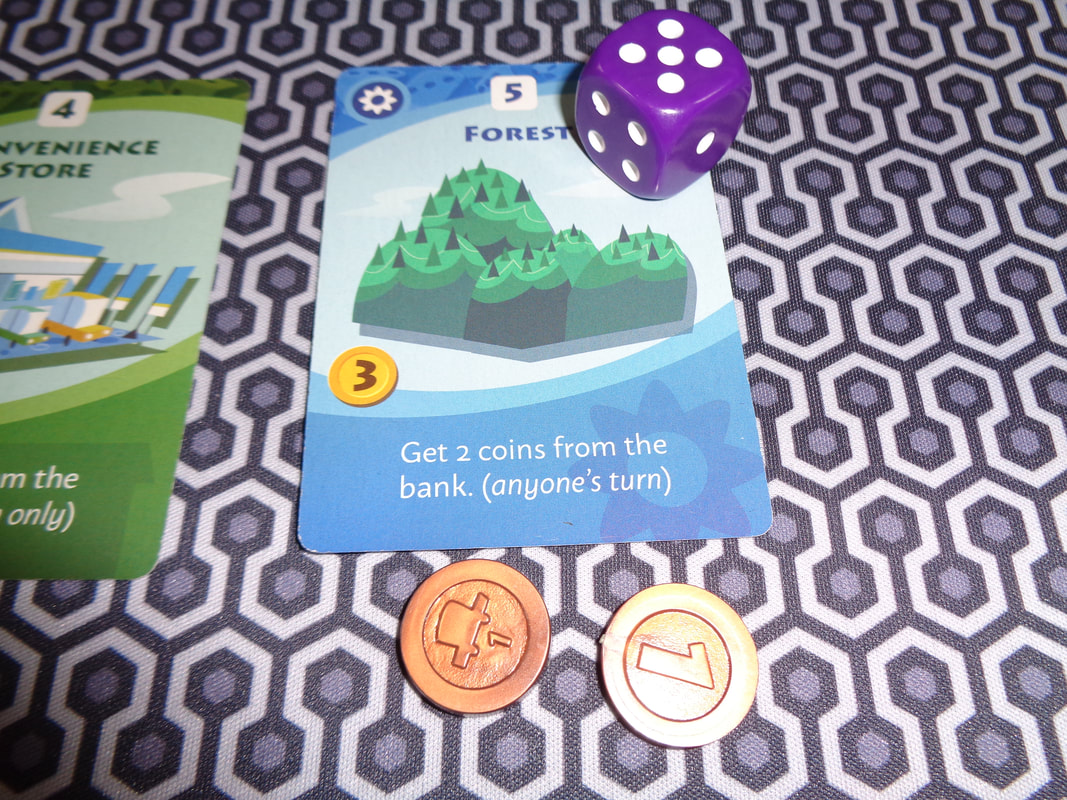
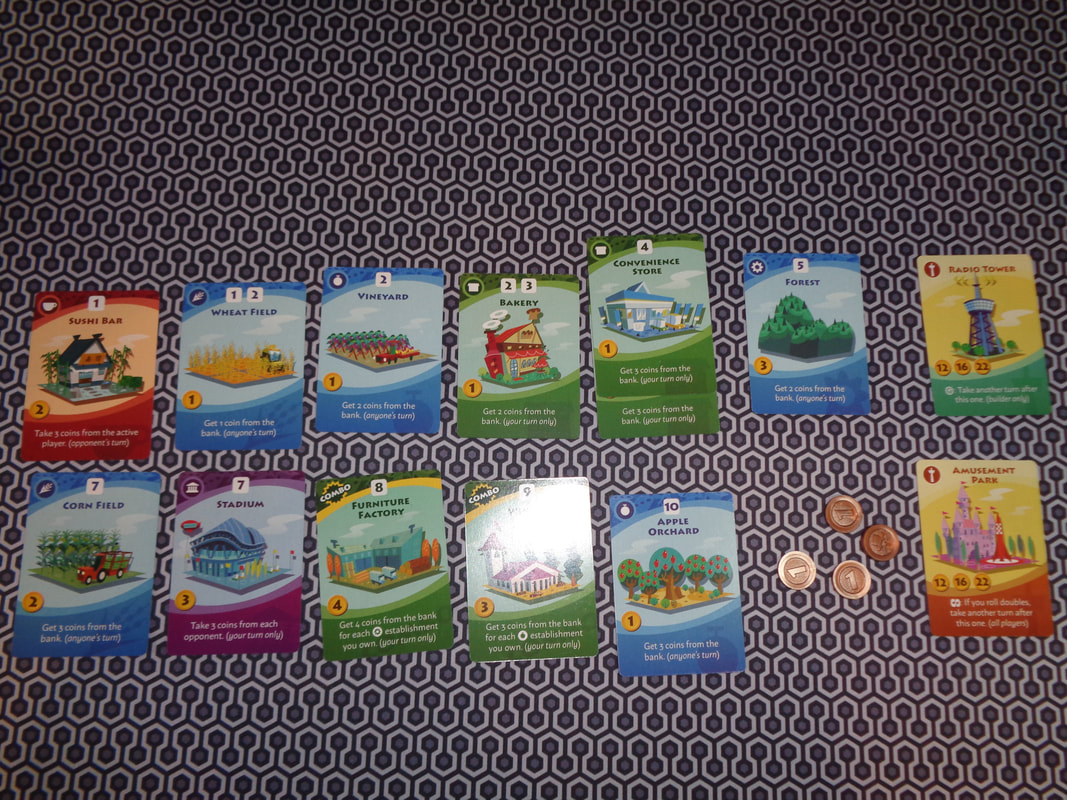
Components in Machi Koro 2 are all good. The cards are pretty standard cards as you'd expect. The coins feel solid and the dice are slightly larger than usual dice, they're plastic but also rounded, chunky and have a bit of heft to them. Machi Koro 2 uses an art style that's identical to the original. Brightly coloured stylised almost cartoony illustrations of establishments and landmarks. The colours are very distinct, which is good because colour plays an important part in the game. There are a few icons in Machi Koro 2, for the different types of establishment and types of effects on landmarks. It's all pretty clear what they mean and it won't provide an problems for players. How's it play? Setup
On to play Machi Koro 2 uses the traditional turn order with the active player playing their turn before the the player to their left becomes the active player. During their turn, the active player has 3 phases to play through.
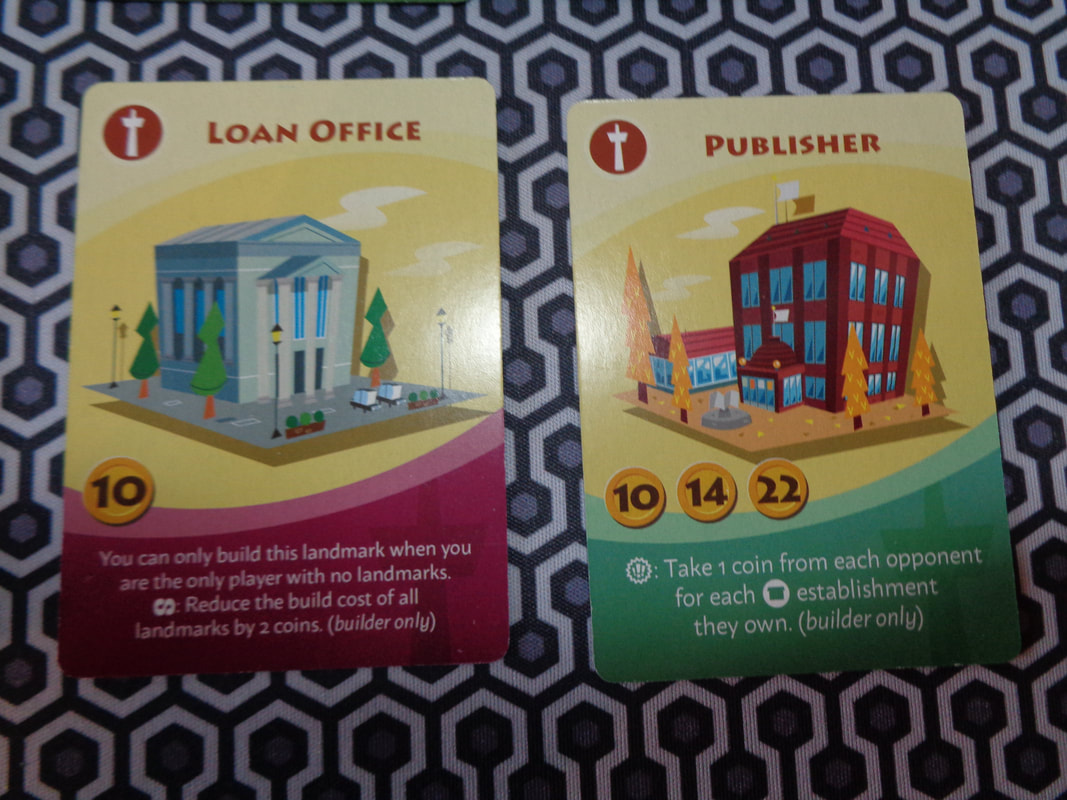
Endgame When any player purchases their 3rd landmark, they immediately win the game. Overall
Machi Koro 2 is a that's fairly easy to pick up and play light-to-mid weight game that has a quick playtime. The game generally presents players mostly straightforward but meaningful decisions about buying cards. Should a player spread their cards over a range of numbers to get better coverage, or concentrate on fewer numbers but getter pay outs when the numbers come up. Players will also need to consider what those numbers are. e.g., 6-8 will come up most often - provided players are rolling 2 dice have a good chance of being activated. Speaking of rolling dice, in Machi Koro 2 players are able to choose to roll 1 or 2 right from the start. This is another decision that players can make, sometimes they'll want to roll certain numbers or avoiding rolling them and using 1 or 2 dice can alter odds of doing this. Much of this ties in with how the activation numbers are distributed across the cards. A lot of the 1-6 cards will immediately generate cash but the cards that combo off of them tend to be in the 7-12 range. Going to 2 dice was described by a player as 'going up a gear'. It can be pretty hard to slowly build up cash over rounds to get landmarks because other players can essentially 'nickel and dime' it away, gearing up makes it easier to get big cash in a single roll to avoid this. And talking of nickel and diming, another strategy to consider is the red card strategy. Using red cards to fleece other players of their coins is a pretty effective strategy, it denies them coins and earns them at the same time - but you won't make any friends that way! The downside of this approach is that canny players will try their best to spend all their coins, the game's timing explicitly states that red activations occur before any other, thus if opponents have no coins, you can't collect them with a red since their blues/greens/purples activate after red. It means that in a quirky reflection of real cities, players will want to be as close to bankruptcy as possible! Unlike blue/green cards, reds are not guaranteed to generate income. Machi Koro 2 is a little on the light side (Not that I consider that an issue.) and perhaps a little too quick to end, which may not be to everyone's taste. One other thing to mention is that there's definitely a dollop of luck to the game, I'm fine with it and actually think it's an important part of the Machi Koro experience but some players will find this off putting. I do have a couple of relatively minor issues with Machi Koro 2. In the original Machi Koro, the card variety in the base game was fairly low, when 'The Harbour' expansion was added to the base game, Machi Koro went from being a 'nice' game to a 'great' game. I feel the same is true of Machi Koro 2 as well. There are only 20 different types of establishment and 10 will be visible right from the start. After playing a few games, players will have more or less seen everything the game has to offer at a basic level and and will habitually fall into familiar patterns or strategies depending how establishments emerge. An expansion would shake that up, I would love to see extra cards for Machi Koro 2. Finally, the rules for landmarks having actions that all players can activate in their turn is a little inelegant, requiring players to remember what landmarks other players have acquired or be reminded of them by those other players. Otherwise, I think Machi Koro 2 an un-taxing (Sic.) fun and breezy game to play that's worth trying if lighter games are your thing. How does it compare to Machi Koro? I've heard Machi Koro 2 described as Machi Koro 1.5 and there's definitely a sliver of truth to that. Anyone who's played the original will be familiar with nearly everything in Machi Koro 2. If it's not broken... So apparently there was also some criticism of the original where it was stated that there was a lot 'whiff' in the early game - where players would roll the dice and nothing would be activated. There was further criticism that the original had too long a play time. It's clear that Machi Koro has tried to address these issues. The 3 rounds of buying will allow players to have a better spread of numbers at the start. Having to only buy 3 landmarks will also make play quicker (Although the cheaper landmarks are way more expensive than the cheapest landmarks from the original.). Landmarks with ongoing effects that activate in any player's turn also make the game quicker and can add an extra layer of interaction between players, although I've frequently seen players avoid these cards, instead optioning for once-only landmarks and I sort of feel that way myself. This is the only thing I see as a possible misstep. Changes to the game have made the red cards a bit more powerful, there's little opportunity to punish players who buy red cards in Machi Koro 2, other than one of the landmarks (Machi Koro had the publisher card to do this.). I don't think this is too much of change though and YMMV. So anyway, all of this makes the game clearly quicker to play but I feel that perhaps it's a little too quick. Sometimes (Especially when someone gets a good roll or two.) a game can be over before players can adopt an emergent strategy. I never found that the original was overlong. Don't let this put you off playing Machi Koro 2, it's of a similar quality as they original. Even though I own the first game, I was happy to buy and play the second and would recommend it to players of the original as well as to people who have never played it. |
AuthorI play, I paint. Archives
March 2024
Categories
All
|

 RSS Feed
